Zhangzi Big Green Pepper Facility Agriculture
Abstract
The Zhangzi big green pepper, named after its origin in Zhangzi County, Changzhi City, Shanxi Province, is a representative specialty vegetable of the warm temperate semi-humid basin region. Located at the southwestern edge of the Shangdang Basin, Zhangzi County is one of China's key regions for facility-based pepper cultivation. In recent years, local agricultural production has gradually shifted from traditional open-field farming to a facility-oriented, standardized, and large-scale model dominated by greenhouses and plastic tunnels, forming a multi-season cropping system. The main production areas feature weakly alkaline soils with heavy metal contents far below national limits, enriched with organic matter and various available trace elements. Irrigation water quality is high, with pH and pollutant indicators meeting national standards, ensuring the ecological safety of water sources. The region also has a high vegetation coverage, with farmland accounting for nearly half of the county's total area. The big green pepper fruits are well-shaped, bright in color, thick-fleshed, juicy, and nutritionally rich, containing abundant chlorophyll and vitamin C, and are sold widely both domestically and internationally. The dataset of the GIES (Geographical Indications Environment and Sustainability) case on the Zhangzi big green pepper includes 4 categories: administrative divisions, physical geography, varietal and quality characteristics, and production management, comprising 66 files with a total data volume of 48.3 MB.
Introduction
Zhangzi County derives its name from Dan Zhu, the eldest son (Zhangzi) of the legendary Emperor Yao, who was enfeoffed in this region in ancient times, and the name has been preserved for thousands of years. Situated on the southwestern side of the Shangdang Basin in southeastern Shanxi Province, Zhangzi lies within the warm temperate semi-humid climatic zone. Influenced by the alternating circulation of cold and warm air masses, the county experiences a mild climate with 4 distinct seasons and a general synchrony of rainfall and temperature. With favorable natural conditions and a long history of vegetable cultivation, the region has nurtured the Zhangzi big green pepper as a high-quality agricultural product with distinctive geographical characteristics. As the largest pepper production base in China[1], Zhangzi County has in recent years achieved a historic transition from open-field to facility-based cultivation, and from single-season to multi- and off-season production, making the big green pepper industry an important pillar of rural revitalization[2].
Metadata of the Dataset
The details of the GIES case dataset on Zhangzi big green pepper facility agriculture in warm temperate and semi-humid basin[3], including its name, authors, geographical region, time period, data format, and dataset composition, are presented in Table 1.
Table 1 Metadata summary of the GIES case dataset on Zhangzi big green pepper facility agriculture in warm temperate and semi-humid basin
| Items | Description |
|---|---|
| Dataset full name | GIES case dataset on Zhangzi big green pepper facility agriculture in warm temperate and semi-humid basin |
| Dataset short name | ZhangziPepperCase26 |
| Authors | Liu, W. B., Institute of Geographic Sciences and Natural Resources Research, Chinese Academy of Sciences, liuwb@igsnrr.ac.cn Zhang, H. J., Zhangzi County People's Government, liufuhu@yeah.net Liu, F. H., Zhangzi County Bureau of Agriculture and Rural Affairs, liufuhu@yeah.net Zhang, H. J., Zhangzi County Bureau of Agriculture and Rural Affairs, zzxnwcyb@163.com Zhang, H. L., Zhangzi County Development and Reform and Science and Technology Bureau, zzxfgj@163.com Feng, G. L., Zhangzi County Bureau of Agriculture and Rural Affairs, 344782703@qq.com Shi, Y. J., Zhangzi County Bureau of Agriculture and Rural Affairs, zzxnwcyb@163.com Duan, X. L., Zhangzi County Development and Reform and Science and Technology Bureau, zzxfgj@163.com Lian, L. J., Zhangzi County Development and Reform and Science and Technology Bureau, zzxfgj@163.com Shen, L. X., Taiyuan University of Technology, shenlixia@tyut.edu.cn Li, Q., Zhangzi County Danxi Longxin Agricultural Technology Co., Ltd., dlclq1973@163.com Miao, H. B., Zhangzi County Bureau of Natural Resources, zzxgtj@163.com Yang, M., Zhangzi County Water Conservancy Bureau, 248117868@qq.com Zhang, P. P., Zhangzi County Bureau of Agriculture and Rural Affairs, zzxnwcyb@163.com Li, L. X., Zhangzi County Bureau of Agriculture and Rural Affairs, zzxnwcyb@163.com Ren, Q., Zhangzi County Bureau of Agriculture and Rural Affairs, tianqu118@163.com Chai, P. S., People's Government of Danzhu Town, Zhangzi County, 13467000177@163.com Han, Z., People's Government of Songcun Town, Zhangzi County, scxzf123@163.com Li, L. L., People's Government of Dabutou Town, Zhangzi County, 1636941591@qq.com Li, P., People's Government of Nanchen Town, Zhangzi County, 1019114970@qq.com Chen, Z. Z., People's Government of Nanzhang Town, Zhangzi County, 109512008@qq.com Li, X. Y., People's Government of Changzhang Township, Zhangzi County, 36519969@qq.com Wang, X. Z., People's Government of Baodian Town, Zhangzi County, 449133557@qq.com Tian, N., People's Government of Nianzhuang Township, Zhangzi County, yuhan7122@qq.com Tan, M. H., Institute of Geographic Sciences and Natural Resources Research, Chinese Academy of Sciences, tanmh@igsnrr.ac.cn Wang, T. T., Institute of Geographic Sciences and Natural Resources Research, Chinese Academy of Sciences, wangtt@igsnrr.ac.cn Zhang, X. X., Institute of Geographic Sciences and Natural Resources Research, Chinese Academy of Sciences, 13998551325@163.com Zhang, R. H., Institute of Geographic Sciences and Natural Resources Research, Chinese Academy of Sciences, 19861601971@136.com |
| Geographical area | Zhangzi County, Shanxi Province, 35°53′N–36°15′N, 112°27′E–113°00′E |
| Year | 2023, 2024 |
| Data format | .xlsx, .shp, .tif, .jpg, .docx, .txt |
| Data size | 48.3 MB |
| Data files | (1) geographic boundaries data; (2) physical geography data; (3) quality characteristics of pepper; (4) management and historical culture information |
| Data publisher | Global Change Research Data Publishing & Repository, http://www.geodoi.ac.cn |
| Address | No. 11A, Datun Road, Chaoyang District, Beijing 100101, China |
| Data sharing policy | (1) Data are openly available and can be free downloaded via the Internet; (2) End users are encouraged to use Data subject to citation; (3) Users, who are by definition also value-added service providers, are welcome to redistribute Data subject to written permission from the GCdataPR Editorial Office and the issuance of a Data redistribution license; and (4) If Data are used to compile new datasets, the "ten percent principal" should be followed such that Data records utilized should not surpass 10% of the new dataset contents, while sources should be clearly noted in suitable places in the new dataset[4]. |
| Communication and searchable system | DOI, CSTR, Crossref, DCI, CSCD, CNKI, SciEngine, WDS, GEOSS, PubScholar, CKRSC |
DOI: https://doi.org/10.3974/geodp.2025.03.11
Dataset Availability Statement:
The dataset supporting this paper was published and is accessible through the Digital Journal of Global Change Data Repository at: https://doi.org/10.3974/geodb.2025.09.01.V1
Dataset Development
Case Area
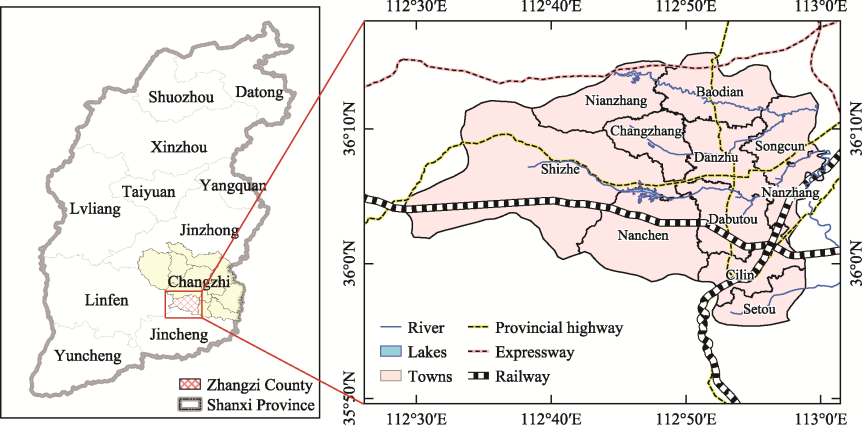
The case area covers Zhangzi County, Changzhi City, Shanxi Province (Figure 1), located between 35°53′N–36°15′N and 112°27′E–113°00′E. The county has a total area of 1,029 km2 and population of 298,700[1]. It administers 9 towns, including Danzhu, Baodian, Shizhe, Nanchen, Dabutou, Cilin, Setou, Nanzhang, and Songcun, as well as 2 townships, Nianzhang and Changzhang. Among these, Shizhe, Nanchen, Dabutou, and Songcun are the main production areas for both open-field and facility-based vegetables, with big green pepper as the dominant crop. The county enjoys convenient transportation: the county is located about 20 km from the municipal center, and the Taijiao Railway, Wari Railway, provincial highway 227, highway 228, and highway 326, together with the Qinglan Expressway, all pass through the area, providing favorable conditions for the transportation of big green pepper.
Ecological Environment Data
Topography
Zhangzi County is located in the Loess Plateau region at the southwestern edge of the
| Figure 1 Map of geo-location of the case area |
|---|
 |
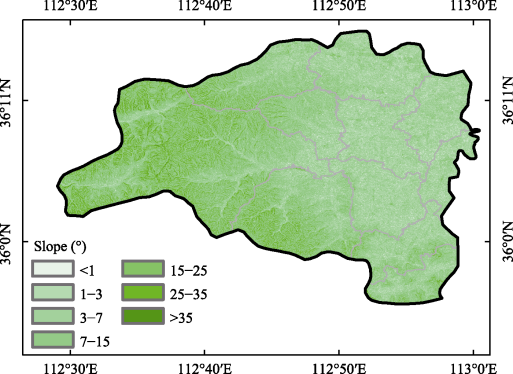
Shangdang Basin, bordering the Taihang Mountains in the east, the Lvliang Mountains in the west, the Fen River in the south, and the Datong Basin in the north. The overall topography slopes from west to east, forming a three-tier geomorphic structure (Figure 2). The western part is dominated by the Fajiu Mountain range with noticeable elevation differences, the central and southern parts are characterized by gently undulating mountains interlaced with rivers and hills, while the northeastern part is relatively flat. Based on topographic data derived from ASTER GDEM[2], the elevation of the county ranges from 865 to 1,645 m, with an average elevation of 929.8 m, and most areas lying between 900 and 1,000 m. The landform is typical of low to mid-mountain and hilly terrain. The slope is generally gentle, with most areas below 3° (Figure 3), providing suitable topographic conditions for the construction and spatial planning of facility agriculture.
| Figure 2 Map of elevation of Zhangzi County | Figure 3 Map of land slope of Zhangzi County |
|---|---|
 |
 |
Land Use and Vegetation Coverage
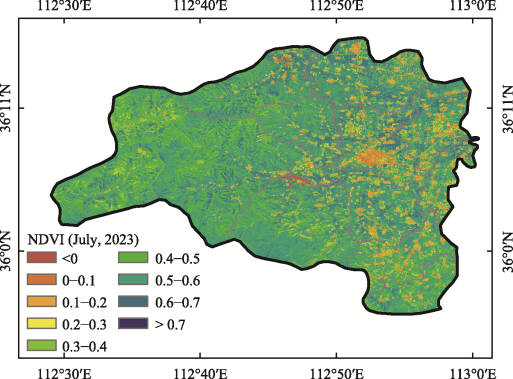
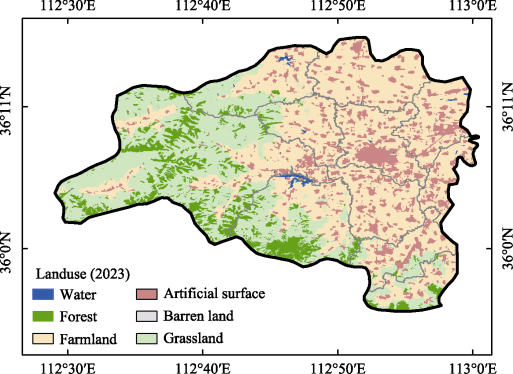
To reveal the characteristics of land use and vegetation coverage in Zhangzi County, the Google Earth Engine (GEE) remote sensing platform was used, and cloud-free Sentinel-2 satellite imagery[3] for 2023 was analyzed to obtain the Normalized Difference Vegetation Index (NDVI) and land-use spatial distribution data (Figure 4). The results show that land use in Zhangzi County mainly includes farmland, forest, grassland, water bodies, artificial surfaces, etc. (Table 2, Figure 5). Farmland occupies the largest share, accounting for nearly half of the county's total area and serving as the main zone for agricultural production and vegetable cultivation. This is followed by forest and grassland, which are mainly distributed in the western and southwestern mountainous areas and together account for 39.57% of the total county area. Except for artificial surfaces, most regions exhibit high vegetation coverage (Figure 4), with NDVI values generally above 0.5, indicating good vegetation growth conditions.
Major vegetables such as big green pepper are cultivated through both open-field and facility-based methods on the farmland. The production bases are mainly located in areas with favorable ecological conditions and clean environments, intentionally avoiding industrial and mining zones as well as main railways and highways to minimize the potential impact of pollution sources on agricultural production.
Table 2 Proportion of land use types in Zhangzi County
| Type | Farmland | Forest | Grassland | Water | Artificial surface | Barren land |
|---|---|---|---|---|---|---|
| Area (%) | 47.72 | 9.69 | 29.88 | 0.47 | 12.24 | 0.001 |
| Figure 4 Map of the NDVI of Zhangzi County | Figure 5 Map of the land use of Zhangzi County |
|---|---|
 |
 |
Climate
Zhangzi County has a warm temperate, semi-humid continental monsoon climate, characterized by 4 distinct seasons and mild temperatures, with neither severe cold in winter nor extreme heat in summer. Rainfall and high temperatures occur in the same period (Figures 6 and 7). Based on daily surface climate data from the China Meteorological Data Service Center (V3.0)[4], data from the nearest meteorological station in Changzhi (Station No. 53882; 36.05°N, 113.07°E; elevation 988.59 m) was analyzed. From 1990 to 2020, annual precipitation ranged from 330.57 to 915.84 mm, with a multi- year average of 665.15 mm. The mean annual temperature was 10.22 ℃, with an extreme maximum of 31.08 ℃ and an extreme minimum of −13.7 ℃. The annual effective accumulated temperature above 10 ℃ was between 3,076.43–3,213.24 ℃, with a total accumulated temperature of 3,148.21 ℃. The mean annual temperature of the 0–20 cm soil layer was 11.05 ℃, which is 1.85 ℃ higher than the mean air temperature. The average annual sunshine duration was 2,556.5 h, with the maximum occurring from April to June, and the average frost-free period ranged from 143 to 196 days.
| Figure 6 Inter-annual characterization of climate in Zhangzi County |
|---|
 |
| Figure 7 Intra-annual characteristics of climate in Zhangzi County |
|---|
 |
Water Conditions Data
Zhangzi County possesses abundant water resources and enjoys favorable irrigation conditions. The main rivers within the county include the Zhuozhang, Lan, Yong, Taoqing, and Dan Rivers, all of which flow eastward into the Zhangze Reservoir in Changzhi City, while the Wangyu and Hengshui Rivers flow westward into the Qin River. According to the Second water resources assessment report of Changzhi City[5], the total water resources of Zhangzi County amount to 122 million m3. Among these, surface water resources total 86.93 million m3, with 65.19 million m3 available for use, and groundwater resources total 66.19 million m3, of which 36.12 million m3 are exploitable. The county has 6 medium- and small-sized reservoirs with a combined storage capacity of 51.45 million m3, including 19.64 million m3 available for irrigation and 26.45 million m3 reserved for flood control.
In accordance with the Standard for irrigation water quality (GB 5084—2021)[5], 23 sampling points (P1–P23) were established in the main big green pepper production areas, where P3 and P21 represent surface water and the remaining points groundwater (Figure 8). 15 parameters of irrigation water quality were measured (Table 3). The results show that pH ranged from 7.5 to 8.4, meeting the standard range of 5.5 to 8.5. Suspended solids (3–32 mg/L), biochemical oxygen demand (1.9–11.4 mg/L), and chemical oxygen demand (5–17 mg/L) were all well below the permissible limits. Total dissolved solids in the 21 groundwater samples were below 1,000 mg/L, while the 2 surface water samples slightly exceeded this value but still satisfied the dryland irrigation standard of not more than 2,000 mg/L. Heavy metals (Pb, Cd, Cr6+, Hg, As) were either undetected or significantly lower than the standard thresholds. Anionic synthetic detergents and sulfides were not detected. Indicators of thermotolerant coliform bacteria and helminth eggs also met the limits (≤40,000 MPN/L and ≤20/10L, respectively), indicating that irrigation water in Zhangzi County is free from significant biological contamination and meets the environmental safety requirements for agricultural production.
Table 3 Statistical testing results of water samples in the case area
| pH | SS (mg/ L) | BOD5 (mg/ L) | COD (mg/ L) | Anionic Synthetic Detergents (mg/L) | Cl– (mg/ L) | S2– (mg/ L) | Total Salinity (mg/L) | Pb (mg/L) | Cd (mg/L) | Cr6+ (mg/L) | Hg (mg/L) | As (mg/L) | Thermotolerant Coliform Bacteria (MPN/L) | Helminth Eggs (Counts/10L) | |
|---|---|---|---|---|---|---|---|---|---|---|---|---|---|---|---|
| P1 | 7.8 | 6 | 2.8 | 7 | ND | 11.3 | ND | 368 | ND | ND | ND | ND | ND | ND | ND |
| P2 | 7.5 | 3 | 2.2 | 5 | ND | 13.4 | ND | 522 | ND | ND | ND | 0.0001 | ND | ND | ND |
| P3 | 8.4 | 18 | 2.3 | 6 | ND | 317 | ND | 1,209 | 0.010,63 | 0.000,14 | ND | ND | ND | ND | ND |
| P4 | 8.1 | 16 | 1.9 | 5 | ND | 20.4 | ND | 335 | ND | ND | ND | ND | ND | ND | ND |
| P5 | 7.6 | 5 | 2.0 | 5 | ND | 39.0 | ND | 806 | ND | ND | ND | ND | ND | ND | ND |
| P6 | 7.8 | 8 | 2.1 | 5 | ND | 17.7 | ND | 445 | ND | ND | ND | ND | ND | ND | ND |
| P7 | 8.4 | 8 | 2.8 | 7 | ND | 9.22 | ND | 302 | ND | ND | ND | ND | ND | ND | ND |
| P8 | 7.9 | 7 | 2.0 | 5 | ND | 78.7 | ND | 903 | ND | ND | ND | ND | ND | ND | ND |
| P9 | 7.9 | 11 | 2.1 | 5 | ND | 14.9 | ND | 354 | ND | ND | ND | ND | ND | ND | ND |
| P10 | 8.0 | 7 | 2.2 | 5 | ND | 34.7 | ND | 681 | ND | ND | ND | ND | ND | ND | ND |
| P11 | 8.0 | 1 | 2.1 | 5 | ND | 40.1 | ND | 620 | ND | ND | ND | ND | ND | ND | ND |
| P12 | 7.8 | 6 | 2.1 | 5 | ND | 40.1 | ND | 877 | ND | ND | ND | ND | ND | ND | ND |
| P13 | 8.0 | 8 | 2.0 | 5 | ND | 21.3 | ND | 680 | ND | ND | ND | ND | ND | ND | ND |
| P14 | 8.3 | 10 | 2.1 | 5 | ND | 17.7 | ND | 466 | ND | ND | ND | ND | ND | ND | ND |
| P15 | 8.2 | 2 | 6.7 | 11 | ND | 15.7 | ND | 416 | ND | ND | ND | ND | ND | ND | ND |
| P16 | 7.7 | 0 | 8.2 | 14 | ND | 15.6 | ND | 579 | ND | ND | ND | ND | ND | ND | ND |
| P17 | 7.8 | 32 | 11.4 | 17 | ND | 28.4 | ND | 560 | ND | ND | ND | ND | ND | ND | ND |
| P18 | 7.8 | 7 | 2.1 | 5 | ND | 9.93 | ND | 381 | ND | ND | ND | ND | ND | ND | ND |
| P19 | 8.0 | 4 | 3.3 | 7 | ND | 11.6 | ND | 298 | ND | ND | ND | ND | ND | ND | ND |
| P20 | 8.3 | 6 | 2.3 | 5 | ND | 76.6 | ND | 789 | ND | ND | ND | ND | ND | 490 | ND |
| P21 | 7.9 | 7 | 3.2 | 7 | ND | 20.6 | ND | 1,317 | 0.00011 | ND | ND | ND | ND | ND | ND |
| P22 | 7.9 | 0 | 2.8 | 6 | ND | 11.5 | ND | 365 | ND | ND | ND | ND | ND | 460 | ND |
| P23 | 8.0 | 0 | 2.3 | 5 | ND | 4.96 | ND | 308 | ND | ND | ND | ND | ND | ND | ND |
| Limit | 5.5–8.5 | – | – | – | – | – | – | – | – | – | – | – | – | – | – |
Note: "ND" stands for "Not Detected".
Soil Conditions Data
According to the Soil environmental quality risk control standard for soil contamination of agricultural land (Trial) (GB 15618—2018)[6], 9 soil indicators were measured at 21 sampling sites across Zhangzi County (Figure 8, Table 4). The results show that soil pH range from 7.60 to 8.36, indicating a weakly alkaline environment suitable for the cultivation of facility vegetables such as big green pepper. The concentrations of heavy metals in the surface soil layer (0–20 cm) were all well below the standard thresholds, suggesting minimal pollution risk and compliance with national environmental safety requirements for agricultural land. In addition, the levels of trace elements met the classification standards for available soil micronutrients in China, ensuring adequate nutrient supply for essential physiological processes in crops, including enzymatic reactions, photosynthesis, and material transport.
| Figure 8 Distribution map of water and soil sampling sites |
|---|
 |
Table 4 Statistical testing results of soil environmental indicators
| pH | Cd (mg/kg) | Hg (mg/kg) | As (mg/kg) | Pb (mg/kg) | Cr (mg/kg) | Cu (mg/kg) | Ni (mg/kg) | Zn (mg/kg) | |
|---|---|---|---|---|---|---|---|---|---|
| P1 | 7.90 | 0.13 | 0.041,2 | 11.6 | 24.0 | 65 | 28 | 30 | 108 |
| P2 | 7.60 | 0.10 | 0.019,5 | 9.84 | 19.5 | 56 | 28 | 23 | 122 |
| P4 | 8.26 | 0.09 | 0.060,5 | 7.51 | 20.4 | 55 | 26 | 23 | 92 |
| P5 | 8.19 | 0.09 | 0.034,5 | 8.10 | 20.4 | 50 | 15 | 23 | 99 |
| P6 | 8.17 | 0.11 | 0.027,3 | 15.8 | 20.6 | 51 | 28 | 24 | 101 |
| P7 | 8.34 | 0.09 | 0.031,9 | 11.8 | 19.1 | 59 | 28 | 29 | 98 |
| P8 | 8.10 | 0.11 | 0.022,5 | 13.2 | 23.1 | 50 | 26 | 24 | 96 |
| P9 | 8.23 | 0.13 | 0.038,7 | 12.0 | 21.8 | 54 | 28 | 28 | 85 |
| P10 | 8.03 | 0.20 | 0.078,3 | 11.9 | 24.2 | 78 | 79 | 26 | 141 |
| P11 | 8.16 | 0.13 | 0.046,5 | 11.8 | 21.2 | 63 | 35 | 26 | 88 |
| P12 | 8.29 | 0.12 | 0.072,6 | 13.7 | 21.2 | 51 | 32 | 24 | 111 |
| P13 | 8.36 | 0.08 | 0.034,6 | 15.6 | 20.5 | 50 | 33 | 29 | 105 |
| P14 | 8.20 | 0.17 | 0.047,5 | 16.9 | 21.1 | 48 | 35 | 30 | 98 |
| P15 | 8.33 | 0.08 | 0.032,1 | 12.9 | 18.8 | 47 | 31 | 28 | 84 |
| P16 | 8.25 | 0.10 | 0.062,4 | 16.4 | 20.0 | 53 | 32 | 29 | 99 |
| P17 | 8.11 | 0.12 | 0.043,2 | 13.4 | 21.3 | 51 | 28 | 29 | 86 |
| P18 | 8.21 | 0.13 | 0.034,0 | 14.2 | 20.2 | 54 | 27 | 28 | 80 |
| P19 | 8.23 | 0.07 | 0.025,4 | 6.82 | 23.0 | 52 | 27 | 27 | 79 |
| P20 | 8.08 | 0.08 | 0.028,6 | 14.1 | 16.5 | 45 | 27 | 27 | 73 |
| P22 | 8.19 | 0.10 | 0.039,1 | 15.6 | 18.8 | 51 | 28 | 26 | 78 |
| P23 | 8.24 | 0.13 | 0.052,3 | 9.46 | 21.6 | 49 | 27 | 23 | 96 |
| Limit | – | – | – | – | – | – | – | – | – |
Note: P3 and P21 are designated as rivers, therefore, soil sampling was omitted.
Product Quality Data
Varieties and Characteristics
The Zhangzi big green pepper exhibits considerable varietal diversity. In the early stage of cultivation, the main varieties included Qiemen and Zhongjiao No.4, while later introductions featured Fuli No.1, Fuli No.2, 5029, 5018, and Victoria[7]. The fruits are generally large and uniform in shape, with smooth surfaces, bright green color, firm texture, full cavities, and thick, juicy flesh. They are crisp, tender, and aromatic, suitable for a wide range of cooking methods[8]. Owing to their large size, thick flesh, and strong storage and transport qualities, Zhangzi big green peppers are highly competitive in both domestic and international markets.
Quality Testing Data
Test results show that the Zhangzi big green pepper contains higher levels of chlorophyll and vitamin C than the reference values, indicating strong photosynthetic capacity, high nutritional value, and notable antioxidant properties. The protein content was slightly higher than the reference, while the iron content was essentially consistent with it (Table 5).
In terms of food safety, concentrations of heavy metals (Cd, Hg, total As, Cr), pesticide residues (23 items including carbofuran and chlorpyrifos, etc.), and microbiological indicators (5 items) were all undetected or far below the limits specified in China's national food safety standards (GB 2762—2022 and GB 2763—2021)[9,10] (Table 6). These results demonstrate that the Zhangzi big green pepper is not only of high quality but also fully compliant with national food safety requirements.
Table 5 Quality testing results of Zhangzi big green pepper
| Items | Result | Reference | Conclusion |
|---|---|---|---|
| Chlorophyll (mg/g) | 0.153 | 0.091 | Higher than the reference |
| Vc (mg/100g) | 114.01 | 76.06 | Higher than the reference |
| Fe (mg/100g) | 0.40 | 0.27 | Higher than the reference |
| Protein (g/100g) | 1.05 | 1.0 | Higher than the reference |
Table 6 Statistical testing results of safety and hygiene indicators of Zhangzi big green pepper
| Cd | Hg | As | Cr | Other 25 items | |
|---|---|---|---|---|---|
| Sample 1 | 0.075 mg/kg | ND | ND | 0.73 mg/kg | ND or below the risk threshold |
| Sample 2 | 0.02 mg/kg | ND | ND | 0.31 mg/kg | ND or below the risk threshold |
Note: Microbiological indicators (5 items): Total Bacterial Count, Coliforms, Molds and Yeasts, Salmonella, Staphylococcus aureus. Pesticide residues (23 items): Cypermethrin, Triadimefon, Carbendazim, Procymidone, Chlorpyrifos, Lambda-cyhalothrin, Imidacloprid, Carbofuran, Fipronil, Omethoate, Methamidophos, Triazophos, Aldicarb, Abamectin, Beta-cyfluthrin, Profenofos, Emamectin benzoate, Myclobutanil, Pyrimethanil, Dimethomorph, and Methyl isofenphos.
Management of Zhangzi Big Green Pepper Industry
According to the 2024 statistical data, the gross domestic product (GDP) of Zhangzi County reached 26.819 billion CNY, including 1.78 billion CNY from the primary industry. The total annual fiscal revenue was 6.795 billion CNY, of which 2.652 billion CNY came from the general public budget and 1.848 billion CNY from tax revenue. The county had a permanent population of 284,000, including 169,700 rural residents, with a per capita disposable income of 23,400 CNY for rural households. With the continuous development of the rural economy, the vegetable industry has gradually become a key driver of farmers' income growth and rural revitalization.
Vegetable cultivation in Zhangzi County had already achieved a considerable scale by the 1990s and reached its peak in 1995, when the total planting area exceeded 6,666.67 ha, including more than 4,000 ha devoted to peppers. By the end of 2017, the cultivation of Zhangzi big green pepper had expanded to more than 300 villages, covering an area of over 4666.67 ha with an annual output exceeding 60 million kg[14]. In 2022, the Danxi Longxin Modern Agricultural Demonstration Park adopted an integrated operational framework that linked enterprises, cooperatives, and farming households. Through this coordinated mechanism, more than 20 cooperatives and numerous farmers jointly managed over 180 greenhouses, producing more than 2,000 tons of peppers annually[15]. As the cultivation area continued to expand, the big green pepper industry became a central pillar of Zhangzi County's characteristic agriculture, significantly increasing farmers' cash income, strengthening village collective economies, and promoting local employment.
Pepper Cultivation Techniques
(1) Planting environment. Facility bases should be located in areas with flat terrain, stable water supply, and good irrigation and drainage conditions. The soil should be sandy loam with a deep plow layer, loose texture, good aeration, and rich organic matter. In greenhouses, daytime temperature should be maintained at 25–28 ℃, nighttime temperature at 12–15 ℃, and relative humidity at 40%–45%. The extreme temperature should be controlled between 10–35 ℃. When the outside temperature remains above 15 ℃, the facilities should be kept well ventilated to ensure proper air circulation and humidity balance.
(2) Pre-sowing preparation. Plastic tunnels, solar greenhouses, or multi-span greenhouses can be used for seedling raising. Weeds and debris inside and outside the facilities should be removed, drainage channels dredged to prevent water logging, and seedling tools, trays, and substrate preparation areas thoroughly disinfected. The substrate should be leveled and lightly compacted, with holes drilled to a depth of 0.8–1.0 cm.
(3) Sowing. Sowing time should be determined according to transplanting schedules, generally 60–70 days in advance for winter-spring seedlings and 40–45 days in advance for summer-autumn seedlings. Seeds should be disinfected, rinsed, and sown into trays, then covered with perlite, watered thoroughly, and sealed with a white plastic film for moisture retention. The film should be removed when more than 60% of cotyledons have expanded. During seedling growth, temperature should be kept at 30–32 ℃ with relative humidity around 90%.
(4) Seedling management. Water and nutrients should be supplied according to seedling growth stages, with longer intervals during cool or rainy weather. For greenhouse transplanting, seedlings should be transported under controlled temperature. For plastic tunnel transplanting, ventilation and cooling should start 3 to 5 days in advance to harden seedlings. For open-field transplanting, seedlings should be gradually acclimated 7 to 10 days prior to transplanting.
(5) Cultivation techniques. Prior to transplanting, clean the field and form ridges covered with plastic mulch. Adopt the method of planting double rows with single plants on top of the ridges. After the seedling recovery phase, initiate a hardening-off period by controlling water for approximately 20 days. This practice promotes root system development and suppresses excessive vegetative growth. Following transplanting, enhance shading and implement scientific fertilization. During the mid to late growth stages, promptly remove non-fruiting branches to ensure balanced fruit development.
(6) Water and fertilizer management. A thorough irrigation should be applied before transplanting, followed by controlled watering during seedling establishment. When 70% of plants in the facility reach harvest readiness, the first irrigation should be applied, combined with balanced fertilization. Generally, irrigation is performed every 10–15 days, with water depth reaching half the depth of furrows, avoiding flood irrigation to maintain soil moisture. A "two irrigations, one fertilization" approach is recommended, applying 150–225 kg of compound fertilizer and 75–105 kg of diammonium phosphate per ha. Fertilizer application should stop 30 days before harvest to ensure fruit quality.
(7) Pest and disease control. For pest and disease management, the principle of "prevention first and integrated control" should be followed, giving priority to agricultural, physical, and biological measures, while chemical control should only serve as a supplement. Resistant varieties should be selected, and insect-proof nets and shading nets should be used during summer seedling raising to reduce pest and disease incidence.
(8) Packaging, labeling, and transportation. Peppers in the same package must be of the same variety, batch, and grade, and should be free from impurities or contaminants. Outer packaging should indicate the variety, origin, and grade. For long-distance transportation, cold-chain logistics at 8–13 ℃ should be adopted, while insulated transport may be used for short-distance delivery to ensure freshness and marketability.
Standardized Management
Standardized cultivation is an important means of improving the yield and quality of Zhangzi big green pepper and maintaining orderly market production. On the basis of scientific and regulated farming practices, dedicated personnel should be assigned to carry out full-cycle management of cultivation. Combined with technical training and on-site guidance provided by agricultural experts, a standardized production technology system adapted to local conditions has been gradually established for Zhangzi big green pepper (Table 7).
Table 7 Technical specifications for standardized production of pepper in Zhangzi County
| Name of standard and technical specification | Types | |
|---|---|---|
| 1 | Technical regulations for pepper seedling production (DB1404/T 25—2022) | Local standard |
| 2 | Field pepper production technical regulations (DB1404/T 26—2022) | Local standard |
| 3 | Greenhouse pepper production technical regulations (DB1404/T 27—2022) | Local standard |
| 4 | Zhangzi green pepper standards system, Part 1: production environment (T/ZZQJ005—2023) | Local standard |
| 5 | Zhangzi green pepper standards system, Part 2: seedling production regulations (T/ZZQJ006—2023) | Local standard |
| 6 | Zhangzi green pepper standards system, Part 3: cultivation technical regulations (T/ZZQJ007—2023) | Local standard |
| 7 | Zhangzi green pepper standards system, Part 4: quality grading and classification (T/ZZQJ008—2023) | Local standard |
| 8 | Zhangzi green pepper standards system, Part 5: raw material acceptance and finished product inspection (T/ZZQJ009—2023) | Local standard |
| 9 | Zhangzi green pepper standards system, Part 6: storage and transportation technical Regulations (T/ZZQJ010—2023) | Local standard |
| 10 | Zhangzi green pepper standards system, Part 7: dehydrated green pepper (T/ZZQJ011—2023) | Local standard |
| 11 | Zhangzi green pepper standards system, Part 1: production environment (T/ZZQJ005—2023) | Local standard |
| 12 | Zhangzi green pepper standards system, Part 2: seedling production procedures (T/ZZQJ006—2023) | Local standard |
Industry Chain Expansion
Relying on its characteristic vegetable industry, Zhangzi County has promoted facility agriculture and large-scale cultivation of big green pepper, gradually forming a complete industrial chain that integrates intensive seedling cultivation, pepper production, storage, processing, and marketing.
(1) Intensive seedling cultivation. Seedling production provides the foundation for the expansion of the big green pepper industry. The county has 6 vegetable seedling centers with a total area of 31,100 m2, offering a capacity of over 5 million seedlings. The annual seedling output reaches 88.4 million plants, sufficient to support the cultivation of approximately 1,933 ha of peppers.
(2) Cold-chain logistics. The county has continuously improved its cold-chain logistics system, significantly enhancing its capacity for long-distance distribution. At present, there are 10 pre-cooling warehouses with capacities exceeding 1,500 m3, including 6 ammonia-based and 4 water-cooled systems, with a total storage capacity of 63,500 m3 and an annual turnover exceeding 100,000 tons. In addition, 21 constant-temperature storage facilities provide a total capacity of 56,000 m3, with a storage capacity of 5,200 tons and an annual turnover of more than 400,000 tons.
(3) Processing and marketing. Processing has extended and strengthened the big green pepper industrial chain. At present, 3 large-scale vegetable processing enterprises operate in the county. Haorun Food Co., Ltd. primarily produces dehydrated peppers, red peppers, carrots, and dandelions, supporting more than 200 ha of vegetable bases. Huafeng Technology and Xinan Agribusiness Cooperative focus on chopped-pepper processing, with an annual output of about 10,000 tons, supporting more than 2,000 ha of red-pepper cultivation in Zhangzi, Tunliu, and nearby areas. Their products are supplied to well-known enterprises such as "Lao Gan Ma" in Guizhou and "Xiangjuming" in Shanghai.
Brand Building
The Zhangzi big green pepper has a strong brand foundation. Since being recognized as the "Hometown of Chinese Green Pepper" in 1998, Zhangzi County has received a series of national honors, including "Geographical Indication Agricultural Product" (2008), "Top Ten Counties of Pollution-Free Fruits and Vegetables in China" (2009), "National Demonstration County for Agricultural Standardization (Vegetables)" (2011), and "National Agricultural Product Quality and Safety County" (2019). It was also included in the National Catalogue of Special and Excellent Agricultural Products in 2019 and was designated as a National Demonstration Base for the standardization of the whole agricultural industry chain in 2023.
Established in 2020, Zhangzi Danxi Longxin Agricultural Technology Co., Ltd. has promoted the development of the "Zhangzi Green Pepper" brand toward higher levels of standardization and diversification through the construction of a modern agricultural industrial park covering about 33 ha with a total investment of 50 million CNY. The park is equipped with a 2,800 m2 multi-span seedling greenhouse and 23.33 ha of high-standard greenhouses, producing approximately 1,100 tons of peppers annually. The company has introduced 21 high-quality new varieties from China Agricultural University for demonstration planting and has expanded its cultivation area to more than 133.33 ha through cooperative and contracted farming. The annual output value has reached 40 million CNY, benefiting more than 2,000 households and ensuring stable income growth for farmers.
Near Real-time Monitoring System
An automatic in-situ observation station for Zhangzi big green pepper has been established in the Danxi Longxin Modern Agricultural Demonstration Park of Zhangzi County. Based on low-power Internet of Things (IoT) technology, the station enables real-time image transmission and simultaneously monitors and automatically records air temperature and humidity, atmospheric pressure, soil temperature and moisture, and vegetation indices such as NDVI. This system ensures the integrity and spatiotemporal consistency of the data. It is also equipped with data processing and analysis functions that support the extraction of phenological characteristic curves, extended index calculations, and dual local-cloud storage. These capabilities provide reliable technical support for precise environment monitoring and scientific research related to big green pepper cultivation.
Discussion and Conclusion
The Zhangzi big green pepper holds unique and irreplaceable geographical advantages as a premium agricultural product in Shanxi Province and across China. The fruits are bright green, large, thick-fleshed, smooth-skinned, crisp, and juicy, with excellent storability and transportability, earning the reputation of being the "No.1 sweet pepper in the world". Future research and development should focus on several aspects: (1) strengthening ecological and environmental protection, improving soil conditions, reducing the use of chemical fertilizers and pesticides, and promoting sustainable industrial development; (2) improving standardized production and management systems to stabilize and enhance product quality; (3) extending and optimizing the entire industrial chain that integrates intensive seedling cultivation, planting, storage, processing, and marketing to increase added value and brand influence; and (4) expanding marketing channels through e-commerce platforms to ensure efficient product distribution, reduce production costs, and increase farmers' income. Through these measures, the Zhangzi big green pepper industry, along with the regional vegetable sector, can achieve high-quality and sustainable development.
References
[1] Wang, X., Zhang, W. H., Li, X. X. Current status and countermeasures for the development of the vegetable industry in Zhangzi County [J]. Agricultural Technology and Equipment, 2017, 325(1): 42–43+46. https://doi.org/10.3969/j.issn.1673-887X.2017.01.018.
[2] Qu, G. Q., Feng, G. P. High-yield cultivation of open-field sweet peppers [J]. Vegetables, 1999, 2: 34–35.
[3] Liu, W. B., Liu, F. H., Zhang, H. L., et al. GIES case dataset on Zhangzi big green pepper facility agriculture in warm temperate and semi-humid basin [J/DB/OL]. Digital Journal of Global Change Data Repository, 2025. https://doi.org/10.3974/geodb.2025.09.01.V1.
[4] GCdataPR Editorial Office. GCdataPR data sharing policy [OL]. https://doi.org/10.3974/dp.policy.2014.05 (Updated 2017).
[5] Ministry of Ecology and Environment of P. R. China, State Administration for Market Regulation. Standard for irrigation water quality (GB 5084—2021) [S]. Beijing: China Environment Publishing Group, 2021.
[6] Ministry of Ecology and Environment of P. R. China, State Administration for Market Regulation. Soil environmental quality risk control standard for soil contamination of agricultural land (Trial) (GB 15618—2018) [S]. Beijing: China Environment Publishing Group, 2018.
[7] Wu, J. H. Research on the development path of organic dryland farming in Shanxi Province—a case study of Zhangzi County [J]. Shanxi Agricultural Economics, 2019, 13: 28–31. https://doi.org/10.16675/j.cnki. cn14-1065/f.2019.13.015.
[8] Shi, Y. J. Application of water-saving and high-yield cultivation techniques for dryland chili peppers [J]. Farme' Wealth Friend, 2019, 15: 17.
[9] National Health Commission of P. R. China, State Administration for Market Regulation. National food safety standard—maximum levels of contaminants in food (GB 2762—2022) [S]. Beijing: Standards Press of China, 2022.
[10] National Health Commission of P. R. China, Ministry of Agriculture and Rural Affairs of P. R. China, State Administration for Market Regulation. National food safety standard—maximum residue limits for pesticides in food (GB 2763—2021) [S]. Beijing: China Agricultural Press, 2021.
[11] He, Q. M., Yang, X. Q., Li, S. B., et al. Comparison of chlorophyll content in five common market peppers [J]. Popular Science and Technology, 2015, 17(4): 47–49.
[12] National Institute for Nutrition and Health Chinese Center for Disease Control and Prevention. Chinese Food Composition Table (6th Edition/Volume I) [M]. Beijing: Peking University Medical Press, 2016.
[13] Rubio, C., Fernández, E., Medina, M., et al. Mineral composition of the red and green pepper (Capsicum annuum) from Tenerife Island [J]. European Food Research and Technology, 2002, 214(6): 501–504.
[14] Tian, R. X., Liang, Y. P., Cheng, Y., et al. Current status and development countermeasures of green pepper production in Zhangzi County, Shanxi Province [J]. China Agricultural Abstracts, Agricultural Engineering, 2019, 3: 37–37. https://doi.org/10.19518/j.cnki.cn11-2531/s.2019.0045.
[15] Sx.chinanews. Zhangzi County: vigorous seedlings in greenhouses, promising prospects for revitalization [N/OL]. https://www.sx.chinanews.com.cn/news/2023/0411/220822.html?utm_source=chatgpt.com.
Case Team
Principle Investigator
| Principle Investigator Liu Wenbin |
|---|
 |
Liu Wenbin is a Research Professor at the Institute of Geographic Sciences and Natural Resources Research (IGSNRR), Chinese Academy of Sciences (CAS). His long-term research focuses on flood and drought risks under global change, disturbance hydrology, resilient socio-ecological systems. He has published over 100 peer-reviewed papers in leading earth science journals. Since 2023, he has been consecutively listed among the world's top 2% of scientists for annual scientific impact. He currently serves as Vice Chair of the ICGdR Commission on Coastal and Riparian Environmental Hazards, Deputy Director of the Natural Disaster Risk and Integrated Disaster Reduction Committee of the Geographical Society of China, Secretary-General of the Climate Resources Committee of the China Society of Natural Resources.
Expert members of the case team
Liu Wenbin Institute of Geographic Sciences and Natural Resources Research, Chinese Academy of Sciences Research Professor
Zhang Haijiang People's Government of Zhangzi County Deputy County Head
Liu Fuhu Agriculture and Rural Affairs Bureau of Zhangzi County Second-level Principal Staff Member
Zhang Huijie Agriculture and Rural Affairs Bureau of Zhangzi County Director
Zhang Huilan People's Government of Zhangzi County Director
Feng Guoliang Comprehensive Agricultural Law Enforcement Team of Zhangzi County Deputy Captain
Shi Yanjun Agriculture and Rural Affairs Bureau of Zhangzi County Section Chief, Agronomist
Duan Xiaoli Bureau of Development, Reform, and Science and Technology of Zhangzi County Deputy Director
Lian Lujun Bureau of Development, Reform, and Science and Technology of Zhangzi County Director
Shen Lixia Taiyuan University of Technology Professor, Agricultural Expert
Li Qiang Danxi Longxin Agricultural Technology Co., Ltd. Chairman, Enterprise Representative
Miao Haibin Natural Resources Bureau of Zhangzi County Director
Yang Miao Water Resources Bureau of Zhangzi County Director
Zhang Pengpeng Agriculture and Rural Affairs Bureau of Zhangzi County Agronomist
Li Lixia Agriculture and Rural Affairs Bureau of Zhangzi County Fourth-level Principal Staff Member
Ren Qiang Agriculture and Rural Affairs Bureau of Zhangzi County Agronomist
Chai Pengsong People's Government of Danzhu Town, Zhangzi County Party Secretary
Han Zheng People's Government of Song Town, Zhangzi County Mayor
Li Lili People's Government of Dabaotou Town, Zhangzi County Deputy Mayor
Li Peng People's Government of Nanchen Town, Zhangzi County Director of the People's Congress
Chen Zhouzhou People's Government of Nanzhang Town, Zhangzi County Deputy Mayor
Li Xiaoyan People's Government of Changzhang Township, Zhangzi County Deputy Mayor
Wang Xiaozhou People's Government of Baodian Town, Zhangzi County Deputy Mayor
Tian Ning People's Government of Nianzhuang Township, Zhangzi County Director of the People's Congress
Tan Minghong Institute of Geographic Sciences and Natural Resources Research, Chinese Academy of Sciences Research Professor
Wang Tingting Institute of Geographic Sciences and Natural Resources Research, Chinese Academy of Sciences Associate Professor
Zhang Xinxin Institute of Geographic Sciences and Natural Resources Research, Chinese Academy of Sciences Master's Candidate
Zhang Ruhan Institute of Geographic Sciences and Natural Resources Research, Chinese Academy of Sciences Master's Candidate
Author Contributions
Liu, W. B., Liu, F. H., Tan, M. H. and Wang, T. T. completed the overall design of the case study; Zhang, H. J., Zhang, H. J., Zhang, H. L., Feng, G. L., Shi, Y. J., Duan, X. L., Lian, L. J., Miao, H. B., Yang, M., Zhang, P. P., Li, L. X., Ren, Q, Li, Q., Chai, P. S., Han, Z., Li, L. L., Li, P., Chen, Z. Z., Li, X. Y., Wang, X. Z., Tian, N., Tan, M. H., Wang, T. T., Zhang, X. X. and Zhang, R. H. participated in field research and sampling, providing or collecting relevant data for the case; Shen, L. X., Zhang, H. J. and Zhang, H. L. provided guidance for the case study; Liu, W. B. Wang, T. T., Tan, M. H., Zhang, X. X. and Zhang, R. H. completed the compilation of the dataset, mapping, and writing of the paper.
Acknowledgements
We would like to express our gratitude to Professor Liu, C., Song, X. F. and Wang, Z. B. from the Institute of Geographic Sciences and Natural Resources Research, Chinese Academy of Sciences, for their guidance and assistance in the development of this case study dataset and the writing of the paper. Our sincere thanks also go to the leadership at all helps in Zhangzi County for their strong support.