GIES Case Study on Ji’an Forest-Grown Panax Ginseng Temperate
Conifer-Broadleaf Mixed Forest in Huadian Town
ZHU Wenbin1* WANG Fei2 ZHAO Zhenchang1,3 CUI Xueyong4 XIANG Lifu2
WEI Guoyong5 WANG Ming6 HOU Jun7 LI Quan8 LIU Jinxiu9 YAO Ying9
LIU Hongbo9 SUN Jiuchun10 BAI Hongguang11
1. Institute of Geographic Sciences
and Natural Resources Research, Chinese Academy of Sciences, Beijing 100101,
China; 2. Ji’an Municipal Administration for Market Regulation, Ji’an 134200,
China; 3. University of Chinese Academy of Sciences, Beijing 101408, China; 4.
People’s Government of Huadian Town, Ji’an City, Jilin Province, Ji’an 134200,China; 5. People’s Government of Ji’an City, Jilin
Province, Ji’an 134200, China; 6. Ji’an Ginseng Association, Jilin Province,
Ji’an 134200, China; 7. Ji’an Tianli Ecological Agriculture Co., Ltd., Jilin
Province, Ji’an 134200, China; 8. Ji’an Shenquantang Ginseng Planting
Professional Cooperative, Jilin Province, Ji’an 134200, China; 9. China
University of Geosciences, Beijing, Beijing 100083, China; 10. Jilin Binde
Participation Co., Ltd., Ji’an 134200, China; 11. Jilin Hongwuwei Biological
Technology Co., Ltd., Ji’an 134200, China
Abstract: Forest-grown
Panax ginseng refers to ginseng produced by manual sowing in forest
environments that simulate wild habitats, followed by natural growth without
human intervention. Ji’an City, situated at the southern foothills of the
Laoling Mt. within the Changbai Mt. range. Huadian
Town, under its jurisdiction, is one of the core production areas of forest-cultivated ginseng in
Jilin Province. It covers a total area of 155.49 km2, with a registered
population of 9,414 and a permanent resident population of 6,174 as of 2024,
and administers 1 community and 8 administrative villages. As a key township
for ginseng distribution in Ji’an, Huadian Town offers favorable soil,
hydrological and forest conditions. Ginseng cultivated in this environment fully exhibits the “Five forms and
six bodies” morphological characteristics required under the national standard
Identification and grade quality standards of wild ginseng (GB/T 18765—2015).
Furthermore, its chemical composition—specifically total saponins, ginsenoside
Rb1, and ginsenosides Re+Rg1— consistently exceeds
the threshold values specified in the same standard. By 2024, the cultivation
area of forest-grown Panax ginseng in Ji’an reached 9,733.33 ha, with
the total output value of the ginseng industry chain reaching 16 billion CNY,
making it the largest trading and distribution center for wild ginseng in
China. This dataset compiles and analyzes habitat data from the temperate
coniferous-broadleaf mixed forest case area in Huadian Town, Ji’an, resulting
in the GIES case dataset on Ji’an forest-grown Panax ginseng temperate
conifer-broadleaf mixed forest in Huadian Town. The case dataset includes: (1)
case area boundary; (2) physical geography data; (3) product characteristic
data of Ji’an forest-grown Panax ginseng; (4) socioeconomic data, etc.
The dataset is archived in .xlsx, .shp, .tif, .jpg, .pdf and .docx formats,
comprising 85 files with a total size of 36.5 MB (18.2 MB compressed).
Keywords: Changbai Mountain; Ji’an; forest-grown Panax
ginseng; GIES; Case 31
DOI: https://doi.org/10.3974/geodp.2026.03.04
Dataset Availability Statement:
The dataset
supporting this paper was published and is accessible through the Digital Journal of
Global Change Data Repository at: https://doi.org/10.3974/geodb.2026.02.06.V1.
1 Introduction
|
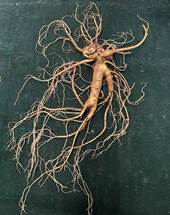
Figure 1 Forest-grown Panax ginseng of
Huadian Town, Ji’an City
|
As one of the most valued herbs in Traditional
Chinese Medicine (TCM), ginseng (Panax ginseng C. A. Meyer) has been
utilized for thousands of years due to its diverse pharmacological effects,
including promoting blood cell regeneration and regulating endocrine,
metabolic, and the central nervous system functions[1,2]. Wild
ginseng resources are now nearly depleted and have been designated as a Class I
nationally protected species in China. As a result, current production mainly
relies on field cultivation and forest-based conservation, producing “garden
ginseng” and “forest-grown Panax ginseng”, respectively. Forest-grown Panax
ginseng (also known as “under-forest seeds” or “wild-simulated ginseng”) is
cultivated by sowing seeds in forest environments that mimic natural habitats,
where the plants grow without further human intervention for at least 15 years[3,4].
Compared with garden ginseng, this cultivation method enables forest-grown Panax
ginseng to develop morphological features—traditionally described as the “Five forms and six
bodies”—and quality characteristics similar to those of wild ginseng[5,6].
Ji’an serves as the core production area for Changbai Mt. ginseng and has
maintained a long-standing traditional of mountain harvesting since the Qing
Dynasty[7]. Its superior product quality is attributed to several
key environmental factors: the unique coniferous-broadleaf mixed forest
ecosystem of the Laoling Mt. on the southern slopes of the Changbai Mt. range,
a temperate continental monsoon climate with favorable hydrothermal conditions,
and nutrient-rich volcanic soils (Figure 1).
Based on the technical specifications of the Global Change Research Data
Publishing & Repository (GCdataPR) World Data Center and the Geographical Indications
Environment & Sustainability (GIES) Initiative, this study develops a
comprehensive GIES dataset for the forest-grown Panax ginseng in the
temperate coniferous-broadleaf mixed forest of Huadian Town, Ji’an, aiming to
provide a scientific basis for ecological conservation and the sustainable
development of forest-grown ginseng
resources in Ji’an City[8–10].
2 Metadata of the Dataset
The
metadata information of the GIES case dataset on Ji’an forest-grown Panax ginseng
temperate conifer-broadleaf mixed forest in Huadian Town[11]
including the title, author, geographical region, data size, data file, etc.,
is summarized in Table 1.
3 Case Dataset Development
3.1 Case Area
Ji’an is a county-level city
of Tonghua City, Jilin Province, located in the southeastern part
Table 1 Metadata summary of GIES case dataset on
Ji’an forest-grown Panax ginseng temperate conifer-broadleaf mixed
forest in Huadian Town
|
Items
|
Description
|
|
Dataset full
name
|
GIES case
dataset on Ji’an forest-grown Panax ginseng temperate
conifer-broadleaf mixed forest in Huadian Town
|
|
Dataset short
name
|
Ji’anGinsengCase31
|
|
Authors
|
Zhu, W. B.,
Institute of Geographic Sciences and Natural Resources Research, Chinese
Academy of Sciences, zhuwb@igsnrr.ac.cn
Wang, F., Ji’an
Municipal Administration for Market Regulation, 78530413@qq.com
Zhao, Z. C.,
Institute of Geographic Sciences and Natural Resources Research, Chinese
Academy of Sciences, University of Chinese Academy of Sciences,
2558253110@qq.com
Cui, X. Y.,
People’s Government of Huadian Town, Ji’an City, Jilin Province
Xiang, L. F., Ji’an Municipal Administration for Market Regulation,
576325664@qq.com
Wei, G. Y.,
People’s Government of Ji’an City, Jilin Province
Wang, M., Ji’an
Ginseng Association, Jilin Province
Hou, J., Ji’an
Tianli Ecological Agriculture Co.,Ltd., Jilin Province,
15180396378@qq.com
Li, Q., Ji’an
Shenquantang Ginseng Planting Professional Cooperative, 18827935273@qq.com
Liu, J. X.,
China University of Geosciences, Beijing, jinxiuliu@cugb.edu.cn
Yao, Y., China
University of Geosciences, Beijing, yaoying20010820@163.com
|
|
|
Liu, H. B.,
China University of Geosciences, Beijing, 1937849173@qq.com
Sun, J. C.,
Jilin Binde Participation Co., Ltd., lnsxbm@163.com
Bai, H. G.,
Jilin Hongwuwei Biological Technology Co., Ltd., 1018030202@qq.com
Hong, X., Institute of Geographic Sciences and Natural Resources Research,
Chinese Academy of Sciences
Yang, X. Y.,
Institute of Geographic Sciences and Natural Resources Research, Chinese
Academy of Sciences
|
|
Geographic
region
|
Huadian Town, Ji’an City
|
|
Year
|
2025
|
|
Data format
|
.xlsx, .shp, .tif,
.jpg, .pdf, .docx
|
|
Data size
|
36.5 MB (18.2 MB
compressed)
|
|
Dataset files
|
Case area boundary, physical geography data, product characteristic
data, socioeconomic data, etc.
|
|
Foundation
|
Jilin Provincial
Administration for Market Regulation (2025)
|
|
Data publisher
|
Global Change
Research Data Publishing & Repository, http://www.geodoi.ac.cn
|
|
Address
|
No.11A, Datun
Road, Chaoyang District, Beijing 100101, China
|
|
Data sharing
policy
|
(1) Data
are openly available and can be free downloaded via the Internet; (2) End
users are encouraged to use Data
subject to citation; (3) Users, who are by definition also value-added
service providers, are welcome to redistribute Data subject to written permission from the GCdataPR Editorial
Office and the issuance of a Data
redistribution license; and (4) If Data
are used to compile new datasets, the “ten percent principle” should be
followed such that Data records
utilized should not surpass 10% of the new dataset contents, while sources
should be clearly noted in suitable places in the new dataset[12]
|
|
Communication
and searchable system
|
DOI, CSTR,
Crossref, DCI, CSCD, CNKI, SciEngine, WDS, GEOSS, PubScholar, CKRSC
|
of
the province. The city extends from 125°34ʹ33ʺE to 126°32ʹ48ʺE and 40°52ʹ7ʺN to
41°35ʹ18ʺN, encompassing a total administrative area of approximately 3,348.54
km2. It comprises 11 towns and 4 subdistricts. Geologically, Ji’an lies on
the southwestern foothills of the Changbai Mt.,
with the Laoling Mt. range traversing
the territory from northeast to southwest. The case area, Huadian Town, is
located on the western slopes of theLaoling Mt.
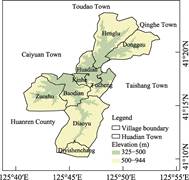
in northwestern Ji’an (Figure 2). Huadian Town covers an area of 155.49 km2
and, as of 2024, has a registered population of 9,414 and a permanent resident population
of 6,174, distributed across 1 community and 8 administrative villages.
3.2 Ecological and
Environmental Data
3.2.1 Topography
The
optimal growth of forest-grown Panax ginseng requires well-drained soils
and specific slope conditions, generally favoring gradients between 15° to 25°[13].
Situated at the southern foothills of the Changbai Mt., Ji’an is characterized by a mountainous landscape dominated
by the Laoling Mt. range, with an
overall topographical gradient descending from northeast to southwest. Based on
SRTM 30-m DEM data, slope reclassification
and raster-based statistical analysis reveal that approximately 42.24% of the
land area in Ji’an falls within the 15°–25° slope range. Huadian Town, a key
cultivation area for forest-grown Panax ginseng located in northwestern
Ji’an, features elevations ranging from 325 m to 944 m (Figure 2). The town is
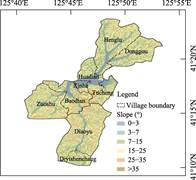
primarily composed of low mountains and gently undulating hills, with 47.61% of
the area—nearly half—with the optimal slope range of 15°–25° (Figure 3).
The hypsography is characterized by higher elevations in the north and south
and lower elevations in the central region. The widespread distribution of suitable
slopes provides natural drainage and geomorphological protection, creating
favorable conditions for the cultivation of forest-grown Panax ginseng.
|
|
|
|
Figure 2 Geo-location
and elevation classification map of Huadian Town
|
Figure 3 Slope classification map of Huadian
Town
|
3.2.2 Vegetation Coverage and Land Use
Using
Sentinel-2 satellite imagery with a spatial resolution of 10 m, the authors
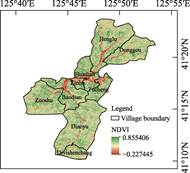
calculated the Normalized Difference Vegetation Index (NDVI) (Figure 4) and
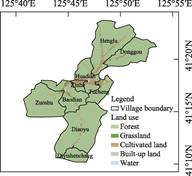
generated land-use/ land-cover (LULC) map (Figure 5) for Ji’an City and Huadian
Town. The NDVI results indicate dense vegetation cover across the region,
reflecting a superior ecological baseline. Land-use types in the case area
include forest, cropland, grassland, water bodies, and built-up land.
Forestland is the dominant land-use type in both Ji’an and Huadian Town, accounting
for approximately 81.46% and 83.17% of their total areas, respectively. These
extensive forest resources provide primary ecological niches and physical
environments for wild-simulated cultivation of forest-grown Panax ginseng,
serving as the fundamental resource endowment for the development of the
regional ginseng industry.
|
|
|
|
Figure 4 NDVI distribution
map of Huadian Town
|
Figure 5 Land use map of
Huadian Town
|
3.2.3 Vegetation Conditions
Forest-grown
Panax ginseng is a semi-shade-tolerant species that requires natural
shading throughout its growth cycle. It is sensitive to direct sunlight and
prefers diffuse light, making it well suited to broadleaf and
coniferous-broadleaf mixed forests with good canopy cover[14]. In
Ji’an, forest composition is dominated by Mongolian oak (Quercus mongolica),
linden (Tilia spp.), and Korean pine (Pinus koraiensis)[15].
The forest exhibits
a distinct vertical stratification. The canopy layer, dominated by oak and
linden, has a crown closure ranging from 0.6 to 0.8 and provides primary
shading. The shrub layer, mainly composed of hazel (Corylus spp.) and
bush clover (Lespedeza spp.), forms a secondary shading layer. The
herbaceous layer, consisting of ferns and mountain mugwort (Artemisia
spp.), constitutes a tertiary protective layer[16].
This well-developed
vertical structure not only provides natural shading but also contributes large
amount of plant litter each year. The decomposition of this litter continuously
enriches soil organic matter, creating an ideal habitat for ginseng growth.
3.2.4 Climatic Conditions
Ji’an
has a temperate continental climate characterized by synchronized heat and
precipitation and four distinct seasons. The Laoling Mt. range traverses the region, forming a natural barrier that
moderates the climate on its southern slopes. This results in semi-maritime
characteristics, including high humidity, abundant rainfall, and relatively low
wind speeds, earning the region the nickname “Little Jiangnan of Jilin”.
Consequently, Ji’an exhibits 4 climatic extremes within the province:
the highest annual average precipitation (800–1,000 mm), the highest annual
accumulated temperature (3,650 ℃), the longest frost-free period (approximately
150 d), and the lowest annual average wind speed (1.6 m/s). In Huadian Town,
the mean annual temperature is 6.2 ℃ and the average annual precipitation is
approximately 880 mm (Figure 6). This mild and humid environment, characterized
by synchronized water and heat conditions and low climatic stress, provides an
optimal foundation for the high-quality growth of forest-grown Panax ginseng.
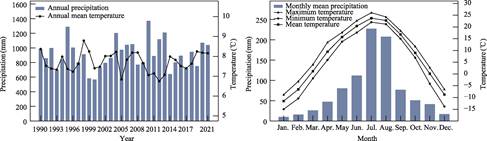
Figure 6 Statistical analysis of climatic
characteristics in Ji’an City
3.2.5 Soil Conditions
The
soil types in Ji’an transition from Phaeozems (black soil) to Luvisols (dark
brown forest soil) along an altitudinal gradient ranging from 325 m to 944 m.
These soils are typically weakly acidic and are rich in organic matter and
available nutrients.
For this study,
soil sampling and analysis were conducted within the Huadian Town case area. 3
topsoil sampling points were established at a depth of 0–20 cm. Additionally, a
1-m deep soil profile was excavated, and stratified samples were collected at
20 cm intervals (Figure 7a). During sampling, the profile surfaces were
meticulously leveled, cleared of superficial impurities, and documented
photographically.
The soil samples were analyzed for fertility
and environmental quality at the Physical and Chemical Analysis Center of the
Institute of Geographic Sciences and Natural Resources Research, Chinese
Academy of Sciences (IGSNRR, CAS). The assessment metrics included soil
fertility indicators: total nitrogen (TN), total phosphorus (TP), total
potassium (TK), organic carbon (TOC), and the carbon-to-nitrogen ratio (C/N),
as well as environmental
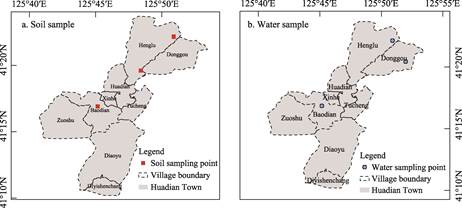
Figure 7 Distribution maps of soil and water
sampling sites in Huadian Town
safety
indicators, including pH and concentrations of cadmium (Cd), chromium (Cr),
lead (Pb), copper (Cu), nickel (Ni), zinc (Zn), mercury (Hg), and arsenic (As).
The analytical
results for nutrient indicators in surface soil samples are summarized in Table
2. Soil pH ranged from 5.33 to 5.38 (mean: 5.36), indicating weakly acidity
consistent with the growth requirements of Panax ginseng. TN content
ranged from 1.39 to 3.11 g/kg (mean: 2.64 g/kg). TOC concentrations were measured
between 16.79 and 42.32 g/kg (mean: 32.78 g/kg); utilizing the standard
conversion factor for organic carbon to organic matter, the resulting organic
matter content ranged from 28.96 to 72.93 g/kg.
The C/N ratio
fluctuated between 12.1 and 12.8 (mean: 12.4). Regarding macro-nutrients, TK
concentrations ranged from 21.92 to 24.68 g/kg (mean: 23.40 g/kg), while TP
ranged from 382 to 521 mg/kg (mean: 467 mg/kg). Both soil pH and organic matter
content meet the requirements specified in the national standard for
forest-grown Panax ginseng: Product of geographical indication—Jilin
Changbai Mountain ginseng (GB/T 19506—2009)[17].
Table 2 Statistical testing results of surface
soil fertility indicators in Huadian Town
|
Sample site
|
Elevation (m)
|
pH
|
Total nitrogen (g/kg)
|
Organic carbon (g/kg)
|
Carbon-to-nitrogen
ratio
|
Total potassium (g/kg)
|
Total phosphorus
(mg/kg)
|
|
Henglu
|
593.27
|
5.33
|
3.31
|
42.32
|
12.8
|
24.68
|
499
|
|
Donggou
|
398.10
|
5.38
|
3.21
|
39.22
|
12.2
|
23.60
|
521
|
|
Baodian
|
409.20
|
5.38
|
1.39
|
16.79
|
12.1
|
21.92
|
382
|
|
Maximum
|
593.27
|
5.38
|
3.31
|
42.32
|
12.8
|
24.68
|
521
|
|
Minimum
|
398.10
|
5.33
|
1.39
|
16.79
|
12.1
|
21.92
|
382
|
|
Mean
|
466.86
|
5.36
|
2.64
|
32.78
|
12.4
|
23.40
|
467
|
|
Limits[17]
|
/
|
5.5–6.5
|
/
|
1.74
|
/
|
/
|
/
|
Note:
/ indicates no corresponding standard limit.
The analytical
results for heavy metal concentrations in surface soil samples are detailed in
Table 3. Concentration ranges for Cd, Cr, Pb, Cu, Ni, and Zn were 0.09–0.18
mg/kg, 88.24–94.24 mg/kg, 16.37–23.23 mg/kg, 13.90–19.53 mg/kg, 26.01–33.48 mg/kg,
and 74.90–77.20 mg/kg, respectively. Corresponding mean values were 0.14
mg/kg, 91.25 mg/kg, 19.88 mg/kg, 16.93 mg/kg, 28.96 mg/kg, and 76.20 mg/kg.
Trace elements Hg and As were detected in ranges of 0.04 to 0.06 μg/kg (mean:
0.05 μg/kg) and 6.14 to 9.15 μg/kg (mean: 7.29 μg/kg). According to the Soil
environmental quality risk control standard for soil contamination of
agricultural land (Trial) (GB 15618—2018)[18], all measured values
are well below the specified risk screening thresholds. These results indicate
that no soil contamination risk in the study area.
Table 3 Statistical testing results of heavy
metal content in the surface soil samples of Huadian Town
|
Sample
site
|
Elevation
(m)
|
Cd
|
Cr
|
Pb
|
Cu
|
Ni
|
Zn
|
Hg
|
As
|
|
(mg/kg)
|
(μg/kg)
|
|
Henglu
|
593.27
|
0.16
|
88.24
|
23.23
|
19.53
|
26.01
|
77.20
|
0.06
|
9.51
|
|
Donggou
|
398.10
|
0.18
|
91.28
|
20.03
|
13.90
|
27.38
|
74.90
|
0.05
|
6.21
|
|
Baodian
|
409.20
|
0.09
|
94.24
|
16.37
|
17.36
|
33.48
|
76.50
|
0.04
|
6.14
|
|
Maximum
|
593.27
|
0.18
|
94.24
|
23.23
|
19.53
|
33.48
|
77.20
|
0.06
|
9.51
|
|
Minimum
|
398.10
|
0.09
|
88.24
|
16.37
|
13.90
|
26.01
|
74.90
|
0.04
|
6.14
|
|
Mean
|
466.86
|
0.14
|
91.25
|
19.88
|
16.93
|
28.96
|
76.20
|
0.05
|
7.29
|
|
Limits[18]
|
/
|
≤0.3
|
≤150
|
≤90
|
≤50
|
≤70
|
≤200
|
≤1,800
|
≤40,000
|
Note: / indicates no corresponding standard limit.
The analytical
results for deeper soil layers are presented in Table 4. Soil pH exhibited
minor fluctuations with depth, maintaining a stable weakly acidic profile and
demonstrating high vertical stability in soil acidity. Both TN and TOC
concentrations peaked in the surface layer (0–20 cm), decreased
significantly at 40 cm, and remained relatively stable in deeper layers.
Notably, a slight increase in TOC was observed at 80–100 cm depth. TK content
increased progressively with depth, while TP was highest in the surface layer
and decreased markedly below it before stabilizing.
Overall, soil
nutrients in the case area exhibit a pattern of surface accumulation and low
vertical heterogeneity, indicating relatively uniform distribution throughout
the profile. This vertical consistency facilitates downward root extension and
supports sustained nutrient uptake by ginseng.
Table 4 Statistics testing results of nutrient
content in soil profile of Huadian Town
|
Depth (cm)
|
pH
|
N (g/kg)
|
C (g/kg)
|
C/N ratio
|
K (g/kg)
|
P (mg/kg)
|
|
20
|
5.46
|
1.10
|
8.40
|
7.49
|
24.28
|
377
|
|
40
|
5.35
|
0.50
|
3.20
|
6.02
|
31.05
|
257
|
|
60
|
5.38
|
0.50
|
3.20
|
6.24
|
32.38
|
280
|
|
80
|
5.41
|
0.60
|
3.90
|
6.58
|
32.46
|
278
|
|
100
|
5.45
|
0.60
|
7.20
|
11.2
|
33.09
|
285
|
The concentrations
of heavy metals—Hg, As, Cd, Pb, Cr, Cu, Ni, and Zn—across various soil depths
remained well below national safety limits, indicating minimal environmental
risk (Table 5). The concentrations of Hg, As, and Cd exhibited negligible
fluctuations across the soil profile, demonstrating a highly uniform
distribution. In contrast, the concentrations of
Ni, Zn, Cr, Pb, and Cu showed a gradual increase with depth. Despite these
variations, the absolute values of all heavy metal concentrations remained at
low levels, consistently falling significantly below the risk screening
thresholds defined in the Soil environmental quality risk control standard for
soil contamination of agricultural land (Trial) (GB 15618— 2018)[18].
Table 5 Statistical testing results of heavy
metal content in soil profile in Huadian Town
|
Testing item
|
Limits[18]
|
20 cm
|
40 cm
|
60 cm
|
80 cm
|
100 cm
|
|
Hg (μg/kg)
|
≤1,800
|
0.04
|
0.03
|
0.03
|
0.03
|
0.03
|
|
As (μg/kg)
|
≤40,000
|
5.27
|
4.18
|
4.53
|
4.39
|
3.89
|
|
Cd (mg/kg)
|
≤0.3
|
0.07
|
0.06
|
0.06
|
0.06
|
0.07
|
|
Pb (mg/kg)
|
≤90
|
20.95
|
21.65
|
25.13
|
27.69
|
24.99
|
|
Cr (mg/kg)
|
≤150
|
91.05
|
87.86
|
83.54
|
101.24
|
101.66
|
|
Cu (mg/kg)
|
≤50
|
19.70
|
23.23
|
21.81
|
24.46
|
24.63
|
|
Ni (mg/kg)
|
≤70
|
32.23
|
39.79
|
42.78
|
47.18
|
46.21
|
|
Zn (mg/kg)
|
≤250
|
74.91
|
81.51
|
90.70
|
93.18
|
93.44
|
3.2.6 Water Conditions
Ji’an
is rich in water resources, with a total volume of 1.765 billion m3,
including 870 million m3 of surface water resources. The river
system in Huadian Town belongs to the Hunjiang River Basin, with a catchment
area of 156.4 km2. To correspond with the spatial distribution of
the soil sampling points, 3 surface water sampling sites were established in
the case area (Figure 7b). Samples were analyzed by the Physical and Chemical
Analysis Center of the IGSNRR, CAS and Centre Testing International (Henan)
Co., Ltd.
The analytical
parameters included 8 environmental indicators: pH, suspended solids,
biochemical oxygen demand (BOD), chemical oxygen demand (COD), anionic
surfactants, chloride, sulfide, and total salt. Additionally, 8 heavy metal
indicators were assessed: Cd, Cr, Zn, Pb, Cu, Ni, As, and Hg.
The analytical
results for surface water samples are summarized in Table 6. The pH fluctuated
within an extremely narrow range of 7.53 to 7.56, indicating high stability in
alkalinity. Suspended solids ranged from 1 to 2 mg/L (mean: 1.67 mg/L), while
BOD ranged from 2.4 to 2.6 mg/L (mean: 2.47 mg/L). COD was recorded at a
constant 6 mg/L. Notably, anionic surfactants and sulfides were not detected
(below the analytical method’s detection limits). Chloride concentrations
ranged from 2.20 to 2.91 mg/L (mean: 2.63 mg/L), and the total salt ranged from
60 to 63 mg/L (mean: 61.33 mg/L), both significantly below standard thresholds.
Overall, all tested indicators were found to be well below the limits
established in the Standard for irrigation water quality (GB 5084—2021)[19].
The detection results of heavy metal
indicators in water samples from the case area are shown in Table 7. Hexavalent
chromium, arsenic, and mercury were all below the detection limit in all
samples. The concentrations of nickel, copper, zinc, cadmium, and lead ranged
from 0.02–0.04 μg/L, 0.20–0.36 μg/L, 0.26–28.20 μg/L, below detection limit to
0.002 μg/L,
Table 6 Statistical testing
results of water environmental indicators in Huadian Town
|
Sample site
|
Elevation (m)
|
pH
|
Suspended solids
(mg/L)
|
BOD
(mg/L)
|
COD
(mg/L)
|
Anionic synthetic
(mg/L)
|
Chloride
(mg/L)
|
Sulfide
(mg/L)
|
Total salt (mg/L)
|
|
Henglu
|
571.8
|
7.53
|
2
|
2.4
|
6
|
ND
|
2.77
|
ND
|
61
|
|
Donggou
|
389.4
|
7.56
|
1
|
2.4
|
6
|
ND
|
2.20
|
ND
|
60
|
|
Baodian
|
360.2
|
7.53
|
2
|
2.6
|
6
|
ND
|
2.91
|
ND
|
63
|
|
Maximum
|
571.8
|
7.56
|
2
|
2.6
|
6
|
ND
|
2.91
|
ND
|
63
|
|
Minimum
|
360.2
|
7.53
|
1
|
2.4
|
6
|
ND
|
2.20
|
ND
|
60
|
|
Mean
|
440.47
|
7.54
|
1.67
|
2.47
|
6
|
ND
|
2.63
|
ND
|
61.33
|
|
Limits[19]
|
/
|
5.5–8.5
|
100
|
100
|
200
|
8
|
350
|
1
|
1,000
|
Note:
/ indicates that no limit is specified in
the standard; ND indicates not detected.
Table 7 Statistical results of water heavy metal
indicators in Huadian Town
|
Sample site
|
Elevation (m)
|
Cr
(μg/L)
|
Ni
(μg/L)
|
Cu
(μg/L)
|
Zn
(μg /L)
|
Cd
(μg/L)
|
Pb
(μg/L)
|
As
(μg/L)
|
Hg
(μg/L)
|
|
Henglu
|
571.8
|
ND
|
0.03
|
0.20
|
0.26
|
ND
|
0.004
|
ND
|
ND
|
|
Donggou
|
389.4
|
ND
|
0.04
|
0.21
|
28.20
|
0.002
|
0.007
|
ND
|
ND
|
|
Baodian
|
360.2
|
ND
|
0.02
|
0.36
|
6.46
|
0.001
|
0.006
|
ND
|
ND
|
|
Maximum
|
571.8
|
ND
|
0.04
|
0.36
|
28.20
|
0.002
|
0.007
|
ND
|
ND
|
|
Minimum
|
360.2
|
ND
|
0.02
|
0.20
|
0.26
|
ND
|
0.004
|
ND
|
ND
|
|
Mean
|
440.47
|
ND
|
0.03
|
0.26
|
11.62
|
0.0015
|
0.0057
|
ND
|
ND
|
|
Limits[19]
|
/
|
≤100
|
≤200
|
≤1,000
|
≤2,000
|
≤10
|
≤100
|
≤100
|
≤1,000
|
|
Limits[20]
|
/
|
≤10
|
/
|
≤10
|
≤50
|
≤1
|
≤10
|
≤50
|
≤0.05
|
Note:
/ indicates that no limit is specified in
the standard; ND indicates not detected.
and
0.004–0.007 μg/L, respectively; with mean values of 0.03 μg/L, 0.26 μg/L, 11.62
μg/L, 0.0015 μg/L, and 0.0057 μg/L, respectively. The heavy metal
concentrations in the water samples were all far below the risk screening
values of the standard GB 5084—2021[19], and the results also met
the Class I water criteria of the Environmental quality standards for surface
water (GB 3838—2002)[20], indicating that there is no risk of
agricultural water pollution in the case area and the water quality is
excellent.
3.3 Product Quality Data
The
primary cultivars of forest-grown Panax ginseng in Ji’an are “Changbo”
and “Ermaya”, which are characterized by vigorous growth and robust main roots,
effectively balancing biomass yield with morphological aesthetics. Mature
specimens exhibit a slender, curved rhizome (lu-tou), commonly known as
the “swan-neck rhizome” (yan-bo-lu), with sparse stem scars (lu-wan).
The main root is typically spindle-shaped, featuring mature epidermal texture
with deep and continuous “iron-line” transverse rings. Fibrous roots are
elongated and resilient, marked by prominent “pearl spots” (nodules) and
occasional scars (Figure 8). These morphological characteristics meet the “Five forms and six bodies” criteria specified in the national standard Identification and
grade quality standards of wild ginseng (GB/T 18765—2015)[3].
|
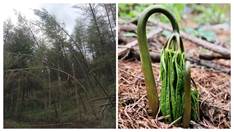
Figure 8 Growth habitat and growth process of forest-grown ginseng
|
In this study, the
chemical composition and heavy metal concentrations of forest-grown Panax
ginseng from Ji’an were evaluated. Samples were analyzed by Ji’an
Traceability Inspection, Testing, and Certification Co., Ltd. Measured
parameters included moisture, total ash, acid-insoluble ash, total
ginsenosides, ginsenoside Rb1, and ginsenosides Re+Rg1.
Heavy metals analyzed included As, Pb, Cu, Cd, and Hg. The analytical results
are summarized in Tables 8 and 9.
Moisture content
ranged from 6.67% to 11.70% (mean: 9.19%), total ash from 3.90% to 4.26% (mean:
4.08%), acid-insoluble ash at 0.63%, total ginsenosides from 6.11% to 6.33%
(mean: 6.22%), ginsenoside Rb1 from 0.68% to 2.90% (mean: 1.79%),
and ginsenosides Re+Rg1 from 0.93% to 3.10% (mean: 2.05%). All
chemical constituents met the requirements stipulated in the national standard
Identification and grade quality standards of wild ginseng[3]. Heavy
metals As and Hg were not detected. Pb, Cu, and Cd concentrations were 0.37
mg/kg, 3.30 mg/kg, and 0.07 mg/kg, respectively, all well below the limits
defined in the Pharmacopoeia of China[1].
Table 8 Statistical testing results of
forest-grown Panax ginseng components in Huadian Town
|
Sample No.
|
Moisture (%)
|
Total ash (%)
|
Acid insoluble ash
(%)
|
Total ginseng
saponins (%)
|
Rb1
(%)
|
Re+Rg1
(%)
|
|
1
|
11.7
|
3.90
|
0.63
|
6.33
|
0.68
|
0.93
|
|
2
|
6.67
|
4.26
|
0.63
|
6.11
|
2.90
|
3.10
|
|
mean
|
9.19
|
4.08
|
0.63
|
6.22
|
1.79
|
2.05
|
|
Limits[3]
|
8.00
|
5.00
|
1.00
|
4.40
|
0.40
|
0.60
|
Table 9 Statistical testing results of heavy
metal content of forest-grown Panax ginseng in Huadian Town
|
Sample No.
|
As (mg/kg)
|
Pb (mg/kg)
|
Cu (mg/kg)
|
Cd (mg/kg)
|
Hg (mg/kg)
|
|
1
|
ND
|
0.37
|
3.30
|
0.07
|
ND
|
|
Limits[1]
|
≤2.00
|
≤0.50
|
≤20.00
|
≤0.50
|
≤0.10
|
Note:
ND indicates not detected.
4 Forest-Grown Panax Ginseng
Industry Management
4.1 Socioeconomic
Development
According
to the Jilin Statistical Yearbook[21], Ji’an had a total population
of 205,300 in 2022, including 119,900 rural residents. From 2019 to 2023, its
Gross Domestic Product (GDP) increased from 5.5 billion CNY to 7.93 billion
CNY, representing an average annual growth rate of 8.7% and reflecting a
fluctuating yet upward trajectory. The primary industry accounted for
approximately 12% of GDP (Figure 9).
The ginseng
industry serves as a traditional competitive advantage and a pillar industry
for Ji’an. In 2022, forest-grown Panax ginseng contributed 62.5% of the
added value of the primary industry, with approximately 60% of farmers’ income
linked to ginseng production[22]. Leveraging its geographical
advantage as a core production area of Changbai Mt. ginseng, Ji’an has developed an integrated model combing
ginseng production, tourism and ecological conservation. The city has been
designated as the “Hometown of Chinese Ginseng” and a “National Non-timber
Forest Economy Demonstration Base”, effectively stimulating industrial and
agricultural production while significantly boosting rural incomes and
providing vital support for local economic growth.
In Huadian Town,
the registered population in 2024 was 9,414, with 6,174 permanent residents; In
2021, total ginseng cultivation area reached 318 ha, yielding an output value
of 28.78 million CNY. By 2024, the cultivation area specifically dedicated to
forest-grown Panax ginseng reached 169.13 ha, reflecting a substantial
industrial scale.
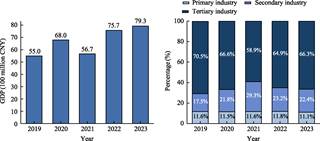
Figure 9 Statistical chart of economic development
of Ji’an City
4.2 Cultivation History of
Forest-Grown Panax Ginseng
Ginseng
serves as the core industrial identity of Ji’an. Ji’an has a history of nearly
400 years of ginseng cultivation and is widely known as the “Hometown of
Chinese Ginseng”. In the 1990s, to address ecological damage caused by
traditional deforestation-based cultivation, Ji’an pioneered under-forest seed
sowing techniques that simulate natural growth conditions of wild ginseng.
Following the nationwide ban on deforestation for ginseng cultivation in 2013,
Ji’an actively responded by fully promoting under-forest sowing techniques.
During this transition, Huadian Town emerged as a key pilot area due to its
favorable forest conditions.
Building upon these
achievements in ecological transformation, the Ji’an Modern Agricultural
Industrial Park was recognized in 2017 as one of China’s first national-level
modern agricultural industrial parks and remains the only one dedicated
specifically to ginseng, thereby laying a solid foundation for industrial
intensification. In 2018, Ji’an developed a high-standard development plan for
the ginseng industrial park, establishing an industrial layout characterized by
“one core, one center, and seven bases”[22]. By 2022, 5 major
technological production demonstration bases had been completed. This was
followed by the launch of operations at the National Inspection and Testing
Center for Ginseng and Local Chinese Medicinal Materials in 2023, and the
establishment in 2024 of the inaugural Ginseng Market Legal Service Center,
aimed at combating counterfeit products and standardizing trade practices.
Currently, Huadian
Town has completed a fundamental transformation in its ginseng cultivation
model, shifting from traditional forest-land utilization to wild-simulated
under-forest systems, and from extensive to standardized management. Building
on these advancements, the locality has prioritized the development of a
comprehensive industrial chain and successfully explored an innovative
“Ecology+” development model. This approach has paved a sustainable pathway for
green development characterized by overall improvements in quality, efficiency,
and industrial structure.
4.3 Cultivation Management
of Forest-Grown Panax Ginseng
4.3.1 Site Selection and Preparation
Forest-grown
Panax ginseng has highly specific environmental requirements for optimal
growth. Cultivation sites should be located within broadleaf mixed forests with
a canopy closure of 0.6 to 0.8, ensuring protection from direct solar
radiation. Topographically, the slope gradient of 10°–25° are preferred to
facilitate natural drainage and prevent waterlogging[23]. The forest
soil should be loose in texture, rich in humus, and possess good water
retention and aeration capacity. Suitable soil types include black sandy humus
soil, sandy loam, and standard loam[13].
To ensure seedling
survival, appropriate site preparation and clearing are required prior to
planting. This involves selectively thinning overly dense trees, removing
weeds, and underbrush below 1 m in height, and clearing excessive forest
litter. However, where the litter layer is thin, it should be retained as a
natural mulch to decompose and supply nutrients for ginseng growth[24].
4.3.2 Seed Preparation and Field Management
Panax
ginseng seeds encompass several cultivated
varieties, notably Ermaya, Changbo, and Yuanbang Yuanlu,
each with distinct morphological and biochemical characteristics. Among these,
the Ermaya cultivar is highly favored due to its elongated rhizome,
tapered shoulder, prominent main root, and distinct lateral roots. It is also
characterized by higher concentrations of active saponins, such as ginsenosides
Rb1 and Re[25]. Accordingly, Ermaya is
predominantly cultivated in forest stands dominated by Mongolian oak (Quercus
mongolica), linden (Tilia spp.), and hazel (Corylus spp.)[26].
Prior to planting, seeds undergo artificial stratification to stimulate
germination. Once the seed coat softens and turns deep red, the fruits are
harvested, depulped to remove the exocarp and mesocarp, and cleaned before
sowing. Autumn sowing is commonly adopted, with seeds dibbled into furrows and
covered with soil, after which they are left to grow naturally with minimal
human intervention.
Management of
forest-grown Panax ginseng in Ji’an strictly adheres to the “Five-No
Principle”[26]: no transplanting, no soil disturbance, no artificial
shading structures, no fertilization, and no weeding, representing a
wild-simulated, low-intervention management approach. Specific protective
measures include installing wire mesh fencing around cultivation sites to
prevent disturbance by humans and livestock[27]. The application of
chemical fertilizers and synthetic pesticides is strictly prohibited throughout
the growth cycle. For the first three years after emergence, weeding is
generally unnecessary; thereafter, only weeds taller than the ginseng plants
are removed. For plants older than 5 years, periodic clearing of encroaching
branches and shrubs is required to maintain suitable light conditions[28].
Furthermore, for plants
older than 8 years, floral thinning and bud removal are
practiced to reduce reproductive energy expenditure and promote root
development.
4.3.3 Harvesting and Processing
The
optimal harvest period for forest-grown Panax ginseng is after
approximately 15 years of growth, specifically during September–October when
the stems and leaves begin to senesce. After harvesting, farmers transport
fresh roots—retaining adhering soil—to specialized cooperatives or local
processing facilities for cleaning and primary treatment. This process
integrates traditional methods with modern standards: soil is gently removed
using purified running water, damaged sections are meticulously trimmed, and
preliminary sorting is conducted based on morphology, size, and integrity.
Through this standardized processing, cooperatives ensure high levels of cleanliness
and consistency in grading, establishing a solid quality foundation for
subsequent desiccation, dehydration, and intensive processing.
As of 2024, Ji’an
had more than 1,800 ginseng-related business entities covering the entire
industrial chain, from cultivation and processing to marketing. This includes
126 processing enterprises, among which are 1 national-level key leading
enterprise in agricultural industrialization, 4 provincial-level leading
enterprises, and 16 enterprises above designated size. The city possesses an
annual processing capacity of 9,000 t, with an actual annual throughput of
approximately 6,000 t. Notably, 7 intensive processing enterprises each process
over 600 t annually, representing about 10% of the total volume. Ji’an has achieved
full utilization of the ginseng plant—including roots, stems, leaves, flowers,
and fruits. Its range of deep-processed products ranks among the most diverse
in China, with over 600 products developed across 4 major categories: food,
pharmaceuticals, health supplements, and cosmetics[29,30].
4.4 Sustainable Development
of the Forest-Grown Panax Ginseng Industry
4.4.1 Policy Support
Governmental
policy support has played a critical role in promoting the development of the
ginseng industry in Ji’an. By leveraging leading enterprises, the city has
facilitated vertical integration across the industrial chain, connecting
primary, secondary, and tertiary sectors. This development model is anchored in
traditional cultivation, driven by advanced planting technologies, and
supported by intensive product processing, and complemented by agritourism,
ultimately promoting sustainable ecological agriculture[30].
Ji’an has
formulated high-standard development plans for its ginseng industrial parks,
defining a spatial layout of “one core, one center, and seven bases” and
implementing a “company+production base” operational model to maximize land-use
efficiency and resource integration[31]. By prioritizing full-chain
development and high-end industrialization, the city is strategically
positioning itself to build a 100-billion CNY ginseng industrial cluster[32,33].
In 2024, the ginseng industry contributed approximately 80% to local farmers’
income, while the total output value of the entire ginseng industrial chain
reached 16 billion CNY, indicating a rapid transition toward high-quality
development.
Huadian Town has
actively implemented municipal-level policies by establishing standardized
cultivation bases, strengthening benefit-sharing mechanisms between
entrepreneurial leaders and demonstration bases, promoting
industry-university-research collaborations, and exploring “Ecology+”
industrial integration. These specific measures have effectively translated
municipal strategic blueprint into tangible local practices.
4.4.2 Technological Empowerment
Ji’an
hosts the only national-level modern agricultural industrial park in China
dedicated to ginseng as its leading industry. In recent years, the city has
fostered collaborative innovation through industry-university-research
partnerships. By leveraging platforms such as the Jilin Ginseng Science and
Technology Backyard (STB) cluster—the first national-level STB in China focused
on ginseng processing—and through collaboration with research institutions including Jilin Agricultural University, the city
has focused on frontier technologies including rare saponin transformation and
probiotic fermentation. This dual-driven model of “expert think
tanks+technology incubation” has accelerated the transition of the forest- grown
Panax ginseng industry from traditional cultivation to high-value-added
intensive processing.
To further ensure
product quality, the “One Ginseng, One Code” traceability platform was
officially launched in June 2024. By utilizing “QR code + blockchain” technologies,
the platform establishes a three-tier traceability system that enables
stakeholders to verify key information such as geographical origin, cultivation
age, and ginsenoside content, thereby achieving full lifecycle quality control.
The China-Qinghe (Aoyang) Wild Ginseng International Trading Center, located in
Qinghe Town, serves as the primary trading hub for forest-grown Panax
ginseng. It has fully implemented this system, ensuring stringent quality
supervision throughout the transaction process.
4.4.3 Cultural and Tourism Integration
Ji’an
has strategically centered its industrial evolution on ginseng culture,
fostering deep integration between the forest-grown Panax ginseng
industry and cultural tourism. The development of the “Ji’an-Qinghe Wild Ginseng
Town” serves as a primary platform for this synergy, hosting major events such
as the “Chinese Farmers’ Harvest Festival & Ji’an-Qinghe Wild Ginseng
Festival”. These festivals feature innovative activities including “Ginseng
King” competitions, ginseng-themed banquets, and the release of digital
collectibles. Furthermore, the development of the Jilin Xianshen Valley Tourism
and Wellness Resort has introduced specialized programs such as ginseng-based
medicinal cuisine and forest therapy (Shinrin-yoku).
Huadian Town has actively explored the “Ecology+” development pathway
by leveraging its forest-grown Panax ginseng bases to develop forest
tourism and experiential harvesting activities. By inviting tourists to
participate in the full cultivation and harvesting cycle, the town has
effectively advanced the integrated development of the ginseng and tourism
sectors.
4.4.4 Ecological Environment Traceability for Forest-Grown Panax Ginseng
|
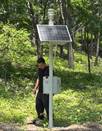 
Figure 10 GIES ground station in Huadian
Town
|
To
enhance the real-time monitoring of forest-grown Panax ginseng growth, a
GIES ground station has been established in Xianshen Valley, Ji’an (Figure 10).
The monitoring suite integrates a comprehensive array of sensors to measure key
environmental parameters, including air temperature, relative humidity, wind
speed, atmospheric pressure, precipitation, and light intensity. Additionally,
the system tracks ecological indicators such as negative oxygen ion
concentration, alongside edaphic parameters including soil moisture and
electrical conductivity. This integrated monitoring framework enables
continuous, real-time observation of both the physiological growth status of
forest-grown Panax ginseng and surrounding environmental conditions.
5 Conclusion
Huadian
Town in Ji’an City possesses highly suitable and abundant habitat conditions
for forest-grown Panax ginseng, enabling the production of high-quality
specimens. Ji’an forest-grown Panax ginseng is characterized by a high
concentration of total ginsenosides and is particularly rich in bioactive
compounds such as ginsenoside Rb1 and the Re+Rg1 complex,
conferring significant medicinal value. To further consolidate the leading
position of the Ji’an forest-grown Panax ginseng in the national market,
the following strategic recommendations are proposed: (1) Standardization and
quality control. Efforts should be continued to refine and advance the
standardized production of forest-grown Panax ginseng and its
derivatives. This includes enhancing scientific research, manufacturing
technologies, and quality management systems to ensure safety and consistency.
(2) Innovation and R&D systems. It is essential to further strengthen the
industrial innovation and R&D framework. Priority should be given to
supporting specialized research projects and providing incentives for the
development of new products, cutting-edge technologies, and advanced processing
techniques. (3) Brand building and market positioning. Strengthening the brand
identity of Ji’an forest-grown Panax ginseng is essential. This entails
establishing a robust brand standard system and innovating marketing models to
enhance market competitiveness and consumer trust, thereby leveraging brand
value to drive overall industrial upgrading. (4) Ecological integration. The
“Ecology+” development trajectory in Huadian Town should be continuously
advanced. Emphasis should be placed on the coordinated development of
ecological conservation and industrial expansion, ensuring that ginseng
cultivation remains aligned with environmental protection and long-term
sustainability goals.
Author Contributions
Zhu, W. B. was responsible
for the overall design and supervision of the manuscript. Zhao, Z. C. was
responsible for manuscript writing and figure preparation. Zhu, W. B., Zhao, Z.
C., Yao, Y., Liu, H. B., Wang, F. and Xiang, L. F. participated in field
investigation and sample collection. Liu, J. X. provided detailed guidance for
the completion of the work. Yao, Y. and Liu, H. B. conducted data curation.
Wang, F. and Xiang, L. F. provided industry standards and data on the ginseng
cultivation area. Hou, J., Sun, J. C. and Bai, H. G. provided economic data on
the development of the forest-grown Panax ginseng industry in Ji’an.
Cui, X. Y. and Wei, G. Y. provided industrial and social data for Huadian Town.
Wang, M. and Li, Q. provided detailed guidance for identifying and evaluating forest-grown
Panax ginseng.
Acknowledgments
We
are grateful to the leaders and staff of Ji’an City for their support and
cooperation during sampling. Our sincere thanks go to Professors Wang, Z. B.,
Liu, C., Song, X. F. from IGSNRR, CAS, for their guidance on project
initiation, research roadmap, dataset quality, and manuscript writing. The
authors express their deep appreciation to all.
Conflicts of Interest
The
authors declare no conflicts of interest.
References
[1]
China Pharmacopoeia Commission.
Pharmacopoeia of China, 2020 Edition, Volume I [M]. Beijing: China Medical
Science Press, 2020.
[2]
Wang, S. M., Chen, X., Sun, Q.,
et al. Research progress on chemical composition and pharmacological
effects of ginseng [J]. Infection, Inflammation and Repair, 2024, 25(3):
250–254.
[3]
General Administration of
Quality Supervision, Inspection and Quarantine of P. R. China, National
Standardization Administration. Identification and grade quality standards of
wild ginseng (GB/T 18765—2015) [S]. Beijing: Standards Press of China, 2015.
[4]
Hao, C. Y., Li, Y. Research
progress on forest-grown Panax ginseng [J]. Journal of Jilin Medical
University, 2011, 32(2): 105–108.
[5]
Chen, Y. R., Han, M., Cheng,
L., et al. Correlation between ginsenoside content and ecological
factors in forest-grown Panax ginseng [J]. Chinese Traditional and
Herbal Drugs, 2023, 54(8): 2588–2595.
[6]
Wang, Y. D., Han, L. S., Li, G.
Y., et al. Research on the differences in trait identification, chemical
compositions and pharmacological effects of forest-grown Panax ginseng
and garden ginseng [J]. Jilin Journal of Traditional Chinese Medicine,
2024, 44(7): 847–851.
[7]
Ji’an County Local Records
Compilation Committee. Ji’an County Annals [M]. Beijing: Zhonghua Book Company,
1995: 287–289.
[8]
Liu, C., Gong, K., Liu, Y. H., et
al. An innovative solution on geographical
indications for environment & sustainability (GIES) [J]. Journal of
Global Change Data & Discovery, 2021, 5(3): 237–248. https://doi.org/10.3974/geodp.2021.03.03.
[9]
Song, X. F., Yu, J. Q., Qi, W.,
et al. GIEs case dataset on Panshi Qiantang (Thousands Reservoirs) rice
in permanent farmland, Jilin Province of China [J]. Journal of Global Change
Data & Discovery, 2022, 6(2): 157–168.
https://doi.org/10.3974/geodp.2022.02.01.
[10] Wang, Z. X. Summary report of the 2 show cases symposium on GI
environment and sustainability [J]. Journal of Global Change Data &
Discovery, 2021, 5(1): 109. https://doi.org/10.3974/geodp.2021.01.15.
[11] Zhu, W. B., Wang, F., Zhao, Z. C., et al. GIES case dataset
on Ji’an forest-grown Panax Ginseng temperate conifer-broadleaf mixed
forest in Huadian Town [J/DB/OL]. Digital Journal of Global Change Data
Repository, 2026. https://doi.org/10.3974/geodb.2026.02.06.V1.
[12] GCdataPR Editorial Office. GCdataPR data sharing policy [OL].
https://doi.org/10.3974/dp.policy.2014.05 (Updated 2017).
[13] Zhen, G. Y. Cultivation techniques of forest-grown Panax ginseng
in the mountainous areas of eastern Liaoning [J]. Journal of Jilin Forestry
Science and Technology, 2017, 46(1): 43–45.
[14] Chen, H. W., Yin, M. F., Liu, N., et al. A study on the
structure and characteristics of herbage layer communities in forest-grown Panax
ginseng planting sites in mountainous areas of eastern Liaoning [J]. Journal
of Northwest Forestry University, 2005, 20(2): 61–63.
[15] Li, J. Q. Analysis and evaluation of forest resources status in
Ji’an City [J]. Agricultural Development & Equipment,
2015(11): 31, 47. DOI: 10.3969/j.issn.1673-9205.2015.11.026.
[16] Zheng, D. J., Zhao, X. L., Tian, Y. Q., et al. Cultivation
techniques of forest-grown ginseng [J]. Ginseng Research, 2009, 21(1):
34–37. DOI: 10.3969/j.issn.1671-1521.2009.01.010.
[17] General Administration of Quality
Supervision, Inspection and Quarantine of P. R. China, National Standardization
Administration. Product of geographical
indication—Jilin Changbai Mountain ginseng (GB/T 19506—2009) [S]. Beijing:
China Standards Press, 2009.
[18] Ministry of Ecology and Environment of P. R. China, State
Administration for Market Regulation. Soil environmental quality risk control
standard for soil contamination of agricultural land (Trial) (GB 15618—2018)
[S]. Beijing: China Environment Publishing Group, 2018.
[19] Ministry of Ecology and Environment of P. R. China, State
Administration for Market Regulation. Standard for irrigation water quality (GB
5084—2021) [S]. Beijing: China Environment Publishing Group, 2021.
[20] State Environmental Protection Administration, General
Administration of Quality Supervision, Inspection and Quarantine of P. R. China.
Environmental quality standards for surface water (GB 3838—2002) [S]. Beijing:
China Environmental Science Press, 2002.
[21] National Bureau of Statistics. Jilin Statistical Yearbook: 2019–2023
[M]. Beijing: China Statistics Press, 2020–2024.
[22] Ding, H. W., Xu, W. J. A green development path with flourishing
prospects—chronicle of innovation and development in the ginseng industry of
Ji’an City [J]. Jilin Agriculture, 2019(10): 16–17.
[23] Miao, X. Y., Zhan, Y., Yan, N., et al. Research progress on
chemical constituents and cultivation techniques of forest-grown ginseng [J]. Special
Wild Economic Animal and Plant Research, 2022, 44(6): 129–135.
[24] Li, X. S. Effects of different site conditions on the growth of
forest-grown ginseng [J]. Contemporary Horticulture, 2019(3): 9–10.
[25] Xu, B. H., Ma, W. R., Dong, X. J. Cultivation techniques for forest-grown
ginseng [J]. Agriculture and Technology, 2018, 38(22): 120.
[26] Zhao, Y. H., Sun, W. C. Inspection report on forest-grown
ginseng in Qinghe Town, Ji’an [J]. Ginseng Research, 2012, 24(4): 45–47.
[27] Zhang, K. Brief discussion on the cultivation and management of forest-grown
ginseng [J]. Biotech World, 2015(9): 53.
[28] Zhang, X., Zhang, L. Q., Liu, C., et al. Current status of
the ginseng industry in Ji’an [J]. Ginseng Research, 2018, 30(3): 53–54.
[29] Zhang, Z. C., Chen, X. L., Zhang, K. X., et al. Current
status and development countermeasures of ginseng industry in Jilin Province
[J]. Journal of Jilin Agricultural University, 2023, 45(6): 649–655.
[30] Jiang, Z. J., Fan, J., Huang, J. Y. Farmers’ willingness to
participate in rural industrial integration and its influencing factors: an
investigation based on the integration of ginseng industry in Ji’an City [J]. Journal
of Hunan Agricultural University (Social Sciences), 2018, 19(6):
37–42.
[31] Zhang, K. X., Wang, K. X., Zhang, R., et al. Current status
and countermeasures of ginseng seed industry development in Jilin Province
[J/OL]. Special Wild Economic Animal and Plant Research, 2026(1): 1–5.
https://doi.org/10.16720/j.cnki.tcyj.2024.117.
[32] The People’s Government of Jilin Province. The 14th five-year plan
for the development of Changbai Mountain ginseng industry in Jilin Province
[EB/OL]. (2021-12-28) [2026-04-17].
http://www.jl.gov.cn/szfzt/jlssxsxnyxdh/jb/202201/P020221130726419451193.pdf.
[33] The People’s Government of Jilin
Province. Opinions of the General Office of the People’s Government of Jilin Province on accelerating the high-quality development of the ginseng industry
in Jilin Province [EB/OL]. (2022-05-26) [2026-04-17]. http://xxgk.jl.gov.cn/szf/gkml/202205/t20220526_8460167.html.