GIES Case Study on Fusong Ginseng Facility
Agriculture
WANG Jianguo1 CHENG Xiaolin1 WANG Ding2 WANG Gang2
GAO Jiantang3 ZHU Honglaing
4 DU Yuchuan3 ZHANG Wenxuan1 LI Hao4 WANG Xiang4 LI Zhenyu5 JIE Zhongyi6 YU Haijun7 SHI Lei8 HOU Yubin9 LIU Weiyan10 XU Huaiyou11 MA Youde11,12 GUO Xingjun13 QIN Shouzhi14 YANG Fan4 YAN He4 XU Xuanwei15 WANG Lei16 CHEN Shengbo17 WANG Zhenbo18
1. College of Earth Sciences, Jilin University, Changchun
130061, China; 2. People’s Government of Fusong County, Fusong 134500, China; 3. Fusong County Market Supervision and Administration Bureau, Fusong
134500, China; 4. Ginseng Industry Development Center of Fusong County, Fusong
134500, China; 5. People’s Government of Songjianghe
Town, Fusong County, Fusong 134504, China; 6. People’s Government of Quanyang
Town, Fusong County, Fusong 134505, China; 7. People’s Government of Donggang
Town, Fusong County, Fusong 134511, China; 8. People’s Government of Wanliang
Town, Fusong County, Fusong 134521, China; 9. Fusong County Ginseng
Association, Fusong 134505, China; 10. Fusong Ginseng Agricultural Technology
Co., Ltd., Fusong 134500, China; 11. Jilin Shenwang Plant Protection Co., Ltd.,
Fusong 134500, China; 12. Baishan City
Ginseng Industry Development Association, Baishan 134000, China; 13. Jilin
Fusong Ginseng Quality Testing Center (Fusong County Ginseng Research
Institute), Fusong 134500, China; 14. Juqian Ginseng Breeding and Planting
Professional Cooperative of Xiaoshan Village, Songjianghe Town, Fusong County,
Fusong 134500, China; 15. Quality Supervision, Inspection and Testing Center of
Ginseng and Antler Products, Ministry of Agriculture and Rural Affairs, Jilin
Agricultural University, Changchun 130118, China; 16. Jilin Institute of GF
Remote Sensing Application Co., Ltd., Changchun 130012, China; 17. College of
Geo-exploration Science and Technology, Jilin University, Changchun 130000,
China; 18. Institute of Geographic Sciences and Natural Resources Research,
Chinese Academy of Sciences, Beijing 100101, China
Abstract:
Fusong County, Jilin Province, renowned as a prominent hometown of ginseng in
China, is located in the hinterland of the
Changbai Mt., the upper reaches of the Songhua River, and adjacent to Tianchi
Lake of the Changbai Mt., with well-developed Cenozoic basaltic volcanic
landforms. The case study on the geographical indication habitat of ginseng
facility agriculture in Fusong covers 3 towns, namely Songjianghe, Quanyang and
Donggang Towns in Fusong County, with a total
area of 1,511.27 km2 and a total permanent resident population of
79,371. In 2024, the reserved area of ginseng in the county was 720 ha. Guided
by unified government coordination and resource integration, and
relying on the market circulation advantages
of a distribution hub, an industrial paradigm of “promoting production through
aggregation and boosting aggregation via production” has been established. The
soil quality in the case area is superior to the national standard for soil
environmental quality, and the irrigation water quality is better than the
national standard for farmland irrigation water quality. In addition, the
complete vertical vegetation zonation, abundant litter from vegetation
communities, volcanic clastic substrate, and unique climatic and topographic conditions,
providing a highly suitable ecological environment for ginseng growth.
The pesticide residue and heavy metal levels in Fusong ginseng are
significantly lower than the national safety standards, and the total
ginsenoside, Re+Rg1, and Rb1 levels exceed the standards for Jilin Changbai Mt.
Ginseng, a geographical indication product. Through government-led formulation of industrial group standards, brand
access and promotion, combined with improved variety breeding, green plant
protection, and traceability by scientific research teams, as well as ginseng
farmers’ participation in production and information feedback, high-quality and
sustainable development of the ginseng industry has been achieved under the
premise of ecological environment protection. The dataset of this case includes
the scope of the case area, physical ecosystem and environment data, product
characteristic data, and data on economic development and management. The dataset is archived in .shp, .tif, .xlsx, .docx, .jpg and .txt
formats, and consists of 108 data files with data size of 45.2 MB (compressed
into one file with 19.7 MB).
Keywords: Changbai Mountain; Fusong ginseng; facility
agriculture; GIES; Case 35
DOI: https://doi.org/10.3974/geodp.2026.03.08
Dataset Availability Statement:
The dataset supporting this paper
was published and is accessible through the Digital Journal of Global Change Data Repository
at: https://doi.org/10.3974/geodb.2026.03.08.V1.
1 Introduction
A regionally favorable ecological environment is an
inherent prerequisite for ginseng growth and development. High‑quality ginseng
also serves as an important indicator of superior regional habitats. Fusong
County, located in the hinterland of the Changbai Mt. and the upper reaches of
the Songhua River and adjacent to Tianchi Lake of the Changbai Mt., is the core
production area of Changbai Mt. ginseng.
|
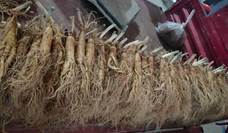
Figure 1 Fusong ginseng in Quanyang Town, Songjianghe
Town, and Donggang Town
|
As the main
raw material for medicinal and edible homologous products, the supply of high‑quality
ginseng directly affects the safety demand for ginseng products and the sound
development of the ginseng ecological industrial economy[1]. According to the
Pharmacopoeia of China, cultivated ginseng is commonly known as “garden
ginseng”, and artificially cultivated “garden ginseng” is collectively referred
to as ginseng in the industry. In response to the need for sustainable development of the ginseng industry in Fusong
County, this study focuses on artificially cultivated ginseng in facility
agricultural land as the research object (Figure 1).
From the
perspectives of the physical and geographical environment, product
characteristics, economic development, and operation management, the GIES case
dataset on Fusong ginseng facility agriculture was constructed. This study aims
to provide data support for Fusong County to build a practical path of “ecology
first, green development” with the ginseng industry as the core, and to promote
ecological environment protection and sustainable development in the Changbai Mt.
region.
2 Metadata of the Dataset
Information including the title, authors, geographical region,
year of the data, dataset files, etc. of the GIES case dataset on Fusong ginseng
facility agriculture[2] are listed in Table
1.
Table 1 Metadata summary of the GIES case dataset on
Fusong ginseng facility agriculture
|
Items
|
Description
|
|
Dataset full name
|
GIES case dataset on Fusong ginseng
facility agriculture
|
|
Dataset short name
|
FusongGinsengCase35
|
|
Authors
|
Wang, J. G., College of Earth Sciences, Jilin University,
wang_jg@jlu.edu.cn
Cheng, X. L., College of Earth Sciences, Jilin University,
chengxl24@mails.jlu.edu.cn
Wang, D., People’s Government of Fusong County, 236147070@qq.com
Wang, G., People’s Government of Fusong County, 364899194@qq.com
Gao, J. T., Fusong County Market Supervision and Administration Bureau, 84809029@qq.com
Zhu, H. L., Ginseng Industry Development Center of Fusong County,
172953679@qq.com
Du, Y. C., Fusong County Market Supervision and Administration Bureau,
84809029@qq.com
Zhang, W. X., College of Earth Sciences, Jilin University,
wxzhang24@mails.jlu.edu.cn
Li, H., Ginseng Industry Development Center of Fusong County,
lihao874@126.com
Wang, X., Ginseng Industry Development Center of Fusong County,
fsxwx01@163.com
Li, Z. Y., People’s Government of Songjianghe Town, Fusong County,
18943769000@163.com
Jie, Z. Y., People’s Government of Quanyang Town, Fusong County,
940676056@qq.com
Yu, H. J., People’s Government of Donggang Town, Fusong County,
410568085@qq.com
Shi, L., People’s Government of Wanliang Town, Fusong County,
fsshilei@126.com
Hou, Y. B., Fusong County Ginseng Association, 339559006@qq.com
Liu, W. Y., Fusong Ginseng Agricultural Technology Co., Ltd.,
13704490217@163.com
Xu, H. Y., Jilin Shenwang Plant Protection Co., Ltd., cbsxu@126.com
Ma, Y. D., Jilin Shenwang Plant Protection Co., Ltd., Baishan City
Ginseng Industry Development Association, cbsma@126.com
Guo, X. J., Fusong County Ginseng Quality Testing Center (Fusong County
Ginseng Research Institute), gxj7578@126.com
Qin, S. Z., Juqian Ginseng Breeding and Planting Professional
Cooperative, Xiaoshan Village, Songjianghe Town, Fusong County,
Yang, F., Ginseng Industry Development Center of Fusong County,
1175836669@qq.com
Yan, H., Ginseng Industry Development Center of Fusong County,
609113920@qq.com
Xu, X. W., Quality Supervision, Inspection and Testing Center of Ginseng
and Antler Products, Ministry of Agriculture and Rural Affairs, Jilin
Agricultural University, xuxuanwei83@126.com
Wang, L., Jilin Institute of GF Remote Sensing
Application Co., Ltd., wang_lei_1992@126.com
Chen, S. B., College of Geo-Exploration Science and Technology, Jilin
University, chensb@ jlu.edu.cn
Wang, Z. B., Institute of Geographic Sciences and Natural Resources
Research, Chinese Academy of Sciences, wangzb@igsnrr.ac.cn
|
|
Geographical region
|
Quanyang, Songjianghe, and Donggang Town, Fusong
County, Baishan City, Jilin Province
|
|
Year
|
2000–2024
|
|
Data format
|
.shp, .tif, .xlsx, .docx, .jpg
|
|
Data size
|
45.2 MB (19.7 MB after compressed)
|
|
Data files
|
Data on case study area scope, physical geography environment, product
characteristics, economic development and operation management
|
|
Foundation
|
Jilin Provincial Administration for Market Regulation (2025)
|
|
Data publisher
|
Global Change Research Data Publishing & Repository, http://wwwgeodoi.ac.cn
|
|
Address
|
No. 11A, Datun Road, Chaoyang District, Beijing 100101, China
|
|
Data sharing policy
|
(1) Data are openly available and
can be free downloaded via the Internet; (2) End users are encouraged to use Data
subject to citation; (3) Users, who are by definition also value-added
service providers, are welcome to redistribute Data subject to written permission from
the GCdataPR Editorial Office and the issuance of a Data
redistribution license; and (4) If Data are used to compile new
datasets, the “ten percent principle” should be followed such that Data
records utilized should not surpass 10% of the new dataset contents, while
sources should be clearly noted in suitable places in the new dataset[3]
|
|
Communication
and searchable system
|
DOI, CSTR, Crossref, DCI, CSCD, CNKI, SciEngine, WDS, GEOSS, PubScholar,
CKRSC
|
3 Case Dataset Development
3.1 Case Area
Fusong County is situated in the southeastern part of
Jilin Province, the northern part of Baishan City, the upper reaches of the
Songhua River, and the northwestern foothills of the Changbai Mt. It stretches
87 km from east to west and 125 km from north to south, located between
127°01′E–128°06′E and 41°42′N–42°49′N. To the north, it borders Huadian City
and Dunhua City across the Second Songhua River; to the south, it is adjacent
to Linjiang City and Changbai Korean Autonomous County; to the east, it shares
boundaries with Antu County and the Democratic People’s Republic of Korea; and to
the west, it faces Jingyu County across the river and adjoins Jiangyuan
District. The scope of this case area covers 3 towns in Fusong County, Jilin
Province, namely Quanyang Town, Songjianghe Town, and Donggang Town (Figure 2),
with a total area of 1,511.27 km2, and a total permanent resident population of 79,371.
|
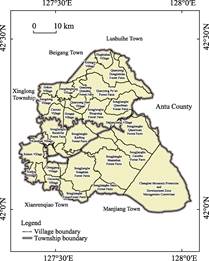
Figure 2 Geo-location map of the case
area
|
3.2 Ecological and
Environmental Data
3.2.1 Topography
Fusong County is located on the northeastern margin of
the Sino-Korean Platform of the Eurasian Plate and has well-developed
Quaternary volcanic lava landforms. Based on DEM data from the Resource and
Environment Science and Data Center of China,
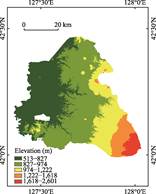
the authors conducted topographic and geomorphic analyses. The results show
that the average altitude of the case area is approximately 943.97 m, and the
terrain is high in the southeast and low in the northwest (Figure 3), with an
obvious elevation gradient. The overall spatial pattern is characterized by “steep
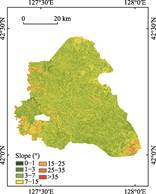
eastern margin, gentle central and western parts”. Slopes in the case area are
dominated by gentle and moderate gradients. The 3–7° class accounts for the
largest proportion (42.66%), followed by the 7–15° class (33.33%), with the two
classes together exceeding 75%. Slopes steeper than 15° account for only 6.81%.
This provides favorable slope conditions for ginseng rotation (Figure 4),
facilitates irrigation, drainage, mechanical operation, and daily management of
ginseng fields, and ensures large-scale production and stable quality of
ginseng[4].
|
|
|
|
Figure 3 Elevation classification map
of the case area
|
Figure 4 Slope classification map
of the case area
|
3.2.2 Climatic Conditions
Fusong
County, located in the mountainous terrain of Northeastern China, is
characterized by a humid climate with cold-temperate conditions. Winter
(November–March) is characterized by high air pressure, low temperature, low
humidity, and low precipitation; summer (June–August) features low air
pressure, high temperature, high humidity, and concentrated precipitation; and
spring and autumn are transitional periods with significant fluctuations in
meteorological elements (Figure 5).
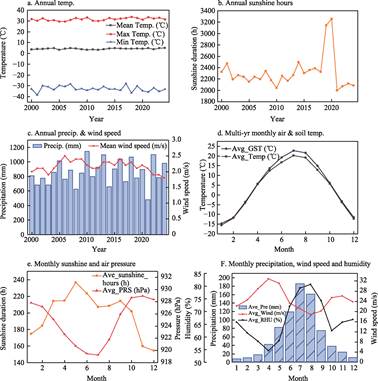
Figure 5 Statistical analysis of climate
change in Fusong County
Meteorological
data for Fusong County from 2000 to 2024 show that the annual average
temperature ranges from 2.0 to 4.8 ℃, annual sunshine hours fluctuate between 2,000.1
and 3,257.8 h, annual average wind speed varies slightly from 1.8 to 2.5 m/s,
and annual precipitation ranges from 480.3 to 1,143.6 mm. The county has a long
snow cover period in winter, with a maximum snow depth of 540 mm.
With
four distinct seasons, the county generally presents the characteristics of
“long and severe winters, mild and short summers, and cool annual average
conditions”, which is conducive to the growth and development of ginseng and
the accumulation of effective components such as ginsenosides[5].
3.2.3 Geological and Soil
Conditions
The case area is located in
the core zone of the Cenozoic basaltic volcanic rock region of the Changbai Mt.,
with significant geothermal anomalies and extensive outcrops of volcanic rocks
and pyroclastics[6]. Loose pyroclastic particles are fine‑grained, with rapid soil‑forming
rates, excellent water permeability, fertilizer retention, and aeration
properties[7]. They are rich in mineral elements essential for plant growth, which
|
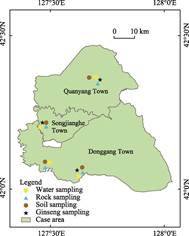
Figure 6 Distribution map of sampling sites
|
significantly
promotes vegetation development and biological activity. Under hydrothermal
processes, pyroclastics participate in soil formation, creating a unique soil
physical structure, abundant mineral conditions[8],
and suitable hibernation temperature conditions for ginseng[9] in
Fusong County.
The
authors collected samples from residual basalt blocks in the soil parent
materials at 4 representative ginseng industrial parks (Figure 6). The samples
were sent to the Key Laboratory of Mineral Resources Evaluation in Northeast
Asia, Ministry of Natural Resources for analysis. The results show that in
terms of major elements, the rocks are characterized by high iron and magnesium
content and are rich in sodium, potassium and phosphorus (Table 2).
The soil
parent rock is characterized by relative enrichment of light rare earth
elements (LREE) and relative depletion of heavy rare earth elements (HREE),
with significant enrichment of La, Rb, Nb, Sr, and Ba, and relative depletion
of Ta. Heavy metal analysis showed that the contents of As, Pb, Cd, Cu, Hg, and
Zn were significantly lower than their corresponding abundances in the
continental crust, whereas Ni and Cr were comparable to crustal abundances. The
nutrient element Se is notably higher than its crustal abundance.
The soil
types in Fusong County are dominated by soils and dark brown soils. A large
area of sandy loam with moderate bulk density has formed under the pyroclastic
parent material. This is conducive to maintaining the normal morphological
development of ginseng roots, ensuring good aeration, keeping the soil moist
but not waterlogged, and preventing root rot caused by excessive moisture or
growth inhibition due to drought[6]. Pyroclastic
materials mixed with litter from coniferous and broad-leaved mixed forests
participate in soil formation, resulting in abundant mineral content, strong
nitrogen fixation capacity, and significant humus accumulation[10], making these soils highly favorable for large-scale
cultivation of ginseng.
Soil samples
were collected from ginseng beds at 4 representative ginseng industrial parks
in the case area (Figure 6) at a depth of 40 cm. The samples were sent to the
Northeast Institute of Geography and Agroecology, Chinese Academy of Sciences
for analysis. Tests of the basic physical and chemical properties showed that
the soil was weakly acidic, highly fertile, and free of salinization risk
(Table 3). According to the reference standard Green food-environmental quality
for production area (NY/T 391—2021)[11], the contents of total nitrogen, available phosphorus
and available potassium reach Grade Ⅰ soil fertility level. In terms of nutrients and
beneficial elements, the average selenium content in the soil samples was 3.02
mg/kg, which is classified as green selenium‑rich soil according to the Delimitation
and identification of natural selenium‑rich land (Trial) (DD 2019—10)[12] (Table 4). Regarding heavy metal pollution, the
concentrations of Cd, Hg, As, Pd, Cr, Cu, Ni and Zn in the soil of the case
area were all far below the risk screening values specified in the Soil
environmental quality risk control standard for soil contamination of
agricultural land (Trial) (GB 15618—2018)[13] (Table 5). For organic pollution, the total contents of
benzene hexachloride (∑BHC), dichlorodiphenyltrichloroethane (∑DDT), and other
indicators are also far below the control thresholds stipulated in the same
national standard GB 15618—2018.
Table
2 Statistical testing results of major elements concentrations
in rock samples Unit: g/100g
|
Test item
|
Si
|
Fe
|
Ca
|
Al
|
Mg
|
Na
|
Ti
|
K
|
P
|
Mn
|
|
R1-1
|
25.25
|
6.86
|
3.75
|
4.30
|
2.87
|
2.85
|
1.01
|
1.11
|
0.14
|
0.14
|
|
R2-1
|
23.39
|
8.90
|
5.39
|
4.17
|
2.77
|
2.24
|
1.40
|
0.62
|
0.20
|
0.21
|
|
R3-1
|
22.38
|
9.59
|
5.18
|
4.19
|
4.23
|
2.08
|
1.38
|
1.00
|
0.19
|
0.15
|
|
R4-1
|
26.25
|
5.79
|
5.02
|
3.98
|
3.24
|
1.76
|
0.55
|
1.52
|
0.13
|
0.12
|
Table 3 Statistical testing results of soil
physical and chemical properties and nutrient content
|
Test item
|
pH
|
EC
|
CEC
|
TN
|
AN
|
AP
|
AK
|
|
Unit
|
–
|
μS/cm
|
cmol/kg
|
g/kg
|
mg/kg
|
mg/kg
|
mg/kg
|
|
S1-1
|
6.32
|
96.7
|
37.18
|
1.78
|
147.9
|
10.14
|
105.35
|
|
S1-2
|
5.03
|
101.8
|
37.59
|
1.10
|
180.4
|
22.00
|
112.46
|
|
S2-2
|
5.78
|
36.4
|
36.07
|
1.37
|
194.9
|
5.59
|
118.28
|
|
S2-3
|
5.59
|
76.6
|
52.87
|
3.83
|
389.7
|
10.13
|
165.26
|
|
S3-1
|
5.14
|
76.9
|
37.31
|
2.24
|
256.9
|
16.16
|
177.52
|
|
S3-2
|
5.26
|
58.6
|
36.07
|
2.00
|
280.0
|
18.18
|
153.71
|
|
S4-1
|
5.03
|
125.8
|
51.43
|
3.12
|
454.7
|
16.31
|
211.68
|
|
S4-2
|
5.02
|
102.1
|
39.57
|
1.50
|
281.5
|
20.54
|
172.01
|
|
NY/T 391—2021 limits[11]
|
/
|
/
|
/
|
Ⅰ (>1.0)
|
/
|
Ⅰ (>10)
|
Ⅰ (>100)
|
Note: – indicates no corresponding
data; / indicates no corresponding standard limit.
Table 4 Statistical testing results of soil
nutrient and beneficial elements content in the case area
|
Test item
|
Se
|
Na
|
Mg
|
K
|
Ca
|
Fe
|
Mn
|
|
Unit
|
mg/kg
|
g/kg
|
g/kg
|
g/kg
|
g/kg
|
g/kg
|
g/kg
|
|
S1-1
|
3.21
|
12.94
|
7.40
|
17.60
|
4.36
|
26.52
|
0.381
|
|
S1-2
|
2.91
|
10.63
|
7.35
|
16.96
|
3.95
|
33.14
|
0.390
|
|
S2-2
|
2.62
|
13.45
|
11.04
|
16.89
|
4.59
|
35.13
|
0.449
|
|
S2-3
|
3.13
|
10.50
|
9.53
|
16.78
|
4.05
|
30.37
|
0.797
|
|
S3-1
|
3.29
|
10.46
|
6.67
|
15.13
|
3.26
|
25.51
|
0.300
|
|
S3-2
|
3.06
|
10.65
|
6.91
|
17.19
|
3.53
|
27.70
|
0.349
|
|
S4-1
|
3.27
|
8.46
|
7.54
|
14.51
|
5.60
|
39.70
|
0.626
|
|
S4-2
|
2.65
|
9.47
|
6.93
|
16.17
|
4.61
|
39.57
|
0.575
|
Table
5 Statistical testing results of soil heavy metal content
in the case area Unit: mg/kg
|
Test item
|
Cd
|
Hg
|
As
|
Pb
|
Cr
|
Cu
|
Ni
|
Zn
|
|
S1-1
|
0.077
|
0.062
|
8.944
|
23.26
|
52.61
|
12.68
|
29.74
|
65.31
|
|
S1-2
|
0.038
|
0.071
|
10.268
|
13.38
|
86.56
|
10.52
|
37.39
|
45.20
|
|
S2-2
|
0.104
|
0.030
|
11.168
|
22.49
|
79.51
|
20.07
|
46.54
|
73.06
|
|
S2-3
|
0.178
|
0.073
|
10.575
|
18.60
|
79.30
|
14.19
|
36.07
|
80.37
|
|
S3-1
|
0.081
|
0.058
|
6.474
|
21.88
|
86.66
|
13.17
|
33.87
|
72.39
|
|
S3-2
|
0.082
|
0.096
|
8.575
|
21.09
|
83.70
|
13.97
|
37.60
|
75.69
|
|
S4-1
|
0.088
|
0.082
|
10.688
|
18.19
|
109.37
|
14.74
|
60.53
|
106.46
|
|
S4-2
|
0.085
|
0.093
|
9.193
|
16.91
|
75.79
|
19.54
|
63.20
|
76.47
|
|
GB
15618—2018 limits[13]
|
0.3
|
1.8
|
40
|
90
|
150
|
50
|
100
|
200
|
3.2.4 Water Conditions
Fusong
County lies at the source of the Songhua and Yalu Rivers. The irrigation water
for ginseng in the case area belongs to the Songhua River system. Donggang and
Songjianghe Towns rely on the Toudao Songhua River and its tributary, the
Songjiang River, whereas Quanyang Town depends on the Erdao Songhua River and
its tributaries, the Lazi and Quanyang River. Irrigation water samples were collected
from typical parks (Figure 6): well water in Songjianghe Town (WJ1-1), river
water in Quanyang Town (WG3-1), well water (WJ2-1), and river water (WG2-1,
WG4-1) in Donggang Town. All samples were tested at the Testing Center of the Northeast
Institute of Geography and Agroecology, CAS. The results show that the
irrigation water is high‑quality low‑salt soft water, rich in Ca, Mg, S, P and
other macroelements (Table 6), which helps maintain soil cation balance and
supports healthy ginseng growth.
Table 6 Statistical testing results of irrigation
water conventional indicators in the case area
|
Test item
|
Unit
|
WG2-1
|
WG3-1
|
WG4-1
|
WJ1-1
|
WJ2-2
|
|
EC
|
us/cm
|
66.40
|
33.90
|
33.40
|
220.00
|
210.00
|
|
HCO3–
|
mg/L
|
18.69
|
14.28
|
16.10
|
125.13
|
121.50
|
|
TA
|
mg/L
|
15.33
|
11.71
|
13.20
|
102.65
|
99.67
|
|
Ca2+
|
mg/L
|
7.96
|
2.92
|
2.93
|
31.09
|
31.12
|
|
SO42–
|
mg/L
|
6.20
|
4.60
|
3.42
|
8.78
|
8.66
|
|
Na+
|
mg/L
|
2.328
|
1.704
|
2.630
|
7.896
|
7.871
|
|
Mg2+
|
mg/L
|
1.785
|
0.787
|
1.439
|
6.444
|
6.427
|
|
P
|
mg/L
|
0.02
|
0.01
|
0.03
|
0.02
|
0.01
|
The average pH was 6.92, within the suitable range of
5.5–8.5 specified in the Standard for irrigation water quality
(GB 5084—2021)[14]. The
mean values of suspended solids, five‑day biochemical oxygen demand (BOD5),
chemical oxygen demand (CODcr), and anionic surfactants were 5.20 mg/L, 1.79
mg/L, 11.03 mg/L, and 0.030 mg/L, respectively, all at low levels. Chloride
(8.95 mg/L), sulfide (0.006 mg/L), and total salt content (125.8 mg/L) met
crop physiological requirements and are far below the standard limits,
indicating no salinization risk (Table 7). Among the heavy metals and other
indicators, hexavalent chromium was not detected. The total mercury (0.057
μg/L) and all other heavy metal indicators were well below standard limits. The
total boron (0.134 mg/L) was suitable for crop growth, fluoride (0.616 mg/L) was
at a safe low level, and cyanide showed no abnormality. All indicators met the
irrigation requirements specified in the GB 5084—2021 (Table 7).
3.2.5 Vegetation Coverage
The case area is located in
the hinterland of Changbai Mt. in Fusong County. It features a complete
altitudinal vegetation zonation and mainly comprises two core communities:
temperate deciduous broad-leaved forest and Korean pine cold-temperate mixed
coniferous and broad-leaved forest. The dominant tree species in the deciduous
broad-leaved forest are Tilia amurensis, Fraxinus mandshurica,
and Acer mono; while the mixed forest is dominated by Pinus
koraiensis, associated with Picea jezoensis, Abies nephrolepis,
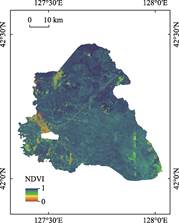
and Betula costata[15]. The NDVI was extracted and
classified from 2024 Sentinel-2 images obtained from the Geospatial Data Cloud[2]. The average
NDVI of the case area was 0.79 (Figure 7). The forest canopy density in the
area is generally high. On the one hand, this creates a suitable microhabitat
for ginseng, which prefers shade, moisture, and protection from direct sunlight[16]. On the other hand, the mixed litter from multiple tree species can
Table 7 Statistical testing results of limited items in irrigation
water
|
Test item
|
Unit
|
WG2-1
|
WG3-1
|
WG4-1
|
WJ1-1
|
WJ2-2
|
GB
5084—2021 limits[14]
|
|
pH
|
–
|
6.4
|
6.34
|
6.43
|
7.71
|
7.72
|
5.5–8.5
|
|
SS
|
mg/L
|
8.00
|
7.00
|
3.00
|
4.00
|
4.00
|
100
|
|
BOD5
|
mg/L
|
1.5
|
4.34
|
0.06
|
1.3
|
1.75
|
100
|
|
CODcr
|
mg/L
|
3.244
|
4.055
|
28.386
|
16.221
|
3.244
|
200
|
|
AS
|
mg/L
|
0.045
|
0.021
|
0.023
|
0.016
|
0.047
|
8
|
|
Cl–
|
mg/L
|
7.1
|
5.68
|
5.964
|
10.65
|
15.336
|
350
|
|
S2–
|
mg/L
|
0.009
|
0.007
|
0.011
|
0.003
|
0.002
|
1
|
|
TSC
|
mg/L
|
93
|
97
|
144
|
268
|
47
|
1,000
|
|
Pb
|
μg/L
|
2.46
|
3.30
|
3.05
|
3.24
|
2.75
|
200
|
|
Cd
|
μg/L
|
0.05
|
0.06
|
0.07
|
0.02
|
0.07
|
10
|
|
Cr6+
|
mg/L
|
ND
|
ND
|
ND
|
ND
|
ND
|
0.1
|
|
Hg
|
μg/L
|
0.089
|
0.019
|
0.012
|
0.145
|
0.020
|
1
|
|
As
|
μg/L
|
1.685
|
2.851
|
2.723
|
2.214
|
2.780
|
100
|
|
Ni
|
μg/L
|
1.069
|
2.441
|
2.199
|
2.588
|
7.075
|
1,000
|
|
B
|
mg/L
|
0.104
|
0.123
|
0.167
|
0.113
|
0.164
|
1
|
|
Cu
|
μg/L
|
3.25
|
3.86
|
3.04
|
3.59
|
1.46
|
1,000
|
|
Zn
|
μg/L
|
37.25
|
15.83
|
15.82
|
59.60
|
39.77
|
2,000
|
|
Se
|
μg/L
|
0.05
|
0.04
|
0.09
|
0.06
|
0.04
|
20
|
|
F–
|
mg/L
|
0.091
|
1.076
|
0.110
|
0.306
|
1.495
|
2
|
|
CN–
|
μg/L
|
0.259
|
0.176
|
0.126
|
0.018
|
0.215
|
0.5
|
Note: – indicates no corresponding data; ND indicates not detected.
activate
soil microorganisms, continuously releasing humic acids and mineral nutrients,
thereby ensuring the nutrient cycling supply needed for ginseng root growth[17].
3.3 Land use
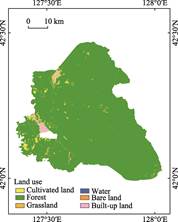
The author classified and
counted land use in Fusong County using the China Land CoverDataset (CLCD)[18]. The proportions of cropland, forestland, grassland, water bodies, and
construction land are 2.05%, 96.43%, 0.51%, 0.04%, and 0.97%, of the total
area, respectively (Figure 8). The overall land use structure presents a
pattern of “large forestland
|
|
|
|
Figure 7 NDVI analysis map of the case area
|
Figure 8 Land use map of the case area
|
patches
interspersed with small scattered patches”, highlighting a forest
ecology-centered land use pattern with low human disturbance.
Fusong County has explored optimized land allocation models for ginseng cultivation.
Combined with scattered logging and regeneration in forest areas, suitable
sloped sites are selected for land preparation, shed covering, and cultivation.
Broad-leaved tree species, such as Mongolian oak, are interplanted among
ginseng beds[10], and forests are
restored immediately after ginseng harvest. This approach makes full use of
forest ecological conditions and effectively prevents soil erosion in the area.
This study also lays a foundation for vegetation restoration and the sustainable
use of ginseng gardens, actively promoting green ecological transformation.
3.4 Product Characteristics Data
Ginseng samples were randomly collected from
representative plantations (Figure 6): 5-year ginseng from Songjianghe Town
(Code G1-1), 6-year ginseng from Quanyang Town (Codes G3-1, G3-2), and 6-year
ginseng from Donggang Town (Code G4-1). For the comparative analysis of ginseng
products at different ages, additional samples were gathered: 4-year ginseng
from Songjianghe Town (G5-1), 3-year ginseng from Donggang Town (G6-1), and
2-year ginseng from Songjianghe Town (G7-1). All samples were tested at the
Sino- Vegetable and Animal Products Quality Supervision, Inspection, and
Testing Center, Ministry of Agriculture and Rural Affairs, Jilin Agricultural
University.
Ginseng
products of different ages in Fusong County show excellent safety and quality
levels. 6 organochlorine pesticide residues were detected in all samples,
including HCH, DDT, quintozene, aldrin+dieldrin, and cyhalothrin. 6
organophosphorus pesticide residues, namely malathion, parathion,
monocrotophos, dimethoate, methamidophos, and chlorpyrifos, were analyzed. 6
insecticide residues were detected: phorate, isofenphos-methyl, endosulfan,
tetrachlorvinphos, methidathion, and acephate. 12 fungicide residues were
tested: propiconazole, metalaxyl, cyprodinil, flusilazole, tebuconazole,
difenoconazole, pyrimethanil, pyraclostrobin, fluazinam, kresoxim-methyl,
propamocarb, and dimethomorph. The residues of 5 metals residues, including As,
Pb, Cd, Cu, and Hg, were also measured. All residues were either not detected
or were present at low levels. All results met the limit requirements specified
in Geographical indication products—Jilin Changbaishan Ginseng (GB 19506—2009)[19].
In terms of
medicinal ingredients, samples of different ages showed significant differences
(Table 8). 6-year-old ginseng has the highest ginsenoside accumulation. Sample
G4-1 from Donggang Town had a total ginsenoside content of 3.76%. Its Rb1
(0.80%) and Re+Rg1 (0.65%) contents were the highest. The 5-year-old sample
G1-1 from Songjianghe Town had a total ginsenoside content of 2.89%. The total
saponin content of 2–4-year-old samples ranged from 3.01% to 3.34%. All samples
met the requirements for ginseng in GB 19506—2009 and the Pharmacopoeia of
China (2020 Edition, Volume I)[20]. However, they are
generally lower than those of 5–6-year-old samples. The saponin indices of all
5–6-year-old samples were significantly higher than the two standards. The Rb1
content was more than twice the standard value. This supports the traditional
view that ginseng over 5- year-old has high medicinal value. Considering
safety, active ingredients, and economic benefits, Fusong ginseng harvested at 6
years of age shows superior quality. However, all ginseng products have good
medicinal value over 5 years. Mineral element analysis showed (Table 9) that Se
was not detected. K, Mg, Ca, Fe, Zn and other essential elements were present
at relatively high levels.
Table
8 Statistical testing results of ginseng physical and chemical index Unit:
%
|
Test item
|
Rb1
|
Re+Rg1
|
TG
|
Rc
|
Rb2
|
Rf
|
|
G1-1
|
0.59
|
0.46
|
2.89
|
0.23
|
0.26
|
0.08
|
|
G3-1
|
0.66
|
0.50
|
3.55
|
0.27
|
0.36
|
0.08
|
|
G3-2
|
0.41
|
0.38
|
2.78
|
0.18
|
0.17
|
0.05
|
|
G4-1
|
0.80
|
0.65
|
3.76
|
0.31
|
0.39
|
0.10
|
|
G5-1
|
0.22
|
0.65
|
3.01
|
–
|
–
|
–
|
|
G6-1
|
0.27
|
0.77
|
3.34
|
–
|
–
|
–
|
|
G7-1
|
0.25
|
0.67
|
3.22
|
–
|
–
|
–
|
|
GB 19506—2009 limits[19]
|
≥0.20
|
≥0.30
|
≥2.50
|
/
|
/
|
/
|
|
Pharmacopoeia
limits[20]
|
≥0.20
|
≥0.30
|
/
|
/
|
/
|
/
|
|
Judgment
results
|
Qualified
|
Qualified
|
Qualified
|
/
|
/
|
/
|
|
|
|
|
|
|
|
|
Note: – indicates no
corresponding data; / indicates no corresponding standard limit.
Table
9 Statistical testing results of ginseng mineral elements Unit:
mg/kg
|
Test item
|
K
|
Mg
|
Ca
|
Na
|
Fe
|
Zn
|
Se
|
|
G1-1
|
12,311.60
|
1,481.30
|
1,079.10
|
55.70
|
41.90
|
20.00
|
ND
|
|
G3-1
|
12,242.20
|
1,289.60
|
1,053.00
|
108.60
|
37.10
|
15.50
|
ND
|
|
G3-2
|
10,331.50
|
1,518.70
|
961.70
|
294.20
|
42.80
|
15.00
|
ND
|
|
G4-1
|
12,271.00
|
1,270.50
|
1,038.10
|
105.80
|
37.10
|
16.90
|
ND
|
Note:
ND
indicates not detected.
4 Socioeconomic
Development and Industrial Management
4.1 Population, Economy and Ginseng Industry
Development
In
2024, the registered population of Fusong County was 259,953, with an
urbanization rate of 73.9% and a regional GDP of 14.477 billion CNY[21]. The permanent populations of Songjianghe Town was 56,046, Quanyang Town
21,637, and Donggang Town 1,688, totally 79,371. The three towns together
accounted for 36.5% of the total population of the county.
As
a core pillar industry of Fusong County, the ginseng industry has shown strong
development. In terms of industrial scale, the reserved ginseng planting area
in Fusong reached 720 ha in 2024, with an output value of 314 million CNY,
accounting for 2.17% of the county’s gross domestic product (GDP). There are
more than 3,200 ginseng businesses, and the output value of the entire
industrial chain reached 18.64 billion CNY. In variety breeding, Fusong has
developed more than 20 high-quality new ginseng varieties, including Fuxing
No.1 and Fuxing No.2, which feature high disease resistance and ginsenoside
content. A ginseng germplasm resource nursery has been established, and eight
high-quality varieties have been bred[22],
supporting the upgrading of characteristic agriculture. In terms of product
branding, Fusong successfully applied for the “Fusong Ginseng” geographical
certification trademark in 2010 (Figure 9). On November 6, 2022, a new logo was
approved by the China National Intellectual Property Administration. As the
core production area for Changbai Mt. ginseng, it helped “Changbai Mt. Ginseng”
enter the second batch of China-EU geographical indication protection list in
July 2020. Fusong has become a representative core production area of national
geographical indication protected products (Figure 10). As the largest core
ginseng production area and distribution center in China, Fusong ginseng has
established an important position in the industry with a stable supply and
standardized quality standards, becoming a key force driving industrial
development.
|
|

|
|
Figure 9 Brand logo of Fusong ginseng
|
Figure 10 Geographical indication of Changbai Mt. ginseng
|
4.2 Cultivation Management
The
ginseng studied in the case area was artificially cultivated garden ginseng. It
is a perennial herb of the genus Panax in the family Araliaceae. Its growth
cycle is 4 to 6 years, with distinct planting characteristics and strict
management. Site selection requires a slope of less than 25° and good drainage.
Dark brown or albic soil is suitable, avoiding previous rhizome crops. Land preparation should be completed in the year prior.
Deep plowing is conducted to a depth of 30–40 cm, followed by disinfection and
bed making. The bed height was 20–25 cm and the width was 100–120 cm. After the
germination treatment, until the cracking rate exceeds 90%, seeds can be sown
in autumn (after mid-October) or spring (late April to early May).
Transplanting uses 2–3-year-old seedlings with oblique planting methods. The
spacing was 10 cm×20 cm, with soil covering 5–8 cm. Field management is implemented
carefully. Sheds were erected for shading with a light transmittance of
10%–20%. Organic fertilizers are applied, and the soil is loosened and weeded.
Flower buds of 3–4-year-old ginseng plants are removed. Light and water are
adjusted according to meteorological data, and pest and disease control are
performed. Harvesting is conducted in September of the 4th to 6th year after
planting. It also has obvious and distinguishable morphological
characteristics. The main root was either fusiform or cylindrical. The plant
height is 45–55 cm, with palmately compound leaves. The fibrous roots were
dense and slender.
4.3 Fusong Ginseng Group Standards and Pesticide
Control
Fusong
County has focused on promoting group-standard development and pesticide
control in the ginseng industry. Relying on the Ginseng Association, a series
of group standards have been formulated covering seed germination, seedling
breeding, variety breeding, land selection and preparation, sowing and
transplanting, field management, harvesting, and processing. A closed-loop
management mechanism for the group standards was established. An alliance of
“group standards+enterprises+cooperatives+farmers” has been built, with a
standardization coverage rate of 78%. Implementation has been strengthened
through the dynamic revision of standards and cloud platform-based queries and
training. A negative list of pesticides has also been issued. In accordance
with relevant regulations, 46 high-residue pesticides including HCH, DDT,
phorate, parathion and carbofuran, are banned. Twenty pesticides including
methamidophos and omethoate, are restricted. Illegal use is strictly
prohibited. Biological and physical control methods have been promoted. The
safe interval period for pesticides was strictly implemented. No banned
pesticides were detected in the tests. A win-win situation of clean production
areas and ecological benefits was achieved.
4.4 Ecological Environment Traceability for Fusong
Ginseng
The
Jilin Shenwang Plant Protection Base of Fusong National Modern Agricultural
Industrial Park is the only national-level regional Chinese herbal medicine
seed breeding base in the province. Relying on a seed resource bank, a ginseng
traceability digital database covering the three northeastern provinces has been
built. Together with the Changbai Mountain Ginseng Planting Alliance, a
traceability management system was established. It has a comprehensive
experimental demonstration base of nearly 200 ha, including a 30.06 ha green
food certified base. Pesticide application records of all planting entities are
integrated into the system, realizing the full traceability of ginseng from
seeds to finished products. Meanwhile, a fully automatic GIES ground station was
built at the Ginseng Industrial Park in Songjianghe Town, Fusong County. It can
monitor real-time environmental data, such as temperature, humidity, wind
speed, soil temperature and moisture. This supports precise traceability and
park management (Figure 11).

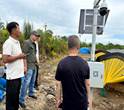
Figure 11
GIES ground station in the
case area (completed in 2025)
5 Fusong Ginseng Culture
Fusong
County represents the cradle of mainstream ginseng culture in China and holds
the distinguished designation of “Hometown of Chinese Ginseng Culture”. The
county boasts a cultivation heritage spanning over 400 years of artificial
ginseng farming, grounded in profound cultural and industrial foundations. As
early as the Han Dynasty, ginseng was regarded as an auspicious herb. Shennong
Bencao Jing (Shennong’s Classic of Materia Medica) listed it as a top-grade
medicine, establishing its medicinal value as “mainly tonifying the five
zang-organs”[23]. After the founding of China, the first state-owned ginseng farm was established
locally. A complete system gradually took shape, covering improved variety
breeding, standardized planting, and intensive processing. In 1985, Fusong was
awarded the title of “Hometown of Chinese Ginseng”. Currently, the ginseng
planting area exceeds 6,666.67 ha, with an annual output of fresh ginseng
reaching 10,000 tons, making it a benchmark in China’s ginseng industry. Local
legends such as the Ginseng Girl and Ginseng Doll[24]
have been passed down and evolved into classic literary and artistic works,
forming unique regional cultural symbols. Based on inheriting traditional
ginseng cultivation techniques, Fusong integrates the experience of the older
generation with scientific standards. It has transformed traditional
cultivation proverbs into national standards, bred high-quality varieties, and
formulated the technical code for Changbai Mt. ginseng cultivation, thereby
establishing an industry benchmark. Since 1987, the China Fusong Changbai
Mountain Ginseng Festival has been held for 39 sessions. Through cultural
exhibitions, picking experiences, and 51 intangible cultural heritage items, it
has continuously promoted ginseng culture at home and abroad, achieving an
organic integration of traditional skill inheritance and modern cultural
development[25].
6 Discussion and
Conclusions
The
ginseng industry in Fusong County has formed a collaborative development
framework supported by natural ecology, driven by the social economy, and
empowered by technology and culture. Through the precise utilization of natural
endowments, standardized construction of the industrial system, and in-depth
exploration of cultural resources, the preliminary integration of ecological,
economic, and social benefits has been achieved. This project successfully
constructed a five-in-one collaborative innovation system of “government,
industry, university, research, and application”. An operational mechanism with
the organic connection of “drive-support-implementation” has been formed. This
system uses habitat landmarks and sustainable development as the innovation
engine, driving the exploration of cutting-edge theories and breakthroughs in
core technologies. Government agencies and scientific research institutions are
the system hubs that provide policy guidance and resource support. Leading
enterprises and industry associations are used as implementation terminals to
promote technology transformation and market application, forming a complete
closed loop from theory to practice. By connecting the innovation, industrial,
and service chains, a sustainable development pattern with multi-party
coordination and complementary advantages has been realized. Supported by this
system, Fusong ginseng products not only have excellent quality but also
highlight their regional characteristics. An industrial development framework
based on natural ecology, driven by the social economy, and empowered by
technology and culture has been established. This exploration not only provides
a demonstration for regional characteristic industries to coordinate ecological
protection and upgrading, but also contributes a Chinese solution of “ecology
priority, brand leadership, and technology-driven quality improvement” to the
global ginseng industry.
Author Contributions
Wang,
J. G. was responsible for the overall research of this case study. Wang, D.,
Wang, G., Gao, J. T., Zhu, H. L., Li, H., Shi, L., Du, Y. C., Wang, X., Li, Z. Y.,
Jie, Z. Y., Yu, H. J., Yang, F., Yan, H. and Liu, W. Y. were responsible for
project coordination and participated in the project design and research &
development. Hou, Y. B. and Guo, X. J. provided constructive suggestions for
project design and dataset collection. Xu, H. Y. and Ma, Y. D. provided
technical support in enterprise management data and sample collection for the
case study, and put forward comments on the revision of the paper. Cheng, X. L.
and Zhang, W. X. were responsible for the collection of soil, rock, ginseng and
water samples, and completed data processing and part of the paper writing. Xu,
X. W. participated in the detection and analysis of ginseng samples. Wang, L.
was responsible for the construction of the ecological environment monitoring
station and technical support for dynamic data.
Conflicts of Interest
The authors declare
no conflicts of interest.
References
[1]
Che, T. H., Peng, S. Y., Yan, K.,
et al. Current situation and development suggestions of ginseng industry
in Jilin Province [J]. Northern Horticulture, 2024(8): 136–142.
[2]
Wang, J. G., Cheng, X. L., Wang,
D., et al. GIES case dataset on Fusong ginseng facility agriculture
[J/DB/OL]. Digital Journal of Global Change Data Repository, 2026.
https://doi.org/10.3974/geodb. 2026.03.08.V1.
[3]
GCdataPR Editorial Office. GCdataPR data sharing policy [OL].
https://doi.org/10.3974/dp.policy.2014.05 (Updated 2017).
[4]
National Technical Committee
for Ginseng and Antler Products Standardization. Code of practice for
high-quality ginseng cultivation (GB/T 34789—2017) [S]. Beijing: Standards
Press of China, 2017.
[5]
Xu, Z. F., Liu, C. S., Liao, X.
D., et al. Effects of ecological factors on quality differences between
forest-grown ginseng and farmland-grown ginseng [J]. Journal of Agricultural
Science and Technology, 2024, 26(9): 213–223.
[6]
Qian, C., Cui, T. R., Jiang, B.,
et al. Study on late Cenozoic volcanic geomorphology and its geological
application in Changbai Mountain area [J]. Quaternary Sciences, 2014,
34(2): 312–324.
[7]
Xu, W. D. Characteristics of
volcanic edifices and geological mapping in Tianchi and adjacent areas of
Changbai Mountain [D]. Changchun: Jilin University, 2022.
[8]
Chen, H. C. Volcaniclastic
ejecta, volcanic strata and volcanic geological mapping of Tianchi volcano,
Changbai Mountain [D]. Changchun: Jilin University, 2020.
[9]
Jin, Y., Li, J., Zhao, Y., et
al. Cambial evidence of the “Millennium Eruption” of Changbaishan volcano
(c. 946 CE) and century-scale climatic change in the Middle Ages [J]. Palaeogeography,
Palaeoclimatology, Palaeoecology, 2022, 595.
[10]
Zheng, D. S., Liu, Q. J.
Effects of environmental factors on forest community distribution in Changbai
Mountain Nature Reserve [J]. Journal of Beijing Forestry University,
2023, 45(8): 57–64.
[11]
Ministry of Agriculture and
Rural Affairs of P. R. China. Green food-environmental quality for production
area (NY/T 391—2021) [S]. Beijing: China Agriculture Press, 2021.
[12]
China Geological Survey.
Delimitation and identification of natural selenium-rich land (Trial) (DD
2019—10) [S]. Beijing: China Geological Survey, 2019.
[13]
Ministry of Ecology and
Environment of P. R. China, State Administration for Market Regulation. Soil
environmental quality risk control standard for soil contamination of
agricultural land (Trial) (GB 15618—2018) [S]. Beijing: China Environment
Publishing Group, 2018.
[14]
State Administration for Market
Regulation, Standardization Administration of China. Standard for irrigation
water quality (GB 5084—2021) [S]. Beijing: China Planning Press, 2021.
[15]
Jiang, P., Ye, J., Wang, S. X.,
et al. Vertical distribution of community composition, structure and
tree species diversity of forests on the southern slope of Changbai Mountain [J].
Journal of Beijing Forestry University, 2008, 30(S1): 258–262.
[16]
Zhao, S. Q., Fang, J. Y., Zong,
Z. J., et al. Vertical distribution of plant community composition,
structure and species diversity on the northern slope of Changbai Mountain [J].
Biodiversity Science, 2004(1): 164–173.
[17]
Wang, L., Wang, H. Y., He, L. H.,
et al. Comprehensive evaluation of soil fertility quality based on GIS—a
case study of natural spruce-fir mixed forest [J]. Chinese Journal of Soil
Science, 2016, 47(5): 1223–1230.
[18]
Yang, J., Huang, X. The 30 m
annual land cover dataset and its dynamics in China from 1990 to 2019 [J]. Earth
System Science Data, 2021, 13(8): 3907–3925.
[19]
General Administration of Quality
Supervision, Inspection and Quarantine of P. R. China, National Standardization
Administration. Product of geographical indication—Jilin Changbai Mountain
ginseng (GB/T 19506—2009) [S]. Beijing: China Standards Press, 2009.
[20]
National Pharmacopoeia
Committee. Pharmacopoeia of China: 2020 Edition: Volume I [M]. Beijing: China
Medical Science Press, 2020.
[21]
Baishan Municipal Bureau of
Statistics [OL]. http://tjj.cbs.gov.cn/wzsy/tjfx/202505/t20250506_844277. html.
[22]
CAILIAN NEWS. In-depth
breakthrough of ginseng industry—analysis on ginseng industry in Fusong County [OL]. (2024-06-21) [2025-11-10]. https://www.agri.cn/zx/xxlb/jl/202406/t20240621_8644916.htm.
[23]
Wang, D. F. The beginning,
weighing and boiling of ginseng culture connotation [J]. Ginseng Research,
2018, 30(5): 60–62.
[24]
Sun, Y. Preliminary study on
cultural tourism development of Fusong ginseng [J]. Tourism Overview,
2016(16): 89.
[25]
JILIN DAILY. A glimpse of
Fusong Ginseng Festival [OL]. (2024-09-06)
[2025-11-10]. https://www.jl.gov. cn/szfzt/gzlfz/sydt/202409/t20240906_
329Figure3923.html.