GIES
Case Study on Fusong Lushuihe Pinus Koraiensis Nuts Forest Ecosystem
QI Wei1,2* ZHU Jianhua3 WANG Gang4 GAO Jiantang5 DU Yuchuan5
ZHAO Wenxu6 WANG Xiuqin7
LIU Huiqiang7 JIN
Xin7 XU Yanguo8
ZHANG Zenggui9 CHEN Yongting3
LIU Yan3 LIU Yubo3 NIU Ziming3
ZHU Wenhao1,2 LI Yu1,2 FAN Kai1,2 TANG Xinrui1,2
1. Institute of Geographic Sciences and Natural
Resources Research, Chinese Academy of Sciences, Beijing 100101, China; 2.
University of Chinese Academy of Sciences, Beijing 100049, China; 3. Northeast
Normal University, Changchun 130024, China; 4. People’s Government of Fusong
County, Baishan City, Jilin Province, Fusong County 134500, China; 5. Fusong
County Market Supervision and Administration Bureau, Baishan City, Jilin
Province, Fusong County 134500, China; 6. Lazihe Village, Lushuihe Town, Fusong
County, Baishan City, Jilin Province, Fusong County 134500, China; 7. Jilin
Changbai Mingzhu Forest Food Co., Ltd., Fusong County 134500, China; 8.
Hongguang Forest Farm of Lushuihe Forestry Co., Ltd., Fusong County 134500,
China; 9. Fusong County Lushuihe Hualong Chinese Herbal Medicine Planting
Professional Cooperative, Fusong County 134500, China
Abstract:
The GIES case of Fusong Lushuihe Pinus koraiensis
nuts forest ecosystem is located in Lushuihe Town, Fusong County, Jilin
Province, in the core area of the Changbai Mt. The town administers 6
communities and 5 administrative villages, with an area of 855.58 km2
and a total registered population of 28,000 in 2025. Benefiting from its distinctive
natural conditions, including medium-to-high elevation, high vegetation
coverage, a cold-temperate humid mountain climate, and fertile volcanic ash
soils, Lushuihe supports extensive and contiguous century-old Pinus koraiensis
forests. These environmental conditions contribute to the distinctive quality
of the pine nut kernels, which are plump, milky white in color, and rich in
aroma, making them a natural food resource with
high nutritional value. This study analyzes Lushuihe Town as the case area from
the perspectives of the ecological environment of Pinus koraiensis
forests, product characteristics, management practices, and socioeconomic
development. It further summarizes the habitat conservation and sustainable
development model of the Lushuihe pine nut production area. The case dataset
mainly includes data on the spatial extent of the case area, physical
geographical conditions, product characteristics of Lushuihe pine nuts,
socioeconomic development, management practices, and cultural context. The
dataset is archived in .shp, .tif, .xlsx, .docx, and .jpg formats, consisting
of 82 data files, with a total size of 264 MB, and is compressed into
one file of 77.3 MB.
Keywords: Changbai
Mountain; Fusong; Lushuihe; Pinus koraiensis nuts; Pinus koraiensis Forest; GIES; Case 36
DOI: https://doi.org/10.3974/geodp.2026.03.09
Dataset Availability Statement:
The dataset supporting this paper
was published and is accessible through the Digital Journal of Global Change Data Repository
at: https://doi.org/10.3974/geodb.2026.04.01.V1.
1 Introduction
Pinus koraiensis, also known as
“fruit pine” in Chinese, is a tall tree species belonging to the Gymnospermae,
Pinaceae, Pinus, and subgenus Strobus. It is a dominant constructive species of
coniferous and broad-leaved mixed forests, one of the zonal vegetation types in
the temperate region of Northeast China. The species is mainly distributed in
the Changbai Mt., Wanda Mt., Zhangguangcai Range, and Lesser Khingan Mt. in
Northeast China. The natural Pinus koraiensis mother forest in Lushuihe
Town, Fusong County, Jilin Province, is the largest, best-preserved, and most
genetically diverse natural Pinus koraiensis mother forest in China[1].
In this forest, century-old trees are common, and there is even an ancient tree
known as the “King of Pinus Koraiensis”, which is estimated to be
approximately 550 years old. As a tall tree species, mature Pinus koraiensis
generally reaches 20–30 m in height and may grow up to 50 m. Its crown is
conical at the juvenile stage and gradually develops into an open
umbrella-shaped or tower-shaped form after maturity. Pinus koraiensis is
characterized by slow growth and a long natural regeneration cycle. With the
implementation of the Natural Forest Protection Program by China’s forestry
authorities, wild Pinus koraiensis resources have been subject to
conservation and restoration[2]. Wild Pinus koraiensis grows
slowly and usually begins to bear cones only after approximately 50 years.
During the full-yield period, a single tree can produce up to 600–800 cones per
year, yielding approximately 40–60 kg of pine nuts.
|
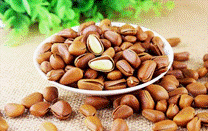
Figure 1 Fusong Lushuihe pine nuts
|
The Fusong Lushuihe pine nut production area is located
in Lushuihe Town, Fusong County, Jilin Province, in the hinterland of the
Changbai Mountain[3]. Fusong Lushuihe pine nuts are regarded as a
representative high-quality pine nut product in Asia (Figure 1)[4].
Their kernels are large and plump, with a natural milky-white color and a high
kernel yield, and are of significantly higher quality than ordinary pine nut
kernels. They are also an important representative of national geographical
indication products from the Changbai Mt. region. The kernels contain omega-3
and omega-6 fatty acids, which may act synergistically in regulating
cholesterol levels and help reduce the risk of arteriosclerosis. Vitamin E and
anthocyanins provide dual antioxidant effects and help inhibit oxidative damage
caused by free radicals. In addition, their high protein content and
slow-release carbohydrates can provide a lasting sense of satiety, making them
suitable for people with high cognitive demands. In traditional Chinese
medicine, pine nuts are used to moisten dryness, relieve cough, alleviate
constipation, and support recovery from postpartum weakness. Fusong Lushuihe
pine nuts are not only an important component of the traditional dietary
culture of the Changbai Mt. region, but also align well with the modern dietary
concept of “natural, nutritious, and functional” foods. They have therefore
become a representative premium ingredient in the high-end health food market[5].
Fusong Lushuihe pine nuts grow in a distinctive
regional setting and a unique ecological environment. They are not only a
concentrated reflection of local natural resource endowments and historical and
cultural traditions, but also a core industry that supports regional economic
development and contributes to local residents’ income. Protecting the habitat
of Pinus koraiensis forests that produce pine nuts is of great
significance for maintaining ecological balance, promoting local economic
development, and preserving cultural traditions[6]. This study
systematically reviews and analyzes diverse information on the region,
including its physical geographical characteristics, ecological conditions,
pine nut product characteristics, industrial development and management,
socioeconomic development data, and historical and cultural context. On this
basis, it explores coordinated pathways for habitat conservation and
sustainable development of Fusong Lushuihe pine nuts. The findings are expected
to provide scientific support for Pinus koraiensis forest conservation
practices and the high-quality development of the pine nut industry.
2 Metadata of the Dataset
The
metadata information of the GIES case dataset on Fusong Lushuihe Korean pine
seeds forest ecosystem[7], including name, authors, geographical
region, data period, data size, data format, and dataset files, is shown in
Table 1.
Table 1 Metadata summary of the GIES case dataset
on Fusong Lushuihe Korean pine seeds forest ecosystem
|
Items
|
Description
|
|
Dataset full name
|
GIES case dataset on Fusong Lushuihe
Korean pine seeds forest ecosystem
|
|
Dataset short name
|
LushuiheKoreanPineSeedsCase36
|
|
Authors
|
Qi, W., Institute of Geographic Sciences
and Resources, Chinese Academy of Sciences, qiwei@igsnrr.ac.cn
Zhu, J. H.,
Northeast Normal University, zjh198827@163.com
Wang, G., People’s Government of Fusong County, Baishan City, Jilin Province, sjjbgs2024@ 163.com
Gao, J. T., Fusong County Market Supervision and Administration Bureau, Baishan City,
Jilin Province, sjjbgs2024@163.com
Du, Y. C., Fusong County Market Supervision and Administration Bureau, Baishan City,
Jilin Province, 84809029@qq.com
Wang, X. Q., Jilin Changbai Mingzhu Forest Food Co., Ltd., bssonglin@163.com
Liu, H. Q., Jilin Changbai Mingzhu Forest Food Co., Ltd., bssonglin@163.com
Jin, X., Jilin Changbai Mingzhu Forest Food Co., Ltd., bssonglin@163.com
Chen, Y. T.,
Northeast Normal University, 3118078674@qq.com
Liu, Y.,
Northeast Normal University, liuyan0227@foxmail.com
Liu, Y. B.,
Northeast Normal University, 2276359635@qq.com
Niu, Z. M.,
Northeast Normal University, 13293223632@163.com
Zhu, W. H., Institute of
Geographic Sciences and Resources, Chinese Academy of Sciences, zhuwenhao18@mails.ucas.ac.cn
Li, Y., Institute of
Geographic Sciences and Resources, Chinese Academy of Sciences, liyu6917@igsnrr.ac.cn
Fan, K., Institute of Geographic Sciences
and Resources, Chinese Academy of Sciences, fankai0308@gmail.com
Tang, X. R., Institute of
Geographic Sciences and Resources, Chinese Academy of Sciences, tangxinrui20@mails.ucas.ac.cn
|
|
Geographical region
|
Lushuihe Town, Fusong County, Baishan
City, Jilin Province
|
|
Year
|
2025
|
|
Data format
|
.xlsx, .shp, .tif, .jpg, .docx
|
|
Data size
|
246 MB (compressed into one file of 77.3
MB)
|
|
Data files
|
Spatial scope of the
case area, physical geographical conditions, product characteristics of
Fusong Lushuihe Pinus koraiensis nuts, and socioeconomic development,
management and culture
|
|
Foundation
|
Jilin Provincial Administration for Market
Regulation (2025)
|
|
Data publisher
|
Global Change Research Data Publishing
& Repository, http://www.geodoi.ac.cn
|
|
Address
|
No. 11A, Datun Road, Chaoyang District,
Beijing 100101, China
|
|
Data sharing policy
|
(1) Data
are openly available and can be free downloaded via the Internet; (2) End
users are encouraged to use Data
subject to citation; (3) Users, who are by definition also value-added
service providers, are welcome to redistribute Data subject to written permission from the GCdataPR Editorial
Office and the issuance of a Data
redistribution license; and (4) If Data
are used to compile new datasets, the “ten percent principle” should be
followed such that Data records
utilized should not surpass 10% of the new dataset contents, while sources
should be clearly noted in suitable places in the new dataset[8]
|
|
Communication
and searchable system
|
DOI, CSTR, Crossref, DCI, CSCD, CNKI, SciEngine,
WDS, GEOSS, PubScholar, CKRSC
|
3 Case Data Development
3.1 Case Area
|
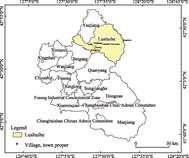
Figure 2
Geo-location map of Lushuihe Town
|
Lushuihe
Town is located in the southeastern part of Jilin Province, in the northern
part of Fusong County, Baishan City. It lies in the hinterland of the Changbai Mt.,
within the vast forest region of the upper reaches of the Songhua River,
between 127°25′E–128°05′E and 42°20′N–42°45′N (Figure 2). Lushuihe Town borders
Liangjiang Town and Erdaobaihe Town of Antu County to the east, Quanyang Town
to the south, Beigang Town to the west, and Yanjiang Township to the north.
Lushuihe Town administers 6 communities: Zhanxi, Hebei, Dongshan, Beishan,
Hongwei, and Xishan, as well as 5 administrative villages: Lazihe, Changsheng,
Xinxing, Dongsheng, and Qingshuihe. In 2025, the town covered an administrative
area of 855.58 km2 and had a registered population of 28,000.
3.2 Ecological and Environmental Data
3.2.1 Topography
The overall topography
of Lushuihe Town is characterized by higher elevations in the south and lower
elevations in the north. Based on SRTM 30-m DEM data,
the authors analyzed the topographic characteristics of the town and found that
elevations are predominantly between 500 and 1,000 m (Figure 3). River valley
lowlands below 500 m are mainly concentrated in the northern and northwestern
parts of the town, while hilly areas at elevations of 500–700 m constitute
the dominant topographic type. Low-mountain and hilly areas at elevations of
700–900 m, with some local areas exceeding 900 m, are mainly distributed in the
central and southern parts. In terms of slope, flat areas with gradients of
<3° extend in belt-like patterns along river valleys. Gentle hilly slopes of
3–15° are widely distributed across the central and eastern parts of the town,
whereas low- to mid-mountain areas with slopes >15° are concentrated along
the western margin. The moderate elevation of Lushuihe Town is suitable for the
ecological preferences of Pinus koraiensis, and the extensive gentle
slopes provide favorable conditions for its growth, drainage, and light
availability.
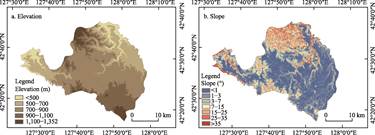
Figure
3 Elevation and slope classification map of Lushuihe Town
3.2.2 Climatic Conditions
Lushuihe
Town has a middle-temperate humid monsoon climate, which is strongly influenced
by the topographic effects of the Changbai Mt. Areas with relatively high temperatures are mainly distributed in river
valleys and lower-elevation zones. In contrast, the southern mountainous areas
have relatively lower land surface temperatures due to their higher elevation
and dense vegetation cover. The spatial patterns of precipitation and relative
humidity are generally consistent, both showing higher values in the northwest
and lower values in the southeast (Figure 4). The mean annual temperature in
Lushuihe Town ranges from 0.9 ℃ to 1.5 ℃, with maximum
temperatures of 29.5 ℃–32.2 ℃ and minimum temperatures of −44 ℃
to −39 ℃. The average annual frost-free period is approximately 105 d[4]. Overall, Lushuihe Town is characterized by a cool and humid climate,
sufficient accumulated temperature, and large diurnal temperature variation,
providing an ideal environment for the growth of Pinus koraiensis and
the accumulation of nutrients in pine nuts.
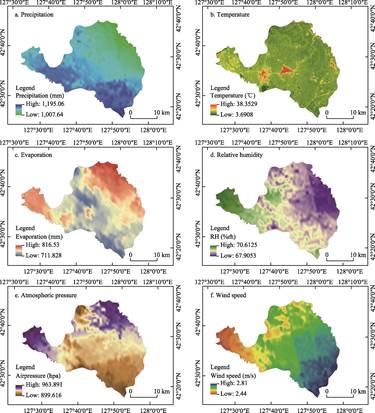
Figure
4 Analysis maps of climatic conditions in
Lushuihe Town (2025)
 3.2.3 Water Conditions
Lushuihe Town is rich in water resources. It
is located in the upper reaches of the Songhua River system and serves as one
of the headwater and water-conservation areas for important tributaries of the
Songhua River[9]. Since the growth of Pinus koraiensis mainly
depends on natural precipitation, a single sampling site was established at
Dongsheng Forest Farm, where Pinus koraiensis is relatively densely
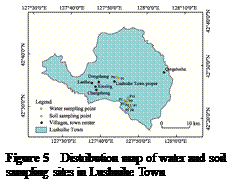
distributed, for the collection of river water samples (Figure 5). The water
samples were submitted to Earthworm Soil Testing Laboratory (Shandong) Co.,
Ltd. for analysis. The test indicators included 15 parameters: pH, total salt
content, chloride, suspended solids, chemical oxygen demand (COD), five-day
biochemical oxygen demand (BOD5), total mercury, total arsenic,
cadmium, lead, hexavalent chromium, fecal coliform count, Ascaris egg count,
sulfide, and anionic surfactants. The results showed that all tested items were
below the concentration limits specified in the National irrigation water
quality standard[10] (Table2).
Table 2 Statistical
testing result of surface water quality in Lushuihe Town
|
No.
|
Test item
|
Unit
|
Limits[10]
|
Testing result
|
|
1
|
pH
|
–
|
5.5–8.5
|
7.4
|
|
2
|
Total salt
content
|
mg/L
|
≤1,000
|
65
|
|
3
|
Chlorides
|
mg/L
|
≤350
|
2.78
|
|
4
|
Suspended solids
(SS)
|
mg/L
|
≤100
|
ND
|
|
5
|
COD
|
mg/L
|
≤200
|
22
|
|
6
|
BOD5
|
mg/L
|
≤100
|
4.9
|
|
7
|
Hg
|
mg/L
|
≤0.001
|
ND
|
|
8
|
As
|
mg/L
|
≤0.1
|
ND
|
|
9
|
Cd
|
mg/L
|
≤0.001
|
ND
|
|
10
|
Pb
|
mg/L
|
≤0.2
|
ND
|
|
11
|
Cr6+
|
mg/L
|
≤0.1
|
ND
|
|
12
|
Fecal coliform
count
|
MPN/L
|
≤4,000
|
ND
|
|
13
|
Ascaris egg
count
|
eggs/10L
|
≤20
|
ND
|
|
14
|
Sulfides
|
mg/L
|
≤1
|
0.0427
|
|
15
|
Anionic
surfactants
|
mg/L
|
≤8
|
ND
|
Note: ND indicates not detected; – indicates no
corresponding data.
3.2.4 Soil Conditions
The soil-forming parent materials in Lushuihe
Town are mainly granite and basalt, with some sedimentary rocks. The dominant
soil types are brown forest soil and albic soil, and the soil layer is
generally more than 0.5 m thick. The soils in Lushuihe Town have developed
through long-term weathering and pedogenesis of volcanic materials and forest
litter. The surface layer is loose and porous, with a thick humus horizon,
while volcanic sand and gravel deposits are often found in the lower layers. Overall,
the soils are dark brown to brownish-black in color, with high organic matter
content and strong water and nutrient retention capacities. These
characteristics make them highly suitable for the growth of Pinus koraiensis
and specialty understory crops.
In this study, 9 soil profile sampling sites
were established in the case area (Figure 5). The sites were selected in forest
farms with relatively dense Pinus koraiensis stands, taking into account
factors such as elevation and slope aspect. In addition, to consider the
potential influence of human activities, soil sampling sites were also
established in areas with dense Pinus koraiensis stands around the
built-up area of Lushuihe Town. Soil samples were collected by depth intervals
of 0–20 cm, 20–40 cm, 40–60 cm, 60–80 cm, and 80–100 cm (Figure 6) to assess
soil fertility and environmental quality in the case area. The tested
indicators included pH, organic matter, cation exchange capacity, total
nitrogen, available phosphorus, available potassium, lead, cadmium, chromium,
arsenic, mercury, copper, zinc, nickel, and organochlorine pesticide residues.
(1) Soil fertility status
The test results of the soil profile samples showed that
soil pH in the area ranged from 5.0
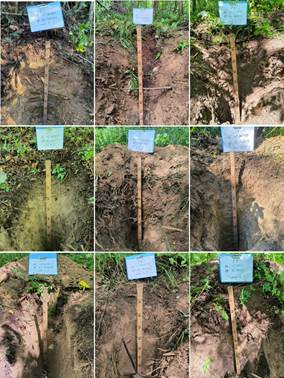
Figure 6 Profile diagram of soil
sampling sites in Lushuihe Town
to 6.8, indicating that
the soils were generally acidic to slightly acidic. This range is suitable for
the growth of Pinus koraiensis. As a key indicator for evaluating soil
nutrient retention capacity, soil cation exchange capacity (CEC) ranged from
8.98 to 31.84 cmol/kg, with an average value of 17.23 cmol/kg, suggesting good
nutrient retention capacity in the case area. In particular, the CEC of the
surface soil at sampling site P9 reached 31.84 cmol/kg, indicating excellent
nutrient-holding capacity (Table 3). CEC showed only slight variation with soil
depth, suggesting that all soil layers had relatively good nutrient retention
performance. This favorable property provides suitable conditions for nutrient
absorption by the deep root system of Pinus koraiensis, enabling the
roots to acquire nutrients from the soil more effectively and thereby promoting
the healthy growth and development of Pinus koraiensis.
The soil fertility indicators of different
soil layers at each sampling site are shown in Table 3 and Figure 7. Soil
organic matter content ranged from 5.29 to 89.3 g/kg, with an average value of
24.54 g/kg. Organic matter content decreased with increasing soil depth. The
surface soil had a higher organic matter content than the other soil layers,
showing obvious surface enrichment, whereas organic matter in the deeper layers
tended to be more stable but remained at the lowest level. Total nitrogen
content showed a similar pattern to organic matter, ranging from 0.047% to
0.498%, with an average value of 0.151%. The differences in total nitrogen
content among deeper soil layers at different sampling sites were relatively
small, and the values were generally low. Available phosphorus ranged from 0.1
to 26.8 mg/kg, with an average value of 6.27 mg/kg. At most sampling sites,
available phosphorus content was relatively low in the surface soil but higher
in deeper soil layers. This pattern may be associated with phosphorus
activation promoted by the deep distribution of Pinus koraiensis roots. Available
potassium ranged from 65 to 500 mg/kg, with an average value of 140 mg/kg.
Overall, the soils in the case area showed good nutrient retention capacity,
providing a favorable nutrient environment for the development of the deep root
system of Pinus koraiensis. These soil conditions effectively support
the growth and development of Pinus koraiensis and provide an important
basis for the high quality and high yield of pine nuts.
Table 3 Statistical
testing result of soil fertility in Lushuihe Town
|
No.
|
Soil layer depth (cm)
|
pH
|
Organic matter (g/kg)
|
CEC/
(cmol(+)/kg)
|
Total nitrogen (g/kg)
|
Available phosphorus (mg/kg)
|
Available zinc (mg/kg)
|
|
P1
|
0–20
|
5.2
|
44.6
|
24.49
|
0.174
|
1.6
|
177
|
|
|
20–40
|
5.0
|
24.9
|
25.60
|
0.113
|
4.6
|
109
|
|
|
40–60
|
5.0
|
8.20
|
20.40
|
0.053
|
9.4
|
80
|
|
|
60–80
|
5.3
|
5.55
|
23.92
|
0.047
|
25.8
|
99
|
|
|
80–100
|
5.3
|
5.77
|
25.22
|
0.053
|
21.6
|
109
|
|
P2
|
0–20
|
5.6
|
89.3
|
12.35
|
0.498
|
2.7
|
129
|
|
|
20–40
|
5.5
|
39.8
|
11.52
|
0.241
|
2.0
|
105
|
|
|
40–60
|
5.6
|
18.7
|
10.66
|
0.121
|
3.8
|
75
|
|
|
60–80
|
5.7
|
9.69
|
12.03
|
0.078
|
3.0
|
65
|
|
|
80–100
|
5.3
|
11.2
|
17.50
|
0.056
|
7.4
|
75
|
|
P3
|
0–20
|
5.7
|
48.8
|
12.13
|
0.236
|
2.5
|
310
|
|
|
20–40
|
5.7
|
32.5
|
14.10
|
0.207
|
2.5
|
249
|
|
|
40–60
|
5.8
|
20.0
|
12.07
|
0.127
|
3.6
|
181
|
|
|
60–80
|
5.7
|
17.2
|
13.69
|
0.115
|
4.9
|
225
|
|
|
80–100
|
5.8
|
14.8
|
14.10
|
0.094
|
12.0
|
156
|
|
P4
|
0–20
|
5.2
|
29.4
|
15.38
|
0.133
|
2.5
|
136
|
|
|
20–40
|
5.5
|
10.9
|
10.33
|
0.087
|
1.6
|
90
|
|
|
40–60
|
5.4
|
6.72
|
12.49
|
0.051
|
2.9
|
87
|
|
|
60–80
|
5.5
|
14.1
|
16.25
|
0.061
|
4.5
|
96
|
|
|
80–100
|
5.6
|
9.10
|
16.15
|
0.055
|
6.8
|
92
|
|
P5
|
0–20
|
6.3
|
43.4
|
17.38
|
0.253
|
1.9
|
500
|
|
|
20–40
|
6.5
|
34.6
|
13.53
|
0.192
|
1.6
|
440
|
|
|
40–60
|
6.7
|
26.8
|
13.14
|
0.145
|
4.5
|
251
|
|
|
60–80
|
6.8
|
12.0
|
10.76
|
0.073
|
8.2
|
100
|
|
|
80–100
|
6.4
|
5.45
|
8.98
|
0.051
|
3.9
|
96
|
|
P6
|
0–20
|
5.1
|
30.7
|
18.84
|
0.190
|
0.1
|
66
|
|
|
20–40
|
5.4
|
27.9
|
20.90
|
0.187
|
0.6
|
81
|
|
|
40–60
|
5.3
|
17.6
|
19.72
|
0.107
|
0.4
|
68
|
|
|
60–80
|
5.3
|
5.29
|
22.14
|
0.060
|
4.4
|
101
|
|
|
80–100
|
5.3
|
5.45
|
27.24
|
0.058
|
10.2
|
133
|
|
P7
|
0–20
|
5.5
|
35.6
|
19.10
|
0.191
|
0.7
|
86
|
|
|
20–40
|
5.7
|
21.2
|
14.57
|
0.168
|
1.4
|
77
|
|
|
40–60
|
5.7
|
21.0
|
15.33
|
0.149
|
1.8
|
79
|
|
|
60–80
|
5.8
|
10.5
|
9.07
|
0.080
|
2.6
|
66
|
|
|
80–100
|
5.8
|
5.31
|
10.65
|
0.049
|
7.8
|
78
|
|
P8
|
0–20
|
5.4
|
63.2
|
26.20
|
0.381
|
2.1
|
160
|
|
|
20–40
|
5.3
|
37.8
|
22.23
|
0.234
|
2.2
|
128
|
|
|
40–60
|
5.4
|
18.6
|
12.21
|
0.136
|
4.5
|
91
|
|
|
60–80
|
5.7
|
17.1
|
13.49
|
0.112
|
11.4
|
96
|
|
|
80–100
|
5.8
|
10.2
|
14.06
|
0.077
|
18.0
|
92
|
(To
be continued on the next page)
(Continued)
|
No.
|
Soil layer depth (cm)
|
pH
|
Organic matter (g/kg)
|
CEC/
(cmol (+)/kg)
|
Total nitrogen (g/kg)
|
Available phosphorus (mg/kg)
|
Available zinc (mg/kg)
|
|
P9
|
0–20
|
5.4
|
70.0
|
31.84
|
0.479
|
7.3
|
146
|
|
|
20–40
|
5.4
|
53.6
|
26.38
|
0.370
|
8.0
|
129
|
|
|
40–60
|
5.5
|
42.7
|
22.90
|
0.270
|
10.5
|
121
|
|
|
60–80
|
5.6
|
19.5
|
21.13
|
0.128
|
15.6
|
164
|
|
|
80–100
|
5.8
|
7.54
|
23.09
|
0.050
|
26.8
|
310
|
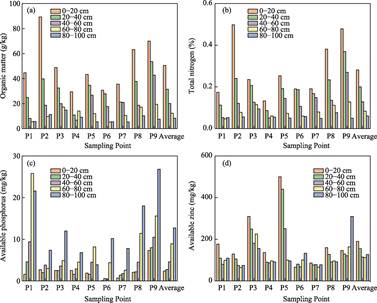
Figure 7
Soil organic matter, total nitrogen, available phosphorus, and readily
available potassium contents in different soil layers
(2) Soil environmental quality
The soil environmental indicators were
evaluated according to the national standard Soil environmental quality risk
control standard for soil contamination of agricultural land (Trial) (GB
15618—2018)[11]. The results showed that the soil environmental
quality of the Pinus koraiensis forest in Lushuihe Town was excellent.
All tested indicators were below the national soil pollution risk screening
values, and no pesticide residues were detected (Table 4). These results
indicate that the soil environment fully meets the quality requirements for the
growth and production of Pinus koraiensis[11]. The excellent
soil environmental quality provides a safe foundation for the healthy growth of
Pinus koraiensis and contributes to the production of high-quality and
safe forest products.
3.2.5 Vegetation Cover and Land Use
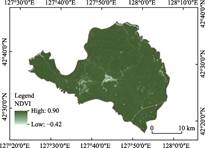
The Normalized Difference Vegetation Index
(NDVI) is an important indicator for characterizing vegetation growth and
surface vegetation cover. In this dataset, 10-m Sentinel imagery of 2025
was selected as the data source to enhance the spectral response of vegetation
and reduce interference from non-vegetation factors. Based on these data, an
NDVI map of Lushuihe Town was generated (Figure 8).
Table 4 Statistical
testing result of soil environmental indicators in Lushuihe Town
|
Test item
|
Limits[11]
|
Unit
|
Testing result
|
|
P1
|
P2
|
P3
|
P4
|
P5
|
P6
|
P7
|
P8
|
P9
|
|
Pb
|
90
|
mg/kg
|
26
|
26
|
25
|
22
|
19
|
23
|
24
|
25
|
23
|
|
Cd
|
0.3
|
mg/kg
|
0.20
|
0.28
|
0.25
|
0.22
|
0.22
|
0.14
|
0.18
|
0.19
|
0.20
|
|
Cr
|
150
|
mg/kg
|
75
|
67
|
73
|
92
|
87
|
80
|
61
|
75
|
69
|
|
As
|
140
|
mg/kg
|
10.1
|
8.99
|
9.08
|
8.77
|
8.20
|
8.97
|
8.56
|
8.2
|
8.22
|
|
Hg
|
1.8
|
mg/kg
|
0.064
|
0.070
|
0.059
|
0.052
|
0.052
|
0.056
|
0.054
|
0.058
|
0.063
|
|
Cu
|
50
|
mg/kg
|
25
|
19
|
19
|
26
|
28
|
15
|
15
|
17
|
20
|
|
Zn
|
200
|
mg/kg
|
89
|
97
|
112
|
73
|
75
|
82
|
85
|
97
|
100
|
|
Ni
|
70
|
mg/kg
|
27
|
27
|
32
|
32
|
35
|
26
|
22
|
25
|
28
|
|
HCHs (Total)
|
ND
|
μg/kg
|
ND
|
ND
|
ND
|
ND
|
ND
|
ND
|
ND
|
ND
|
ND
|
|
DDTs (Total)
|
ND
|
μg/kg
|
ND
|
ND
|
ND
|
ND
|
ND
|
ND
|
ND
|
ND
|
ND
|
Note: ND indicates not detected.
Overall, NDVI values in Lushuihe Town are
dominated by high-value areas, with most values above 0.6. This indicates high
vegetation coverage and favorable ecological conditions in the region,
reflecting the typical forest landscape characteristics of the Changbai Mt.
forest region. In terms of spatial structure, NDVI exhibits a mosaic pattern
consisting of a continuous high-value background interspersed with scattered
low-value patches. The low-value areas are mainly distributed as point-like or
clustered patches, mostly corresponding to areas with relatively intensive
human activities, such as residential areas, logging sites, and open river
valleys. Meanwhile, NDVI shows strong positive spatial autocorrelation, with
high-value areas distributed contiguously and relatively weak overall
heterogeneity. However, significant local differences occur in areas affected
by human disturbance.
For land
use classification, 10-m Sentinel remote sensing images from 2025 and cloud
cover of less than 1% were selected as the data source. After image correction,
sample extraction for different land use types, supervised classification, and
stratified sampling-based accuracy assessment, the land use pattern of Lushuihe
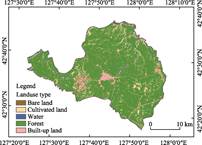
Town was obtained (Figure 9). The main land use types in Lushuihe Town include
built-up land, forest land, cultivated land, and water bodies. Among them,
forest land accounts for approximately 82.54%, cultivated land for
approximately 10.04%, and built-up land for approximately 5.04%. Forest shade
helps regulate the microclimate, fertile volcanic soils supply nutrients, and
clean water sources support physiological metabolism. Together, these
environmental
|
|
|
|
Figure 8 NDVI
analysis map of Lushuihe Town
|
Figure 9 Land use
map of Lushuihe Town (2025)
|
|
|
|
conditions contribute to the distinctive qualities of
Lushuihe pine nuts, including their large and plump kernels, rich oil content,
and excellent flavor.
3.2.6 Distribution of Pinus
Koraiensis Forest
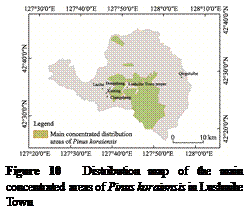 Forest lands in Lushuihe Town generally contain Pinus koraiensis
stands, involving forest farms such as Dongsheng, Hongguang, Xinxing, Yongqing,
Xilin, and Liming. Referring to the map of the protected geographical
indication area for Lushuihe Pinus Koraiensis nuts, the forest zoning
map of the Lushuihe Forestry Bureau of Jilin Province at a scale of 1:100,000,
and the key pine nut harvesting areas, the authors delineated the main
high-density distribution areas of Pinus Koraiensis (Figure 10). The
main high-density distribution areas of Pinus koraiensis in Lushuihe are
located around the built-up area of Lushuihe Town, in Hongguang in the west,
and in Dongsheng Forest Farm in the south, covering nearly 20,000 ha.
Forest lands in Lushuihe Town generally contain Pinus koraiensis
stands, involving forest farms such as Dongsheng, Hongguang, Xinxing, Yongqing,
Xilin, and Liming. Referring to the map of the protected geographical
indication area for Lushuihe Pinus Koraiensis nuts, the forest zoning
map of the Lushuihe Forestry Bureau of Jilin Province at a scale of 1:100,000,
and the key pine nut harvesting areas, the authors delineated the main
high-density distribution areas of Pinus Koraiensis (Figure 10). The
main high-density distribution areas of Pinus koraiensis in Lushuihe are
located around the built-up area of Lushuihe Town, in Hongguang in the west,
and in Dongsheng Forest Farm in the south, covering nearly 20,000 ha.
3.3 Product Characteristic Data
3.3.1 Characteristics of Fusong Lushuihe
Pinus Koraiensis Nuts
Fusong Lushuihe Pinus koraiensis nuts
require low-temperature stratification for more than 120 d before germination,
and their natural germination rate is less than 5%. Pinus koraiensis
generally needs to grow for more than 50 years before producing seeds, and its
cones mature only once every two years, resulting in limited yields. The
kernels are light yellow and oval-shaped, with uniform and plump grains and a
thin light-brown seed coat on the surface. The kernel interior is milky white,
with a fine, smooth, and oily texture. Fusong Lushuihe pine nuts have good
storage stability and can maintain their flavor and quality for a long period
under low-temperature and dry conditions. They also exhibit strong antioxidant
properties and are not prone to rancidity, giving them high nutritional and
health-promoting value as well as good suitability for food processing.
3.3.2 Fusong Lushuihe Pinus Koraiensis
Nuts Quality Test and Analysis
To evaluate the quality of Fusong Lushuihe
pine nuts, the authors collected samples harvested in 2025 and manually split
open. The samples were mainly obtained from areas surrounding the built-up area
of Lushuihe Town and from Dongsheng Forest Farm. They were submitted to the
Jilin Provincial Institute of Quality Supervision and Inspection and Qingdao
CTI Testing Technology Co., Ltd. for testing and analysis. With reference to
the national standard Product of geographical indication—Lushuihe Korean pine
seeds and kernel (GB/T 19505—2008)[12], the samples were tested in
terms of sensory indicators, physicochemical indicators, and safety and
sanitary indicators. The sensory indicators included 4 items: color, odor,
appearance, and impurities. The physicochemical indicators included 16 items,
such as fat content, acid value, peroxide value, protein, amino acids,
vitamins, and minerals. The safety and sanitary indicators included 9
contaminants, such as arsenic, lead, mercury, cadmium, aflatoxin, and coliform
bacteria.
(1) Sensory indicators
Fusong Lushuihe pine nut kernels have a strong pine
aroma. The kernels are yellow with uniform coloration and no obvious color
variation. They are plump and uniform in size. Minor damage was commonly
observed, whereas severely damaged kernels accounted for less than 3%, and
broken kernels accounted for less than 7%. The low proportions of severely
damaged and broken kernels indicate that effective measures were taken during
harvesting, processing, storage, and transportation to ensure the overall
appearance quality of the product. The kernels have a fine texture and contain
no visible impurities. During processing, procedures such as impurity screening
and cleaning were properly implemented, resulting in a clean and hygienic
product (Table 5) that meets the requirements of the national standard[12].
Table 5
Statistical testing result
of Fusong Lushuihe Pinus koraiensis nuts sensory indicators
|
No.
|
Test item
|
Standard indicator[12]
|
Test results
|
Judgment
|
|
1
|
Colour and lustre
|
Yellow
|
Yellow
|
Compliant
|
|
2
|
Smell
|
Strong pine scent
|
Strong pine scent
|
Compliant
|
|
3
|
Appearance
|
Minor
damage<3%, broken kernels<7%
|
Minor
damage<3%, broken kernels<7%
|
Compliant
|
|
4
|
Impurities
|
No visible
impurities
|
No visible
impurities
|
Compliant
|
(2) Physicochemical indicators
Pine nuts are widely recognized as nutrient-rich nuts,
and Fusong Lushuihe pine nuts exhibit particularly prominent nutritional
characteristics due to their unique growing environment. The test results (Table
6) showed that the crude fat content was 65.4%, while the dietary fiber content
was 8.4 mg/100g. The relatively high fiber content provides a beneficial
complement to the high fat content. The acid value was 0.6 mg/g, and the
peroxide value was 0.0023 g/100g. These extremely low values indicate a low
degree of oxidative deterioration, suggesting better flavor quality and
nutritional value. Fusong Lushuihe pine nuts were also rich in protein and
amino acids, with contents of 16.7 g/100g and 13.1 g/100g, respectively, making
them a high-quality source of plant protein. The detected amino acids included
16 types: aspartic acid, threonine, serine, glutamic acid, glycine, alanine,
valine, methionine, isoleucine, leucine, tyrosine, phenylalanine, lysine,
histidine, arginine, and proline. The vitamin E content was relatively high,
reaching 24.7 g/100g. Among the major elements, the calcium, potassium,
and magnesium contents were 145 mg/100g, 594 mg/100g, and 2.58×10³
mg/100g, respectively. Among the trace elements, the manganese, iron, and zinc
contents were 56.1 mg/100g, 45.5 mg/100g, and 62.7 mg/100g, respectively.
Table 6
Statistical testing
result of Fusong Lushuihe Pinus koraiensis nuts physicochemical
indicators
|
No.
|
Test item
|
Unit
|
Limits[12]
|
Test results
|
Judgment
|
|
1
|
Fat
|
%
|
≥60
|
65.4
|
Compliant
|
|
3
|
Acid value
|
mg/g
|
≤4
|
0.60
|
Compliant
|
|
4
|
Peroxide value
|
g/100g
|
≤0.08
|
0.0023
|
Compliant
|
|
5
|
Protein
|
g/100g
|
/
|
16.7
|
–
|
|
6
|
Amino acids
|
g/100g
|
/
|
13.1
|
–
|
|
7
|
Vitamin E
|
g/100g
|
/
|
24.7
|
–
|
|
8
|
Vitamin B₁
|
g/100g
|
/
|
0.40
|
–
|
|
9
|
Vitamin B₂
|
g/100g
|
/
|
0.0551
|
–
|
|
10
|
Ca
|
mg/100g
|
/
|
145
|
–
|
|
11
|
K
|
mg/100g
|
/
|
594
|
–
|
|
12
|
Mg
|
mg/100g
|
/
|
2.58×10³
|
–
|
|
13
|
Mn
|
mg/100g
|
/
|
56.1
|
–
|
|
14
|
Fe
|
mg/100g
|
/
|
45.5
|
–
|
|
15
|
Zn
|
mg/100g
|
/
|
62.7
|
–
|
|
16
|
Dietary fiber
|
mg/100g
|
/
|
8.4
|
–
|
Note: / indicates no corresponding standard
limit; –
indicates no corresponding data.
(3) Safety and hygiene indicators
The test results for
Fusong Lushuihe pine nuts showed that heavy metals, including arsenic, lead,
cadmium, and total mercury, were either not detected or were far below the
limits specified in national standards. Aflatoxin B₁ was not detected, and
the counts of coliform bacteria and other microorganisms were low, indicating
excellent microbial safety indicators (Table 7). All test results complied with
the requirements of the National food safety standard—maximum levels of
contaminants in food (GB 2762—2022)[13] and National food safety
standard—maximum levels of mycotoxins in food (GB 2761—2017)[14].
These results indicate that the food safety and sanitary indicators of Fusong
Lushuihe pine nuts fully meet national standards. They also suggest that the
cultivation and processing practices are conducted in accordance with safety
requirements, thereby ensuring product safety.
Table 7
Statistical testing
result of Fusong Lushuihe Pinus koraiensis nuts safety and hygiene
indicators
|
No.
|
Test item
|
Unit
|
Limits[13,14]
|
Test results
|
Judgment
|
|
1
|
As
|
mg/kg
|
≤0.5
|
ND
|
Compliant
|
|
2
|
Pb
|
mg/kg
|
≤0.5
|
ND
|
Compliant
|
|
3
|
Cd
|
mg/kg
|
≤0.5
|
0.103
|
Compliant
|
|
4
|
Hg
|
mg/kg
|
/
|
ND
|
–
|
|
5
|
Aflatoxin B1
|
μg/kg
|
≤10
|
ND
|
Compliant
|
|
6
|
Coliform bacteria
|
CFU/g
|
/
|
<10
|
–
|
|
7
|
Mould and yeast
|
CFU/g
|
/
|
7.8×10⁴
|
–
|
|
8
|
Salmonella
|
/25g
|
/
|
ND
|
–
|
|
9
|
Staphylococcus aureus
|
CFU/g
|
/
|
<10
|
–
|
Note: ND indicates not detected; / indicates no
corresponding standard limit; – indicates no corresponding data.
4 Socioeconomic Development, Management, and Historical
Traditions
4.1 Socioeconomic Development in Fusong and
Lushuihe
The county economy of Fusong has maintained
steady and rapid growth, providing a sound foundation for promoting green
agricultural development across the county. In 2025, the GDP of Fusong County
exceeded 15 billion CNY, and the total output value of agriculture, forestry,
animal husbandry, and fishery increased by 5.0% year on year. The per capita
disposable income of rural residents reached 22,008 CNY, higher than the
average level of Jilin Province. Following the nationwide ban on commercial
logging, Lushuihe Town underwent a profound industrial transformation. Its
economy shifted from a reliance on forest logging and wood processing to a
diversified industrial structure involving natural mineral water, ginseng, pine
nuts, and other specialty industries. Meanwhile, the town has actively
developed ecotourism based on resources such as national forest parks and
hunting grounds, pursuing a green and sustainable development path[15–18].
Relying on more than one million century-old Pinus koraiensis mother
trees and a well-established industrial chain integrating planting, harvesting,
processing, and sales, the pine nut industry in Lushuihe Town has become a
leading “one town, one specialty” industry in Fusong County. Its annual sales
have exceeded 200 million CNY, with exports accounting for more than 60%. The
industry has directly created employment opportunities for over 3,000 local
forest farmers, achieving coordinated development among ecological resource
protection, traditional skill inheritance, and industrial income growth. In
2025, the pine nut output of Lushuihe Town reached approximately 4,500 t,
creating more than 200 regular jobs and over 400 seasonal jobs, with an average
monthly wage of 4,500 CNY.
4.2 Protection and Development of Pinus
Koraiensis Resources
Since the 1980s, with increasing awareness of
natural forest protection, the Lushuihe Forestry Bureau has taken the lead in
establishing a research group dedicated to the conservation and utilization of Pinus
koraiensis resources. The group focused on systematic research related to
the cultivation of Pinus koraiensis mother forests, improvement of
cone-bearing rates, and optimization of kernel quality. Between 1990 and 1995,
the research team successfully selected 3 superior mother-tree lines of Pinus
koraiensis using a technical system integrating “plus-tree selection,
artificial pollination, and seedling domestication”. Subsequently, a
large-scale mother forest improvement project was carried out in the core
forest area of Lushuihe, expanding the protected area of ancient trees over 100
years old to 8,000 ha[19]. In 2003, “Lushuihe Pinus Koraiensis
Nut Kernels” were officially approved as a National Geographical Indication
Product, becoming the first nut product in Northeast China to receive this
certification. Over the following two decades, through continuous scientific
research and technological improvement, the product successively obtained Grade
AA Green Food Certification, EU Organic
Certification, and China Forest Certification (CFCC)[20]. In 2020,
Lushuihe Pinus koraiensis nut kernels from mother forests were included
in the second list under the China-EU Agreement on Geographical Indications. In
2021, the product was recognized as one of “China’s Famous Agricultural
Products”, and the traditional Pinus koraiensis nut harvesting technique
was included in the Jilin Provincial Intangible Cultural Heritage List. In
2023, the ancient Pinus koraiensis tree group in Lushuihe, Jilin
Province, was selected as one of “China’s Most Beautiful Ancient Tree Groups”.
4.3 Industry Development and Operational
Management
4.3.1 Pine Nut Resource Control
Relying on Asia’s largest natural Pinus
koraiensis mother forest, Lushuihe Town implements fine-scale management of
Pinus koraiensis resources. Based on the growth cycle and fruiting
patterns of Pinus koraiensis, a strict quota-based harvesting system has
been adopted. The annual harvest volume is determined according to monitoring
data to ensure the sustainable growth of mother trees. Forestry authorities and
forest farms have established a comprehensive monitoring system for Pinus
koraiensis resources. By integrating satellite remote sensing, unmanned
aerial vehicle (UAV) monitoring, and ground patrols, the system enables
real-time monitoring of Pinus koraiensis growth, pest and disease
occurrence, and changes in the forest ecological environment.
4.3.2 Business Management
Lushuihe Town has developed a management
model characterized by government guidance, cooperation between research
institutions and enterprises, and collaboration between cooperatives and local
villagers. Research institutions and enterprises jointly carry out the
selection and breeding of improved Pinus koraiensis varieties,
optimization of shell-breaking and kernel-extraction processes, and studies on
the functional components of pine nuts. Enterprises have introduced
internationally advanced aseptic production lines and processing technologies.
During primary processing, impurities and defective seeds are accurately
removed, and low-temperature roasting is adopted to maximize the retention of
nutrients and flavor in pine nut kernels. Cooperatives are responsible for
organizing villagers to conduct standardized harvesting, drying, and
preliminary sorting, thereby ensuring the purity and traceability of raw
materials. By participating in harvesting, forest management, and transportation,
villagers not only increase their income but also provide enterprises with a
stable supply of high-quality raw materials.
Relying on the geographical-origin advantages
of Lushuihe pine nuts, the government has promoted industrial clustering and
industrial chain extension through policy guidance. A modern industrial system
has gradually taken shape, covering multiple links, including wild resource
management, integrated mechanized harvesting, low-temperature shell breaking
and kernel extraction, deep processing of pine nut oil, and the development of
health food products. Meanwhile, with the support of leading enterprises such
as Jilin Changbai Mingzhu Forest Food Co., Ltd., multiple stakeholders have
jointly promoted the research and development of “pine nut +” product series.
These efforts have led to the development of composite products combining pine
nuts with ginseng, cocoa, crispy confectionery, and other ingredients, further
extending the industrial chain.
4.3.3 Marketing and Brand Building
The government plays a leading role by using
industrial policies to guide enterprises in better aligning their products with
consumer demand and developing diversified products for different consumer
groups. For the high-end consumer market, organically certified pine nut
products with refined gift-box packaging have been introduced, emphasizing their
ecological, healthy, and high-quality attributes. For ordinary consumers,
affordable ready-to-eat pine nut kernels in small packages have been launched
to meet daily consumption needs. Meanwhile, the government actively promotes
investment attraction and introduces professional institutions specializing in
e-commerce operations and brand planning. These efforts help enterprises use
emerging marketing channels, such as social media and live streaming, to
communicate the brand story and ecological value of Lushuihe pine nuts, thereby
enhancing consumer awareness and purchase intention.
In terms of brand building, the government
has led the formulation of regional public brand standards for “Lushuihe Pinus
Koraiensis Nut Kernels” and has worked with industry associations to
strengthen brand authorization and supervision. Brand promotion highlights the
product’s natural ecological attributes and high nutritional value. Through
integrated online and offline communication, participation in exhibitions and
promotional events, and culture–tourism integration projects, the brand’s
visibility and market share have been continuously improved. At the same time,
market regulatory authorities, together with industry associations, have
strengthened the protection of the “Lushuihe Pinus Koraiensis Nut
Kernels” geographical indication brand. They regularly carry out targeted
enforcement campaigns, strictly crack down on counterfeit and substandard
products, and safeguard the reputation of the brand.
4.4 Inheritance and Promotion of Fusong
Lushuihe Pine Nut Culture
The history of Pinus
koraiensis in Lushuihe Town can be traced back to ancient times. Numerous
forestry studies indicate that Pinus koraiensis, as an ancient tree
species, existed in East Asia at least 10,000 years ago, with a distribution
range broader than that of today. Local ethnic minorities in Fusong County,
including the Manchu and Korean ethnic groups, have long lived in close
association with Pinus koraiensis[21]. During the Qing
Dynasty, Manchu nobles regarded Pinus koraiensis nuts as precious
delicacies. They were not only consumed as part of the daily diet, but also
played an important role in ritual ceremonies. Pine nut kernels were listed
among the “Eight Delicacies” and were often used to make pastries and other
offerings. Among local communities, pine nut kernels have also been an
important component of traditional dietary culture. They have been made into
characteristic foods such as pine nut porridge and pine nut cakes, with related
practices passed down through generations. Pinus koraiensis holds a
special position in local culture and is regarded as a symbol of longevity and
resilience. In folk legends, Pinus koraiensis is considered an
incarnation of the mountain deity, protecting the forests and the people who
live there.
A variety of cultural activities have
developed around Pinus koraiensis. The government plays a guiding and
supportive role by coordinating forestry, culture and tourism, market
regulation, and other departments throughout the processes of event planning,
safety management, and brand promotion, thereby creating the Pinus
koraiensis Cultural Festival. During the festival, traditional pine nut
processing techniques are demonstrated, characteristic foods are offered for
tasting, and folk performances and knowledge competitions related to Pinus
koraiensis are held. These activities help preserve and promote Pinus
koraiensis culture, enhance local residents’ awareness of resource
conservation and cultural identity, and allow more people to understand the
distinctive regional cultural charm of Lushuihe pine nuts[21].
Meanwhile, the integrated development of “Pinus koraiensis culture +
ecotourism” has been actively promoted. Taking advantage of Lushuihe’s
proximity to Fusong County seat, Erdaobaihe Town, and the core scenic area of
Changbai Mt., the town has integrated outdoor activities such as forest hunting
culture experiences, wilderness hiking, mountain camping, and forest
exploration, and has developed premium tourism routes in collaboration with
surrounding scenic areas.
4.5 Ecological Environment Traceability for Fusong Lushuihe Pinus Koraiensis
Nuts
Promoting the sustainable development of the
Fusong Lushuihe pine nut industry requires strong support from modern
technology. To this end, a geographical indication habitat ground station has
been established in the forest farm of the case area (Figure11). The station is
used for real-time, round-the-clock monitoring and traceability of the
ecological environment of Pinus koraiensis forests. The monitored
indicators mainly include negative oxygen ions, phenology, wind speed, wind
direction, rainfall, air quality, temperature, relative humidity, soil
temperature and moisture, atmospheric pressure, and soil electrical
conductivity. These real-time monitoring data can be used to characterize the
high-quality growing environment of Lushuihe pine nuts and provide scientific
and precise data support for analyzing phenological changes and associated
responses in Pinus koraiensis forests. This further promotes the
transformation of the pine nut production model toward greater intelligence,
scientific management, and sustainability.
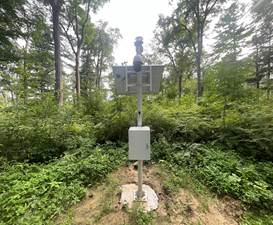
Figure 11 GIES ground station
5 Conclusions
The GIES case of Fusong
Lushuihe Pinus koraiensis nuts forest ecosystem is located in the core
area of the Changbai Mt. in Fusong County, Jilin Province. The primary
forest ecosystem, characterized by high elevation, a cold-temperate humid
climate, and fertile volcanic ash soils, provides favorable habitat conditions
for the growth of Pinus koraiensis. Lushuihe Town has excellent soil
environmental quality, with no detectable pesticide residues, and its clean
water resources are conducive to the production of high-quality pine nuts. Lushuihe
pine nuts are characterized by plump kernels, a milky-white kernel color, and a
rich aroma. They are also rich in fat, protein, and essential trace elements
required by the human body, indicating significant nutritional value. Through
standardized management of wild pine nut harvesting and the establishment of an
integrated management model involving industry, universities, research
institutions, government, cooperatives, local residents, and traditional
practices, the local area has achieved conservation-oriented development of
rare Pinus koraiensis mother forest resources. In the future, it will be
necessary to further deepen the integration of ecological conservation and
industrial development. On the basis of ensuring the security and stability of Pinus
koraiensis resources, efforts should be made to improve the quality and
added value of Pinus koraiensis nuts, so as to achieve coordinated
enhancement of ecological, economic, and social benefits.
Author contributions
Qi, W. designed the overall study, including
the dataset structure, paper framework, technical route, and writing approach;
organized field investigations and seminars; and contributed to paper writing. Wang,
G., Gao, J. T., Du, Y. C., and Zhao, W. X. coordinated the case investigation
and data collection. Qi, W., Zhu, W. H., Zhu, J. H., Chen, Y. T., Liu, Y., Liu,
Y. B., and Niu, Z. M. participated in the field investigation of the case
study. Wang, X. Q., Jin, X., and Qi, W. were responsible for the collection and
analysis of soil and water samples. Chen, Y. T., Liu, Y., Liu, Y. B., Niu, Z.
M., Li, Y., and Fan, K. were responsible for data collection, analysis,
processing, and figure preparation. Tang, X. R. and Liu, H. Q. were responsible
for coordinating support from relevant organizations at different levels and
collecting local cultural data. Qi, W. was responsible for meteorological data
collection and analysis. Zhu, J. H. was responsible for the collection and
analysis of cultural information related to Pinus koraiensis nut
kernels. Liu, H. Q., Xu, Y. G., and Zhang, Z. G. were responsible for
collecting data on management practices, economic development, and product
characteristics. Zhu, W. H., Zhu, J. H., Chen, Y. T., Liu, Y., Liu, Y. B., Niu,
Z. M., Li, Y., Fan, K., and Tang, X. R. contributed to the writing of the paper.
Acknowledgements
We would like to express our sincere
gratitude to Professors Liu, C., Song, X, F., and Wang, Z. B. from the
Institute of Geographic Sciences and Natural Resources Research, Chinese
Academy of Sciences, for their guidance and assistance during the preparation
of this case dataset and manuscript. Our thanks are also extended to the local
villagers who provided assistance during the collection and analysis of soil
and water samples.
Conflicts of Interest
The authors declare no conflicts of interest.
References
[1]
Liu,
J. B. Management and protection measures of natural Pinus koraiensis
mother forest in Lushuihe [J]. Jilin Forestry Science and Technology,
2012, 41(3): 44–45
[2]
Zu, S.
C. Resource evaluation and deep processing technology of Pinus koraiensis
Sieb. et Zucc. seeds [D]. Harbin: Northeast Forestry University, 2020.
[3]
Li, X.
H. Study on the relationship between vegetation productivity and water use in
the broad-leaved Pinus koraiensis forest region of Changbai Mountain
[D]. Beijing: Beijing Forestry University, 2019.
[4]
Liu,
D. D. Research progress on selective breeding of Pinus koraiensis in
China [J]. Protection Forest Science and Technology, 2017(3), 96–99+116.
[5]
Zhang,
H. N., Guo, J. Q., Zhao, Y. H. Research status on composition, nutritional
value, development and utilization of Pinus koraiensis seeds [J]. Forest
By-Product and Specialty in China, 2022(2), 84–86.
[6]
Song,
W., Yan, P. Y., Liu, J., et al. GIES case study on Qin County millet
Shangdang Basin [J]. Journal of Global Change Data & Discovery,
2024, 8(3): 267–285. https://doi.org/10.3974/geodp.2024.03.05.
[7]
Qi,
W., Zhu, J. H., Wang, G., et al. GIES case dataset on Fusong Lushuihe
Korean pine seeds forest ecosystem [J/DB/OL]. Digital Journal of Global
Change Data Repository, 2026. https://doi.org/10.3974/ geodb.2026.04.01.V1.
[8]
GCdataPR Editorial Office. GCdataPR data
sharing policy [OL]. https://doi.org/10.3974/dp.policy.2014.05 (Updated 2017).
[9]
Li, H.
Y., Sun, Y. H., Lu, L. L., et al. Analysis of water resources
characteristics in Fusong Drinking Water Source Protection Area [J]. Jilin
Geology, 2013, 32(3), 80–85.
[10]
State Administration for Market Regulation,
Standardization Administration of China. Standard for irrigation water quality
(GB 5084—2021) [S]. Beijing: China Planning Press, 2021.
[11]
Ministry
of Ecology and Environment of P. R. China, State Administration for Market
Regulation. Soil environmental quality risk control standard for soil
contamination of agricultural land (Trial) (GB 15618—2018) [S]. Beijing: China
Environment Publishing Group, 2018.
[12]
General
Administration of Quality Supervision, Inspection and Quarantine of P. R.
China, Standardization Administration of China. Product of geographical
indication—Lushuihe Korean pine seeds and kernel (GB/T 19505—2008) [S].
Beijing: Standards Press of China, 2008.
[13]
National
Health Commission of P. R. China, State Administration for Market Regulation.
National food safety standard—maximum levels of contaminants in food (GB
2762—2022) [S]. Beijing: Standards Press of China, 2022.
[14]
National
Health and Family Planning Commission of P. R. China, China Food and Drug
Administration. National food safety standard—maximum levels of mycotoxins in
food (GB 2761—2017) [S]. Beijing: Standards Press of China, 2017.
[15]
Wang,
X. H. Discussion on the construction technology of Pinus koraiensis
fruit timber forest [J]. Agriculture and Technology, 2019, 39(3), 88–89.
[16]
Wang,
W., Li, P. X., Wang, G. X., et al. Effects of storage temperature on the
physiology and quality of pine nut kernels under different states [J]. Zhejiang
Agricultural Science, 2009(4), 743–746.
[17]
Dong,
S. N., Yu, Y. F., Fu, Y. C. Study on the spatiotemporal differentiation and
influencing factors of the quality of under-forest economic growth in Changbai
Mountain area of Jilin Province [J]. Journal of Northeast Normal University (Philosophy
and Social Sciences Edition), 2023(1), 147–158+202.
[18]
Liang,
Y. F. Evaluation of development level and model effect analysis of agricultural
green development pilot zone in Fusong County [D]. Changchun: Jilin University,
2024.
[19]
Ren,
Z. J., Shi, W. H. Exploration of forest resource protection and development
under the background of sustainable development—a case study of Fusong County
[J]. Guangdong Sericulture, 2024, 58(10), 24–26.
[20]
Liu,
L., Nie, H. Y. Analysis of the protection development status and
countermeasures of national geographical indication products in Jilin Province
[J]. Science and Technology Innovation Herald, 2018, 15(28), 152–153.
[21]
Xu, W.
“Shanlihong” forever red—the growth track of Shanlihong Troupe in Fusong County
[J]. Shenhua (Part 2), 2019(7), 62–65.